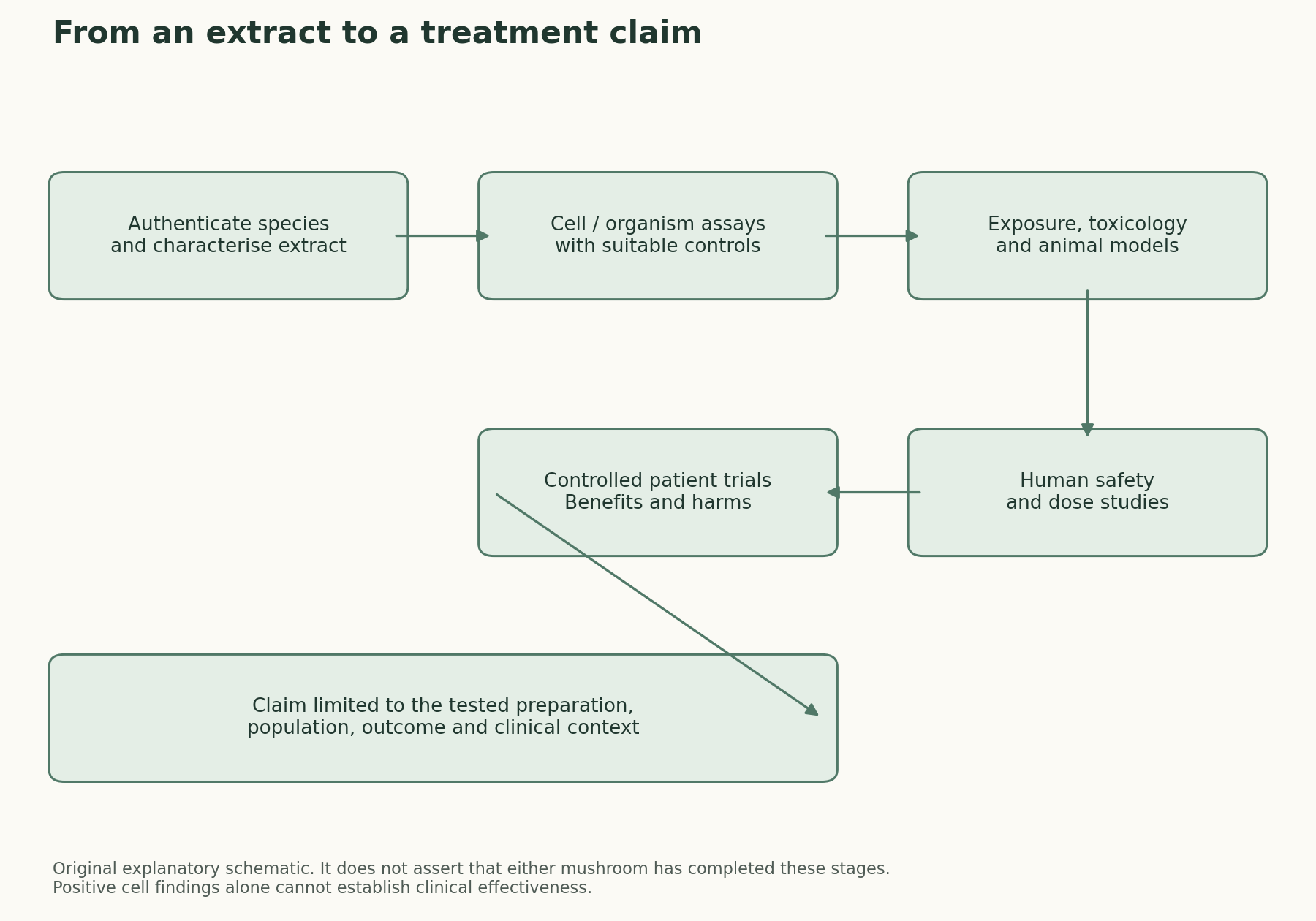
Plant research ranges from direct exposure of parasites to compounds through to clinical trials. Evidence must stay attached to the named species, preparation and infection. A laboratory signal can justify further work without justifying a household treatment course.
A small Nigerian pilot study enrolled 60 children with stool evidence of intestinal parasites. Seven days after a papaya-seed-and-honey preparation, 23 of 30 children had stool clearance, compared with 5 of 30 receiving honey. This was short follow-up, with a small sample and no standard antiparasitic-drug comparator. It cannot establish a universal, long-term or adult treatment schedule. The chart reports the denominators and does not compare this result with mouse or test-tube studies. P13
The EMA monograph for wormwood, Artemisia absinthium, concerns traditional use for loss of appetite and mild digestive complaints. It is not a validation of parasite eradication. Artemisia plants, a homemade infusion and a regulated antimalarial drug are distinct preparations. WHO does not support non-pharmaceutical Artemisia products for malaria prevention or treatment. P14 P15
No robust clinical basis was located for a universal mixture of wormwood, black walnut and cloves against all parasites. This does not establish that every constituent is inactive; it identifies the gap between an experimental or traditional rationale and a broad therapeutic promise.
An educational plant profile should include botanical identity, the part used, solvent or preparation, what was measured, adverse effects and the populations actually studied. It should also acknowledge when interaction or pregnancy data are missing. A “natural” label does not answer these questions.
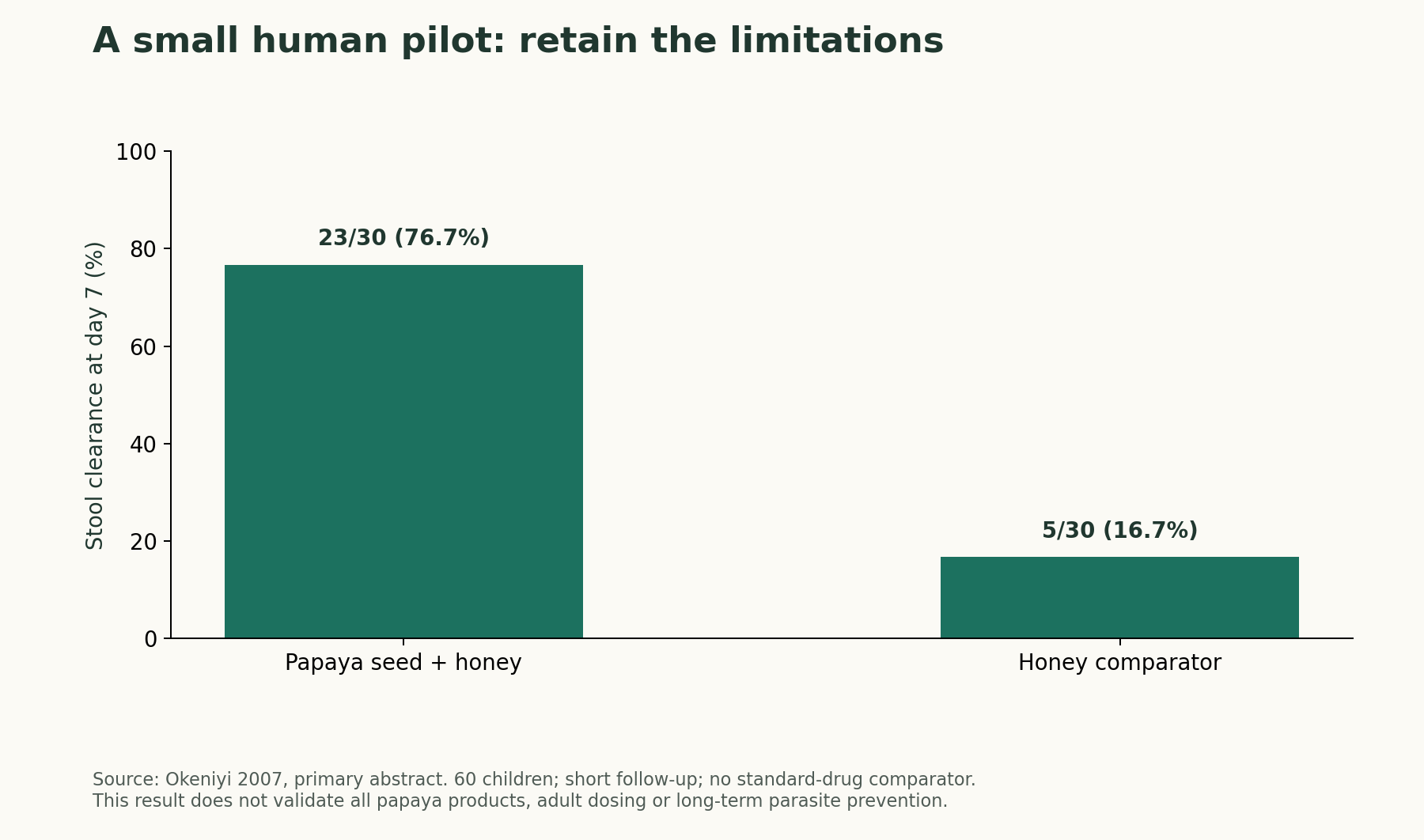
Source: Okeniyi 2007, primary abstract. 60 children; short follow-up; no standard-drug comparator. This result does not validate all papaya products, adult dosing or long-term parasite prevention.
Sources & access limits
Follow each link to the original record. Results remain specific to the preparation, study population and outcomes described.
- [P13] Okeniyi i in., 2007. Carica papaya seeds pilot studyAbstract reviewed; full-method limits apply.
- [P14] EMA, Absinthii herba - zastosowanie tradycyjne i dokumenty ocenyPublic-health, institutional or source documentation.
- [P15] WHO, The use of non-pharmaceutical forms of Artemisia, 2019Public-health, institutional or source documentation.
Najważniejsze informacje po polsku
Rośliny: papaja, piołun i Artemisia; wyniki badań nie przenoszą się automatycznie na mieszanki i suplementy.
To pomocnicze streszczenie. Pełny tekst, ograniczenia badań i źródła znajdują się powyżej.