Meet the species
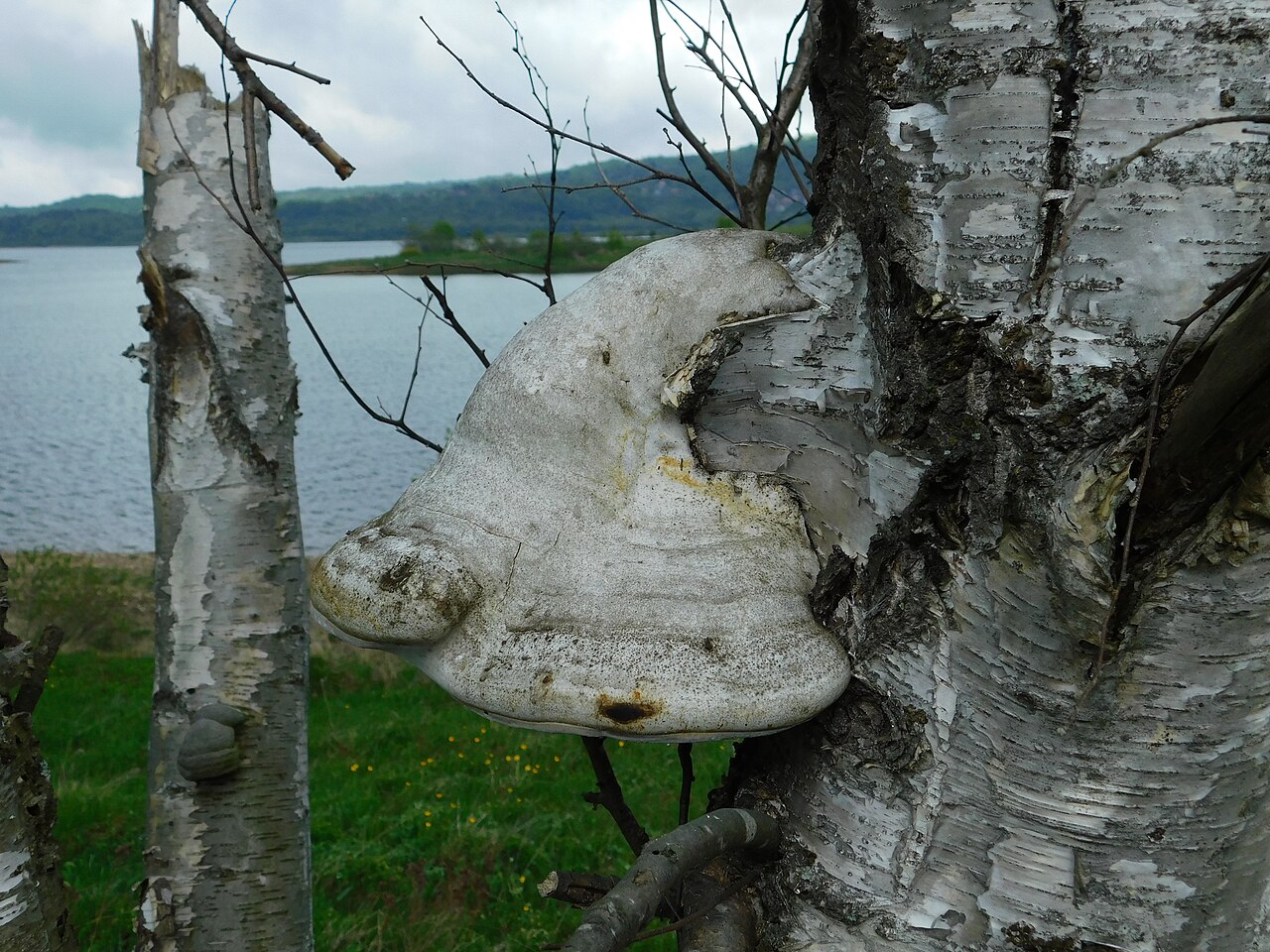
The Polish name kurka commonly refers to pieprznik jadalny, Cantharellus cibarius. It has a yellow fruiting body and folds running down the stem. False chanterelles, Hygrophoropsis aurantiaca, can be confused with it and may cause digestive upset. Photographs support learning but do not authenticate a collected mushroom for eating. M17
Chanterelles belong in food and woodland culture as well as research. A culinary mushroom, dried powder and solvent extract are different materials. In particular, an experimental methanol extract is not a recipe for food or a preparation to drink.
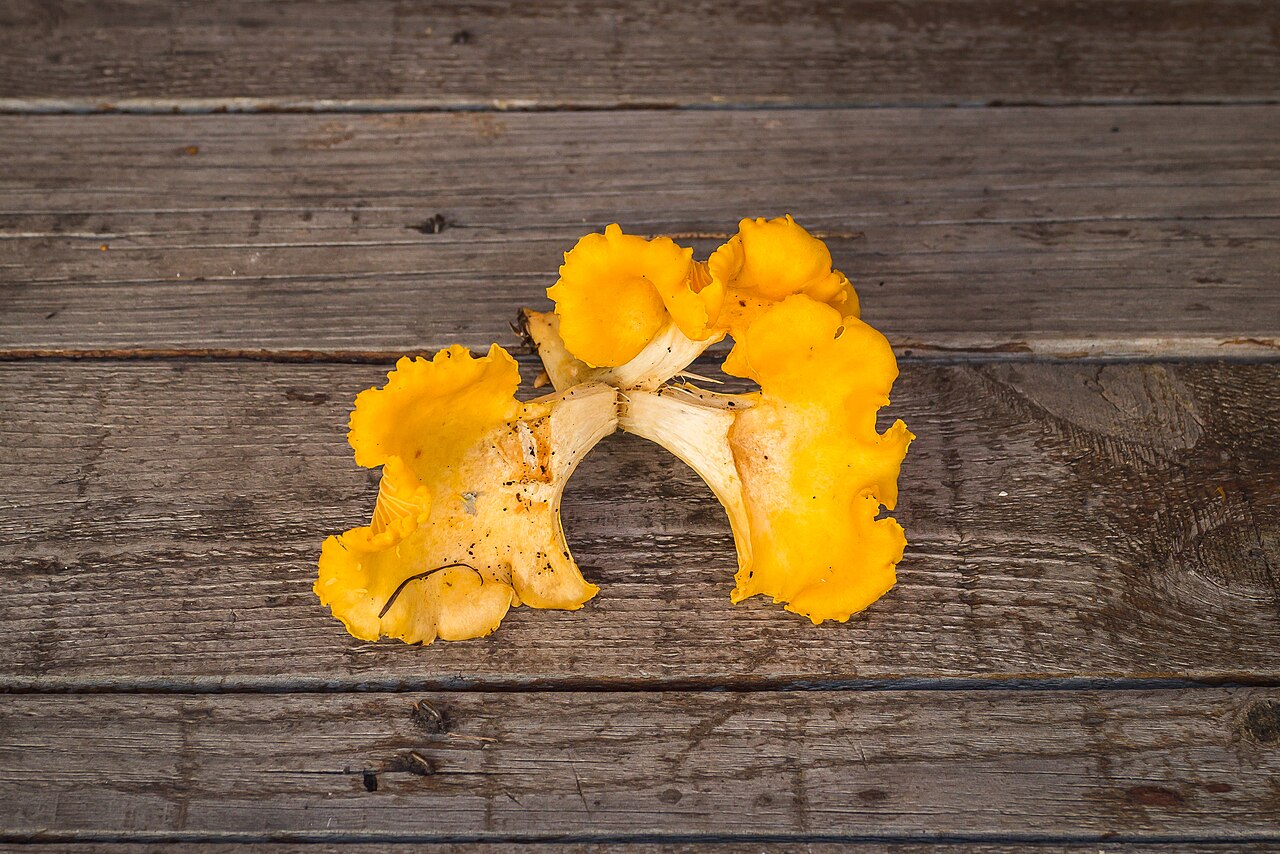
Cantharellus cibarius. Photograph: Alexander Novikov, CC BY-SA 4.0.
Alexander Novikov · CC BY-SA 4.0 · Original · Open full size ↗
Three primary parasite studies
| Study | Model and preparation | Finding | What it does not establish |
|---|---|---|---|
| Abedo 2015 | T. brucei brucei in laboratory tests and infected rats; ethanol extract, intraperitoneal administration | Reduced parasitaemia at the highest tested dose; survival extended but not a demonstrated durable cure | Oral effectiveness in people or treatment of human sleeping sickness M03 |
| Tsyganov 2018 | Juvenile O. felineus in vitro; methanol extract; two mouse schedules | Laboratory activity; early treatment reduced later worm counts, whereas treatment of established infection did not | A human dose, efficacy against all worms, or effectiveness of eating chanterelles M01 |
| Nwofor 2018/2019 | Fasciola eggs and miracidia directly exposed to ethanolic extracts, 1–8 mg/mL | C. cibarius showed activity; G. applanatum was more active in that comparison | Clearance of adult infection in an animal or person; only the abstract was accessible here M02 |
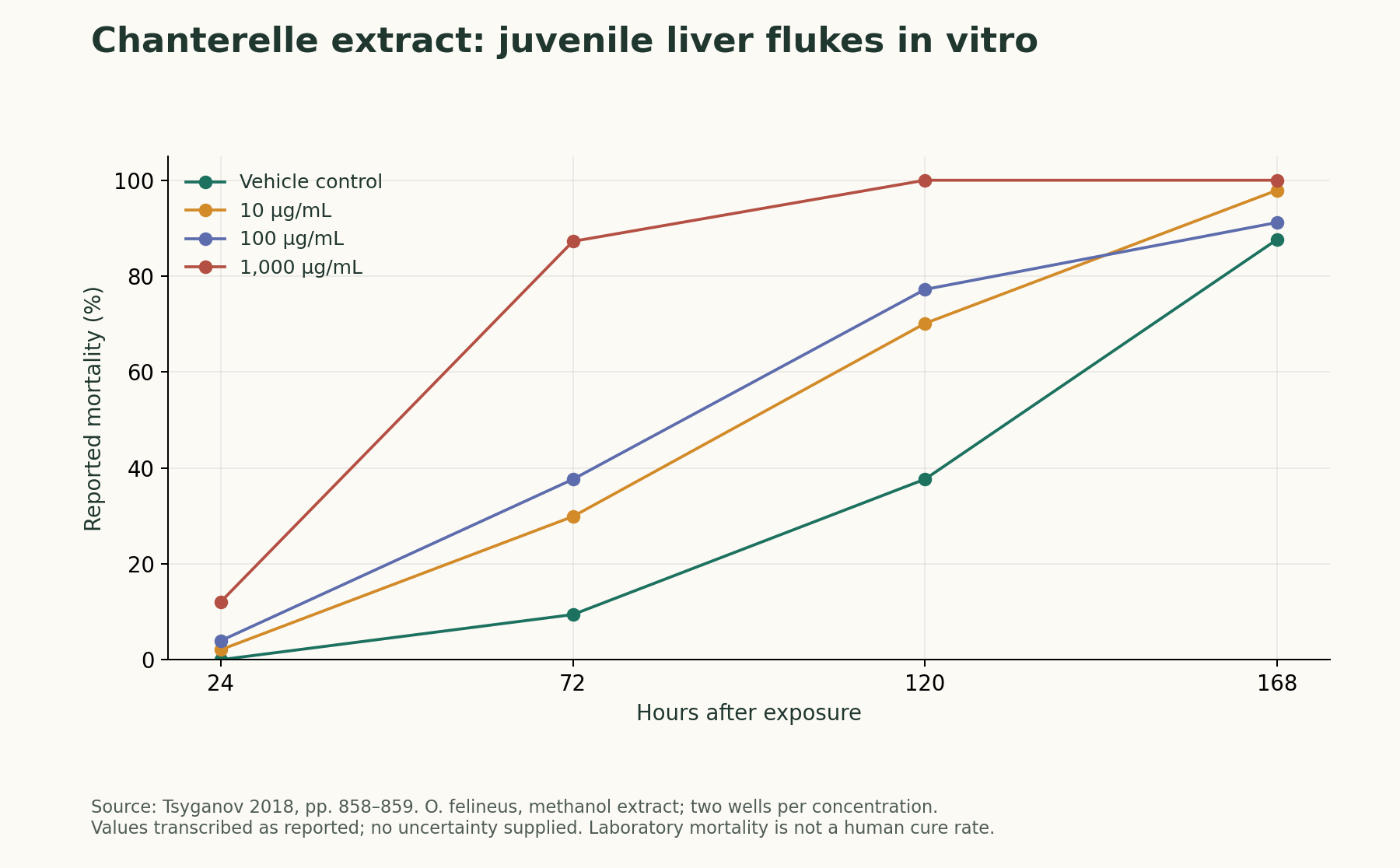
Source: Tsyganov 2018, pp. 858–859. O. felineus, methanol extract; two wells per concentration. Values transcribed as reported; no uncertainty supplied. Laboratory mortality is not a human cure rate.
The timing result that should not be omitted
In the mouse experiment, the mean liver bile-duct worm count six weeks after infection was 23.5 ± 2.2 with vehicle and 18.1 ± 1.5 after early extract administration. The paper reports mean ± standard error and p=0.048. A separate seven-day course starting five weeks after infection had no anthelmintic effect. These are experimental results, not treatment instructions. M01
The accompanying laboratory chart includes the control group. By 168 hours, control mortality was already high; showing only mortality in extract-treated wells would exaggerate what the extract alone explains. The observations are limited to these worms, preparation and culture conditions. M01
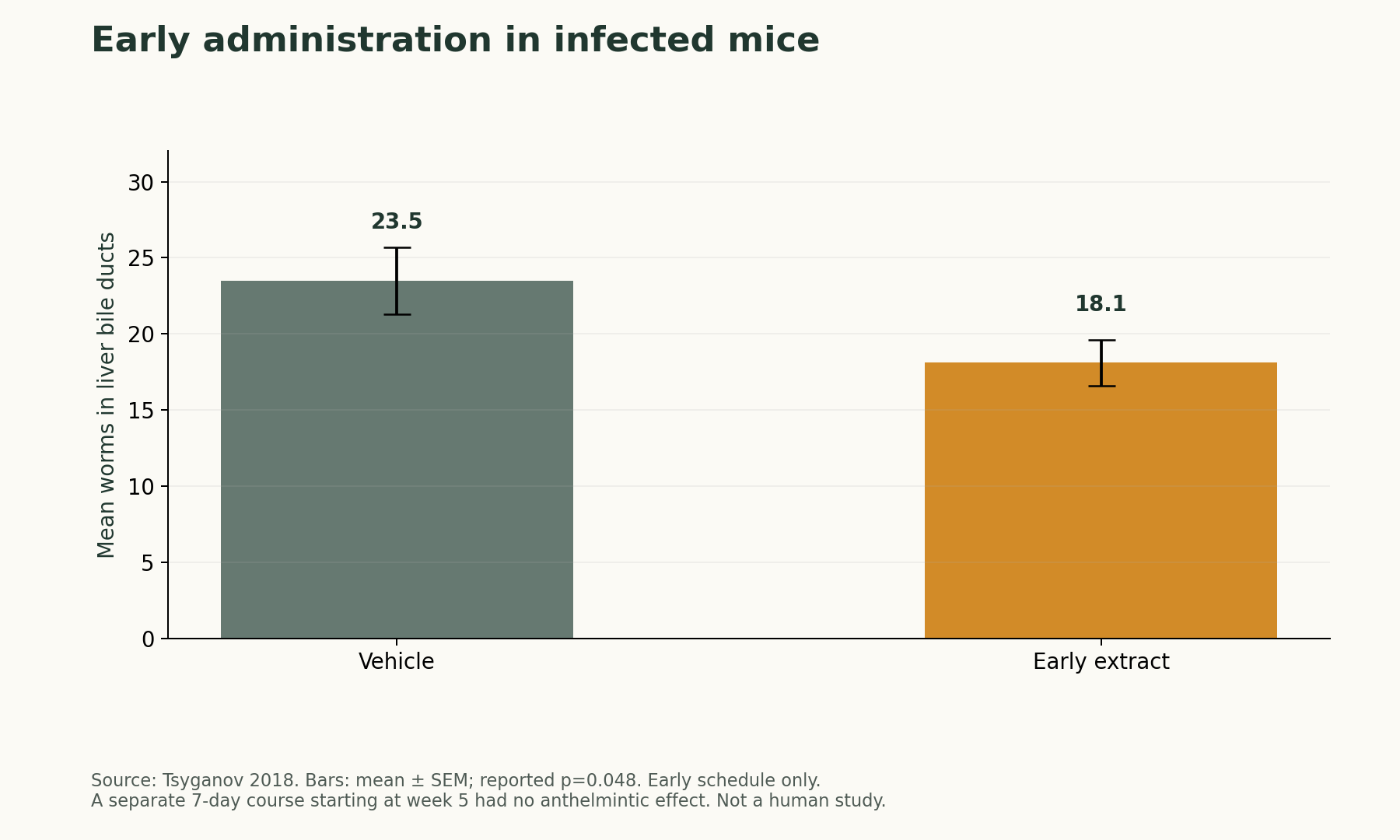
Source: Tsyganov 2018. Bars: mean ± SEM; reported p=0.048. Early schedule only. A separate 7-day course starting at week 5 had no anthelmintic effect. Not a human study.
What remains unproven
The targeted search through 26 October 2026 did not identify reliable human trials demonstrating parasite eradication by chanterelles. That is a statement about the located evidence, not proof that no study could exist. It does not support a clinical dosage or a course of dried powder.
Names such as quinomannose, chinomannose or “chitinmannose” circulate in popular claims. The primary studies examined extracts; they do not validate the claim that one named substance kills every human parasite and every egg. Claims that cooking above one precise temperature destroys all antiparasitic value also require compound-specific evidence. A mushroom's apparent resistance to insects is not a human clinical trial.
Reading a product or recipe
Check the species, material, solvent, extract yield and actual composition. Ask whether a claimed study used the same preparation and route of administration. “Natural”, “dual extract” and “10:1” are not clinical outcomes. For food, start with a reliably identified edible species and normal culinary practice; use organism-specific medical care for a diagnosed infection.
Sources & access limits
Follow each link to the original record. Results remain specific to the preparation, study population and outcomes described.
- [M17] Polish Sanitary Inspectorate. Kurka nie taka oczywistaPublic-health, institutional or source documentation.
- [M03] Abedo et al. (2015). Anti Trypanosomal Activity of Cantharellus cibarius. DOI 10.9790/3008-10514145Primary paper reviewed.
- [M01] Tsyganov et al. (2018). Effects of Cantharellus cibarius on O. felineus and C57BL/6 mice. DOI 10.18699/VJ18.426Abstract reviewed; full-method limits apply.
- [M02] Nwofor et al. (2018 collection; online 2019). Inhibitory activities against eggs and miracidia of Fasciola spp. DOI 10.1515/biol-2018-0060Abstract reviewed; full-method limits apply.
Najważniejsze informacje po polsku
Kurki / pieprznik jadalny: identyfikacja, trzy badania przeciwpasożytnicze i brak potwierdzonego leczenia ludzi.
To pomocnicze streszczenie. Pełny tekst, ograniczenia badań i źródła znajdują się powyżej.