One species, several names
Birch polypore is Fomitopsis betulina, also widely published as Piptoporus betulinus. In Polish, białoporek brzozowy and pniarek brzozowy refer to this research subject. Search both scientific names. It is distinct from chaga, Inonotus obliquus, and from Fomes fomentarius. Sharing a tree host does not make these interchangeable materials. M04 M13
The fungus produces bracket-like fruiting bodies on birch and causes brown rot. Scientific work uses wild fruiting bodies, cultivated fruiting bodies, mycelium and culture liquid. These differ chemically, so a photograph of a bracket on a supplement does not establish what the product contains. M04 M19
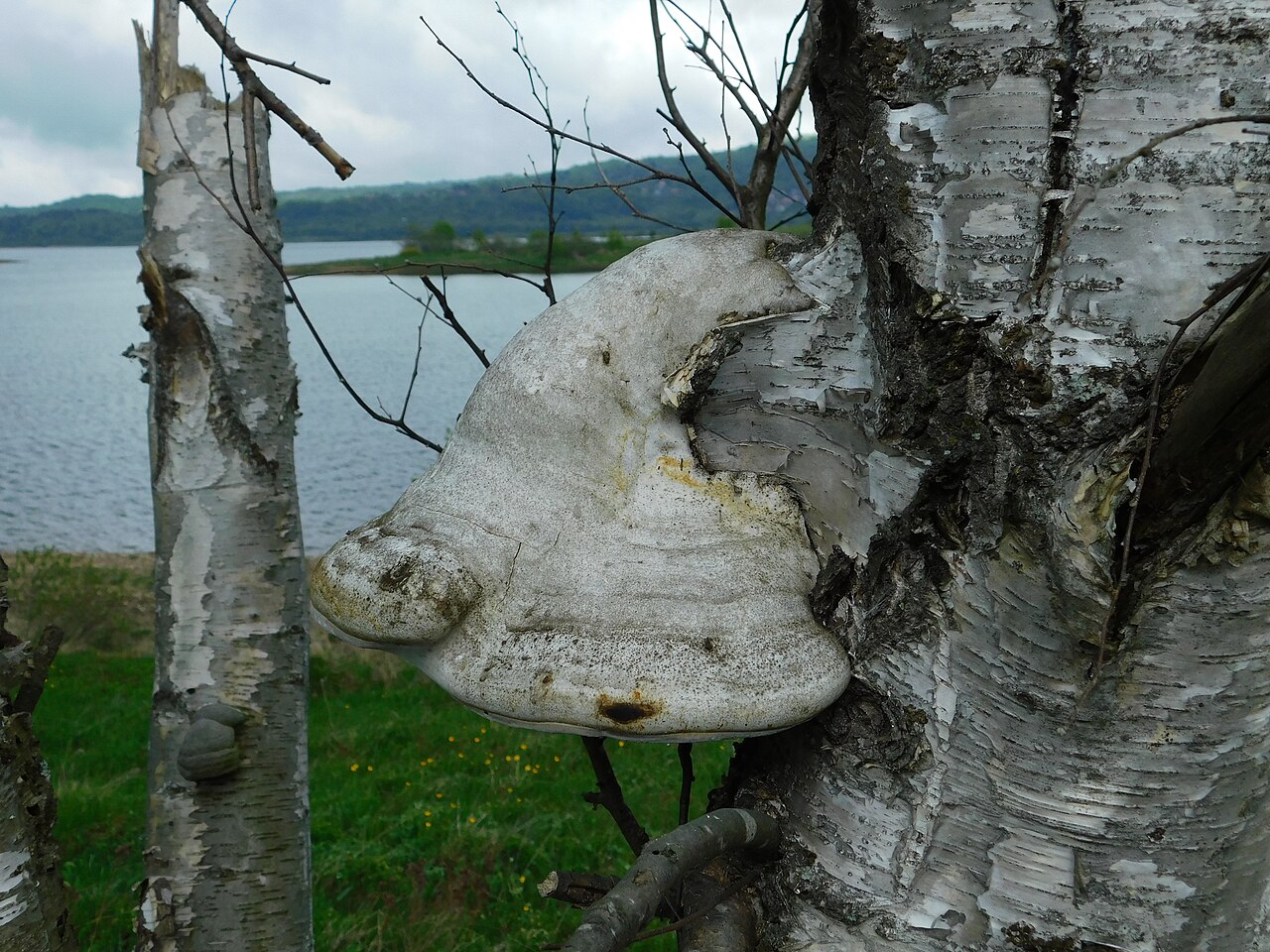
Fomitopsis betulina. Photograph: Nikola Veljković, CC BY-SA 4.0.
Nikola Veljković · CC BY-SA 4.0 · Original · Open full size ↗
Chemistry is a starting point
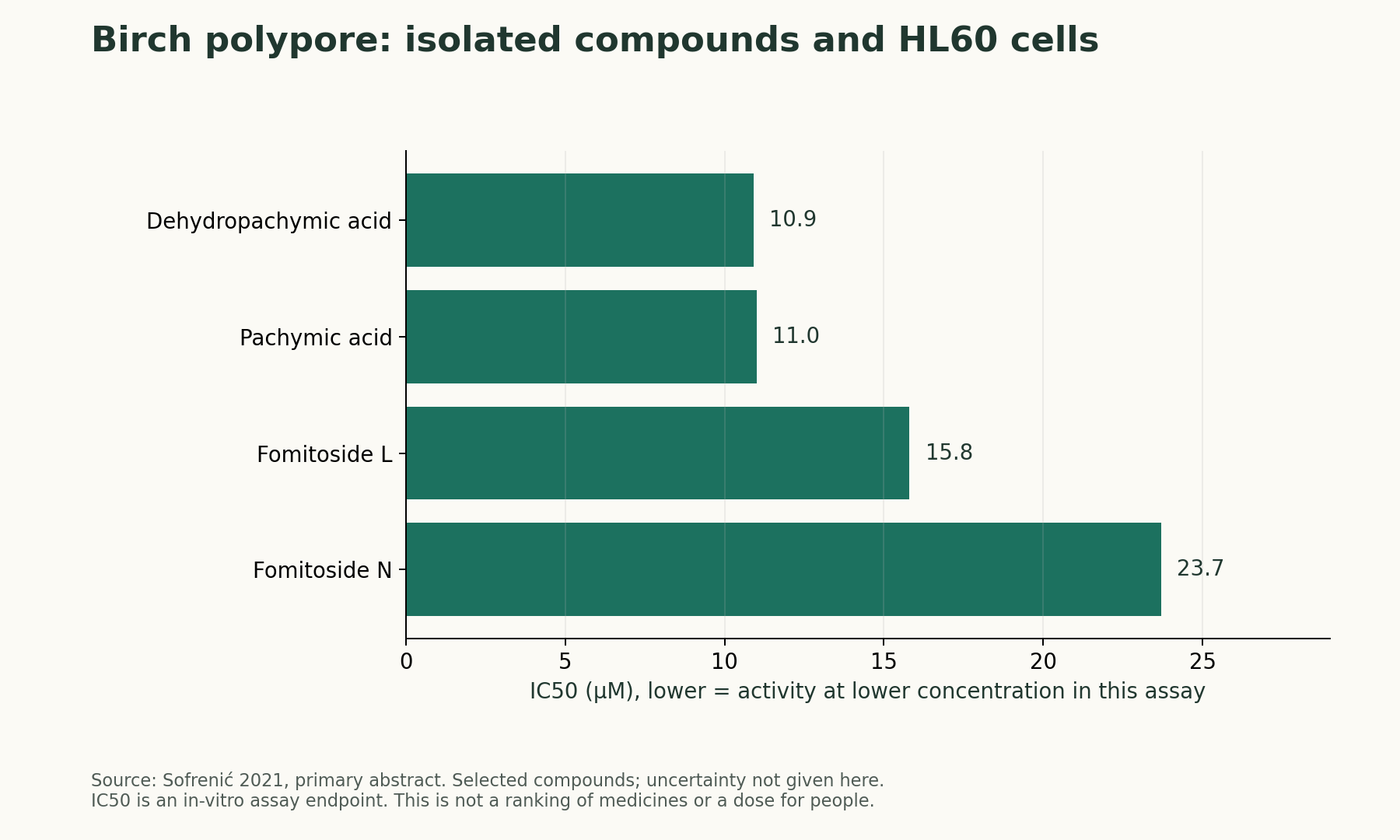
Research has measured phenolic compounds, sterols and triterpenes, including betulin-related compounds, in different materials. A 2018 analysis found different profiles in fruiting bodies and cultured mycelium. Identifying a molecule is not the same as showing that a drink delivers an effective amount to a human target. M04
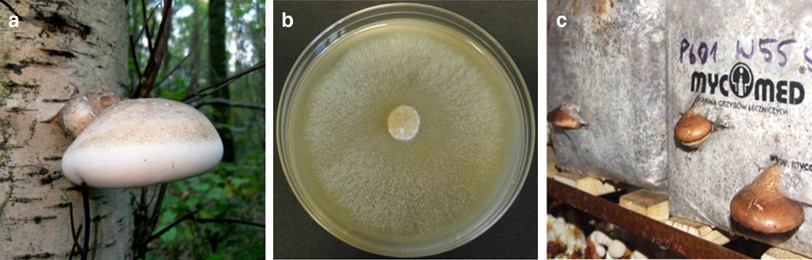
Wild and cultivated F. betulina. M. Siwulski, in Pleszczyńska et al. 2017, Fig. 1; CC BY 4.0.
M. Siwulski; Pleszczyńska et al. 2017, Figure 1 · CC BY 4.0 · Original · Open full size ↗
An evidence map
| Research area | Evidence located | Appropriate conclusion |
|---|---|---|
| Cancer-related biology | Several cell-line experiments and isolated-compound studies | A source of research candidates; no established human cancer treatment M05 M06 M07 |
| Inflammation | Isolated compounds in mouse ear oedema; cell inflammatory-marker assays | Preclinical activity with preparation-specific limits M10 M04 |
| Bacteria | Culture extracts tested against bacteria; piptamine isolated | Antibacterial discovery research, not a replacement for prescribed antibiotics M08 M11 |
| Antioxidant assays | DPPH, FRAP and related chemical measurements | Activity in an assay; not a measured reduction in human disease M09 M12 |
| ACE inhibition | Laboratory enzyme assays | Does not establish blood-pressure treatment M12 |
| Antiviral / interferon research | Older primary records; full methods not available here | Historical experimental lead, insufficient for present clinical claims M18 |
| Parasites | Traditional claims and indirect biological discussions | No reliable human eradication trial located; mosquito-larva results are not intestinal-worm trials |
| Neuroprotection / immune effects | Older leads identified in a review, including thesis material | Not independently verified to a clinical standard in this review M13 |
Variability matters
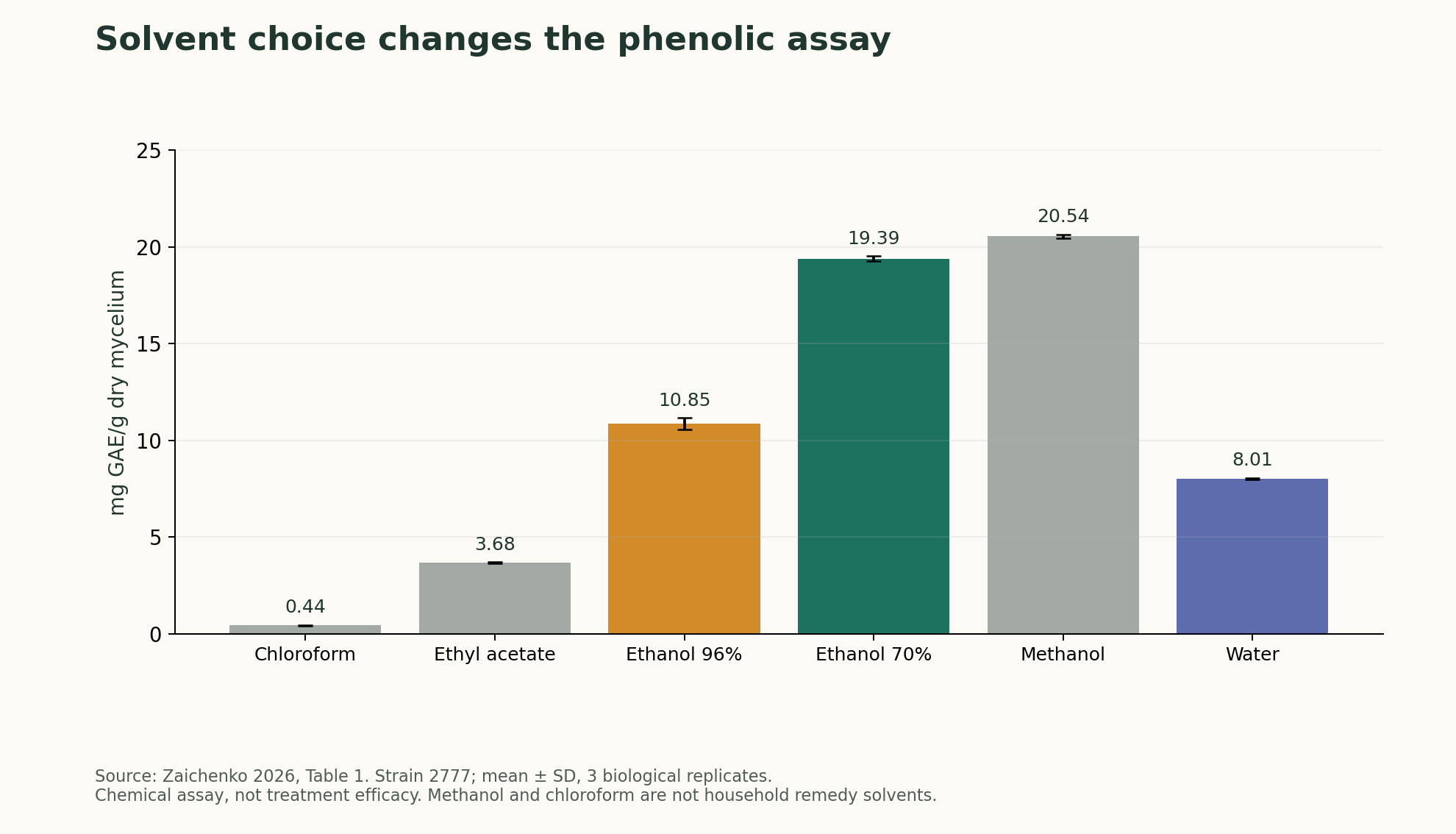
A study of 22 strains found variable antibacterial and antioxidant responses. A later experiment used a specific authenticated strain and compared cultivation and extraction conditions. This is why “birch polypore extract” is too broad a description for precise efficacy claims. M08 M09
There is no clinically established general dose in the evidence located here. Long-term safety, pregnancy safety and interactions with cancer treatment cannot be inferred from a normal-cell assay. A patient considering a concentrated product alongside medicines should discuss its actual label and ingredients with the treating team.
Sources & access limits
Follow each link to the original record. Results remain specific to the preparation, study population and outcomes described.
- [M04] Sułkowska-Ziaja et al. (2018). Chemical composition and biological activity of F. betulina. DOI 10.1007/s11033-018-4420-4Primary paper reviewed.
- [M13] Pleszczyńska et al. (2017). F. betulina review. DOI 10.1007/s11274-017-2247-0Review used for context and to locate primary research.
- [M19] Pleszczyńska et al. (2016). Cultivation and utility of P. betulinus fruiting bodiesPublic-health, institutional or source documentation.
- [M05] Bożek et al. (2022). Ethanolic extract, melanoma cells and membrane models. DOI 10.3390/ijms232213907Primary paper reviewed.
- [M06] Nowotarska et al. (2024). Aqueous extract of F. betulina and cancer cell models. DOI 10.3390/nu16193316Primary paper reviewed.
- [M07] Sofrenić et al. (2021). Cytotoxic triterpenoids and sugar esters. DOI 10.1016/j.phytochem.2020.112580Abstract reviewed; full-method limits apply.
- [M10] Kamo et al. (2003). Anti-inflammatory lanostane-type triterpene acids. DOI 10.1021/np0300479Abstract reviewed; full-method limits apply.
- [M08] Zaichenko et al. (2025). Antibacterial and antioxidant activities of F. betulina extracts. DOI 10.2174/0118743315375853250213061411Primary paper reviewed.
- [M11] Schlegel et al. (2000). Piptamine, a new antibiotic. DOI 10.7164/antibiotics.53.973Bibliographic record only; full methods were not available.
- [M09] Zaichenko et al. (2026). Free radical inhibition and phenolic content under different cultivation conditions. DOI 10.3389/ffunb.2026.1735209Primary paper reviewed.
- [M12] Vunduk et al. (2015). Did the Iceman Know Better? DOI 10.1615/IntJMedMushrooms.v17.i12.10Abstract reviewed; full-method limits apply.
- [M18] Kandefer-Szerszeń and Kawecki (1974). Ether extracts as interference inducersBibliographic record only; full methods were not available.
Najważniejsze informacje po polsku
Białoporek brzozowy / pniarek brzozowy: Fomitopsis betulina, dawniej Piptoporus betulinus; pełny zakres biologiczny.
To pomocnicze streszczenie. Pełny tekst, ograniczenia badań i źródła znajdują się powyżej.