Keep the place and period visible
Historical medical writing can reveal how people understood illness, prevention and the natural world. It cannot be read as a current treatment manual. A twentieth-century Polish book is evidence of its own period; its language and publication place do not automatically prove an ancient Slavic custom.
The supplied 1924 Hornowski volume contains instructive contrasts with present care. Its advice includes turpentine for attached ticks and kerosene for lice. These are historical examples, not procedures to reproduce. Modern tick advice uses prompt mechanical removal, and contemporary treatment exists for trichinellosis. P18 P19
Echinococcosis was presented as a surgical matter in the historical text. Current guidance recognises several management options depending on disease features. This makes an effective “then and now” teaching example without reproducing an obsolete recipe. P22
Ötzi and birch polypore
The South Tyrol Museum records two birch-polypore pieces threaded onto hide strips among Ötzi's equipment. Medicinal use is an interpretation of the objects. Their presence does not document a dose, a diagnosis-specific treatment course or successful parasite eradication. Ötzi belongs to an Alpine prehistoric context and should not be relabelled as a Slavic healer. M16
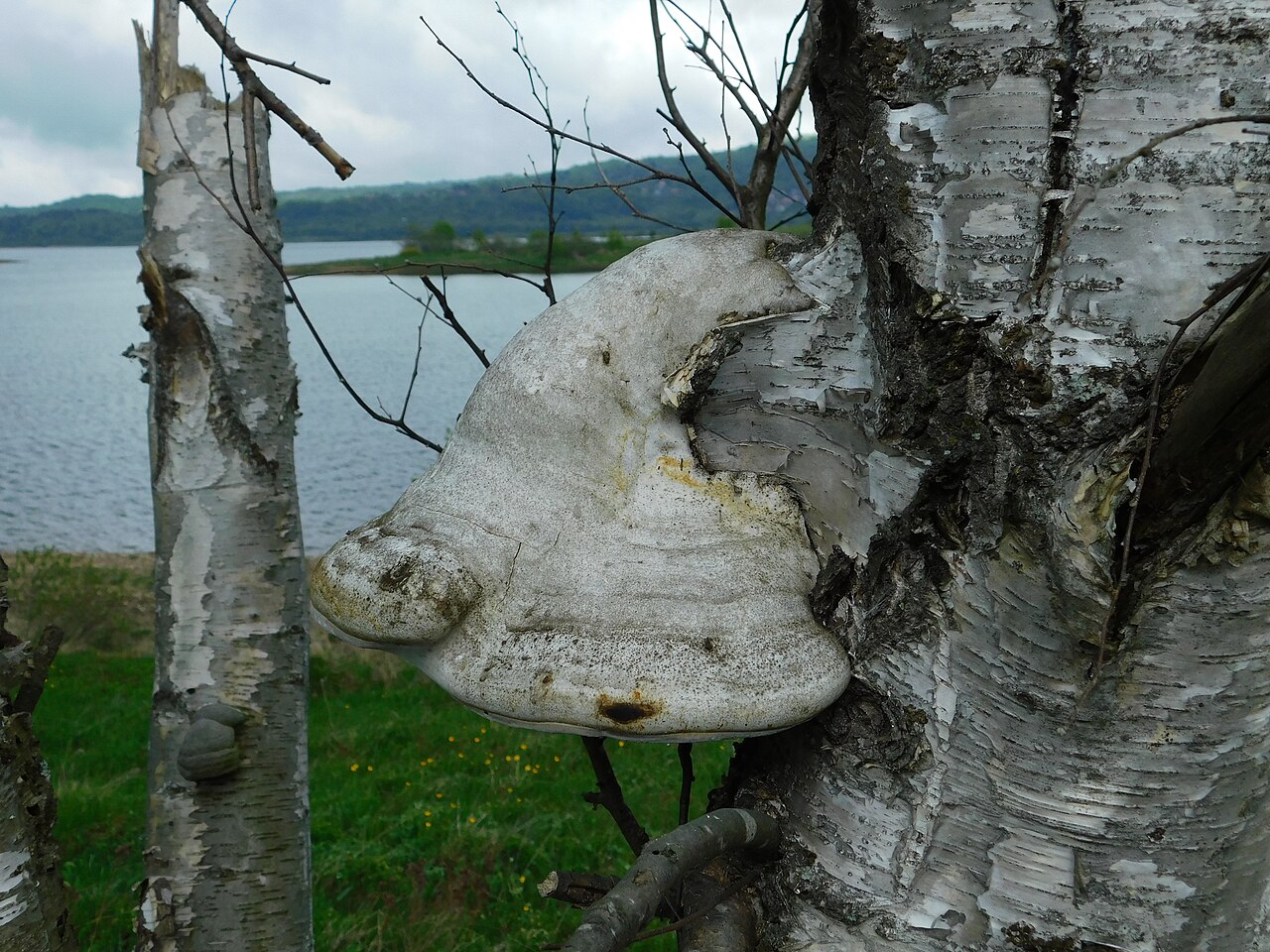
Fomitopsis betulina. Photograph: Nikola Veljković, CC BY-SA 4.0.
Nikola Veljković · CC BY-SA 4.0 · Original · Open full size ↗
How this belongs in Avonoria
Use this pillar for source-based cultural context and the history of knowledge. Link readers to Mushrooms for species and experimental research, and to Natural Medicine for current prevention and care. Ritual meaning, historical use and clinical effectiveness answer different questions.
The supplied Amanita book and Kodex Hermetica remain private source material. This package does not reproduce their pages or illustrations, and does not turn them into products for resale. The prior audit of Kodex Hermetica was limited; it is not represented here as a fully reviewed scientific source.
Sources & access limits
Follow each link to the original record. Results remain specific to the preparation, study population and outcomes described.
- [P18] HPSC, Lyme disease factsheet - prawidłowe usuwanie kleszczaPublic-health, institutional or source documentation.
- [P19] CDC, Clinical Care of TrichinellosisPublic-health, institutional or source documentation.
- [P22] WHO, EchinococcosisPublic-health, institutional or source documentation.
- [M16] South Tyrol Museum of Archaeology. Ötzi’s equipmentPublic-health, institutional or source documentation.
Najważniejsze informacje po polsku
Hornowski, historia europejskiej mykoterapii i Ötzi: źródła kulturowe bez przenoszenia dawnych zaleceń do leczenia.
To pomocnicze streszczenie. Pełny tekst, ograniczenia badań i źródła znajdują się powyżej.