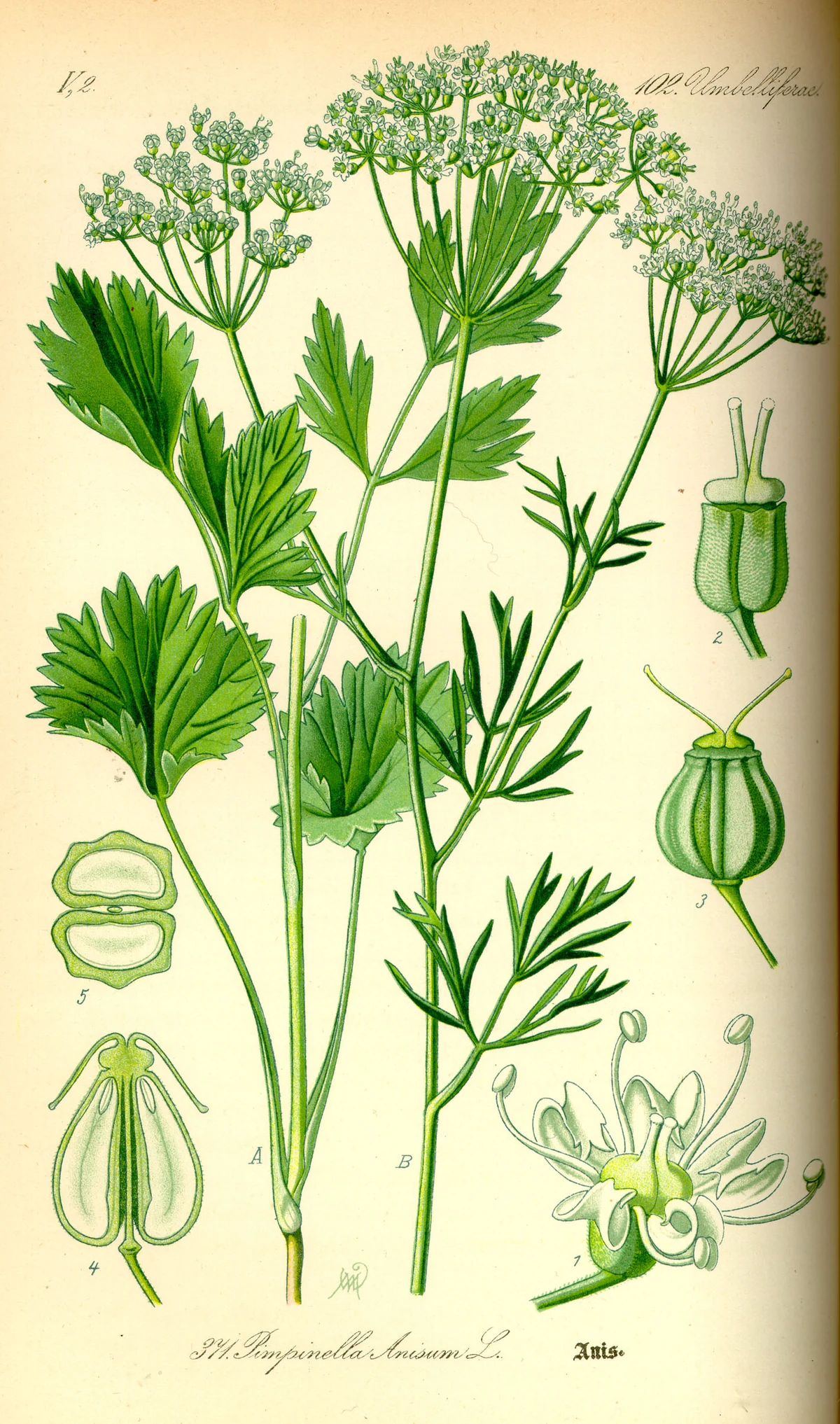
Anise (Pimpinella anisum) in Otto Wilhelm Thomé's botanical plate of 1885. Resized and converted to WebP; no cropping or content edits.
Prof. Dr. Otto Wilhelm Thomé · Public domain · Source · EXIF orientation respected; resized without cropping or upsampling; converted to WebP at quality 88. No other content edits.
Aniseed is not star anise
Anise is an annual Apiaceae crop, Pimpinella anisum, cultivated in European gardens and fields, especially where summers permit reliable ripening. The small aromatic fruits are called aniseed. They are not the star-shaped fruits of Illicium verum.
Fernie incorrectly treats anise as a variety of burnet saxifrage. Pimpinella saxifraga is a different species. The source is used here for preparation history and nineteenth-century custom, while the modern medicinal identity comes from the specific anise-fruit definition.
The comforter of the bowels
Fernie describes aniseed as a household aromatic associated with digestive comfort. His account includes bread and cakes, German supplies, and spiced foods eaten at the end of a meal. He also repeats a broad story linking Roman spiced cakes to later wedding cakes. That is his own interpretation of the origin of bridal baking.
The fruit's sweet aroma helped connect food and medicine. A small quantity in dough, an infusion after food and a spirit-flavoured cordial could all be understood as comforting. They differed in alcohol content, concentration and purpose, and flavour mattered as much as medicine in the household pantry.
Sources: [F]
The cough tradition
Anise also had a reputation for easing phlegmy coughs. Fernie describes fruit tea, essence, liqueur and incorporation into compound pharmaceutical preparations, including an elixir that also contained opium and recommendations for children.
In those compounds the other ingredients shaped the medicine as much as the aniseed did. The traditional preparations described today concern specified fruit preparations for mild digestive symptoms and for cough associated with a cold.
From a ripe umbel to a covered cup
Editorial collection guidance: Grow anise from a reliably named seed source or buy traceable dried fruits. For a garden harvest, wait until the fruits mature on the umbels, collect before excessive shedding and dry them with airflow. Ripening may be less reliable in a cool wet summer, so a calendar month is not a sufficient test. Remove debris and keep the dry fruits whole in a labelled container.
An infusion was made by lightly crushing the measured fruits just before preparation, pouring on freshly boiled water, covering for the steeping time and straining. In baking, the fruits seasoned bread and biscuits.
A tincture extracts into alcohol, while an essence may contain distilled oil dissolved in spirit. Fernie discusses both types of concentrated aromatic preparation. Each was a concentrated aromatic preparation with its own measure.
Present-day editorial handling guidance, not a recipe or a claim attributed to the historical author. Historical source supports identity, part and use only.
Why an English garden did not guarantee a ripe crop
Grieve's account distinguishes successful cultivation from successful fruit production. She describes anise in English gardens but notes that ripening depends on a favourable warm summer. Her commercial geography includes several warmer European growing regions as well as German supplies. A plant can therefore appear healthy in a garden while failing to produce the mature aromatic material wanted by the household or dispensary.
Her handling sequence is concrete: flowering in summer, autumn cutting when a warm season allows ripening, threshing and drying the fruits in trays with moving air. Her recommendations belong to the British conditions she describes, not to a fixed European harvest date. For a contemporary garden record, note the actual ripeness and weather rather than assigning every crop the same calendar day. This last record-keeping suggestion is editorial; the seasonal limitation and drying sequence come from Grieve.
Sources: [G]
The pantry, the sweet cake and the borrowed ancient story
Fernie's opening image is of a housewife keeping a closely closed supply of aniseed in the store cupboard. That detail matters because the material is already harvested, traded and stored. It is not necessarily a wild herb picked beside the house. His statement about German bread shows how closely he associated the flavour with continental baking.
His Roman cake story combines several aromatics, including cumin, with meal. He then proposes a connection to later wedding cake. This is an explanation offered by a nineteenth-century writer, and it shows how herbal authors sought ancient precedents for familiar foods, while anise-flavoured cakes were well known in his own period.
Even biblical plant names were unsettled within the chapter: Fernie prints a question about whether a word rendered anise should instead mean dill. A common name in a sacred text, a Latin botanical species and a jar in a Victorian pantry are linked through interpretation.
Sources: [F]
What an essence added to the medicine bottle
Fernie distinguishes the fruit tea from an essence made with oil and spirit, and from anise-flavoured liqueur. His discussion of paregoric is especially instructive: the compound included anise oil but also opium. The aromatic gave a familiar smell to a powerful mixed medicine.
He also passes along a personal testimonial for anisette in chronic chest complaints. The testimonial records the speaker's experience and the social acceptability of cordial remedies. The chapter also extends anise to children's complaints and epilepsy.
The European Medicines Agency's monograph on anise fruit, written for traditional herbal medicinal products, records the traditional adult infusion as 1–3.5 g of whole or freshly crushed aniseed in 150 ml of boiling water, covered for five to fifteen minutes and strained, with its own conditions on the duration of use.
In baking, aniseed was measured into biscuits and bread as a spice. The cook seasoned a food, while the medicinal preparation had its own identity and quantity.
The pantry spice
Anise's history begins in the store cupboard. Fernie's housewife kept her aniseed closely closed; he found it in German bread, Roman spiced cakes, comforting teas after meals, essences, anisette and compound cough medicines, and Grieve followed the crop through English summers that did not always ripen it. Today the European Medicines Agency describes anise fruit preparations within its traditional-use framework for mild digestive complaints and cough with a cold, with its own conditions of age and use.
The aromatic fruit remains a documented link between the baker's table and the household medicine chest.
Sources
- [F] William Thomas Fernie. Herbal Simples Approved for Modern Uses of Cure, second edition (1897). Aniseed, printed pp. 24–26
Recorded culinary and medicinal traditions
A period source with errors and obsolete claims, not a modern field guide. Harvest and kitchen hygiene notes are editorial.
- [E] European Medicines Agency, HMPC. Anisi fructus: public summary (2016). Preparation and safety sections; accessed 29 October 2026
Specific traditional-use preparation boundaries
Does not verify every historical indication.
- [G] Maud Grieve. A Modern Herbal: Anise (1931). Cultivation, history and part used
British ripening limitations, tray drying and historical household preparations
Historical compilation; ancient-origin claims are not independently established here.
- [M] European Medicines Agency, HMPC. Community herbal monograph on Pimpinella anisum L., fructus (2013). Published 2014, pp. 4–5
Fruit infusion quantity, duration and precautions
Specific traditional-use preparation, not infant dosing.
- [T] European Medicines Agency, HMPC. Draft template for a European Union herbal monograph: herbal teas (2016). Infusion procedure, pp. 4–7
General covered infusion method
Not a separate anise indication.