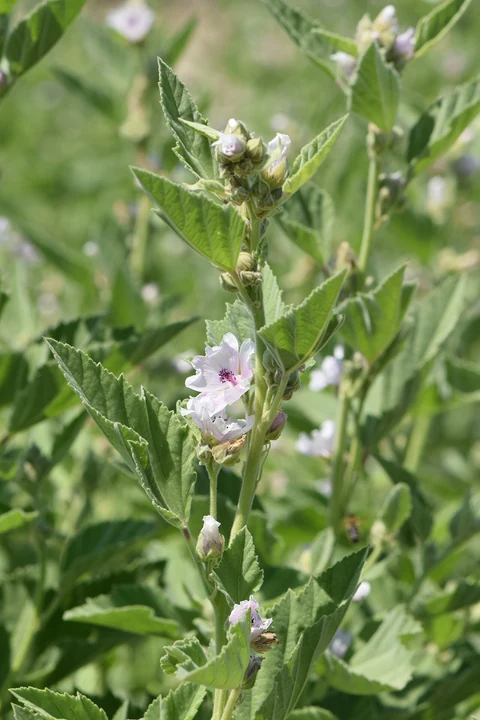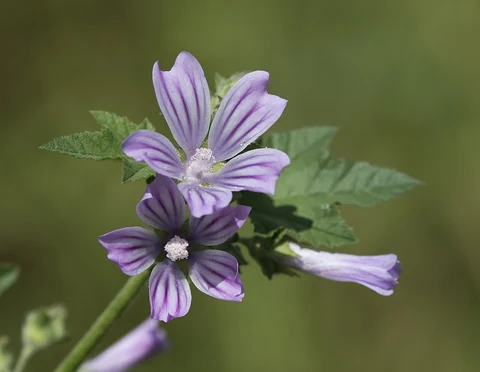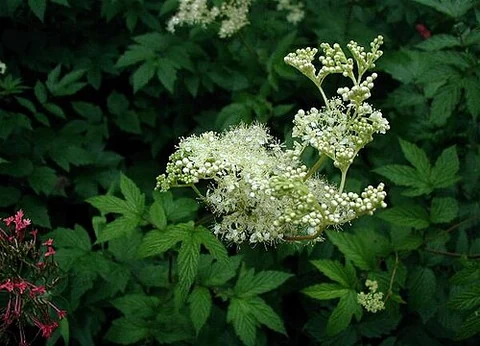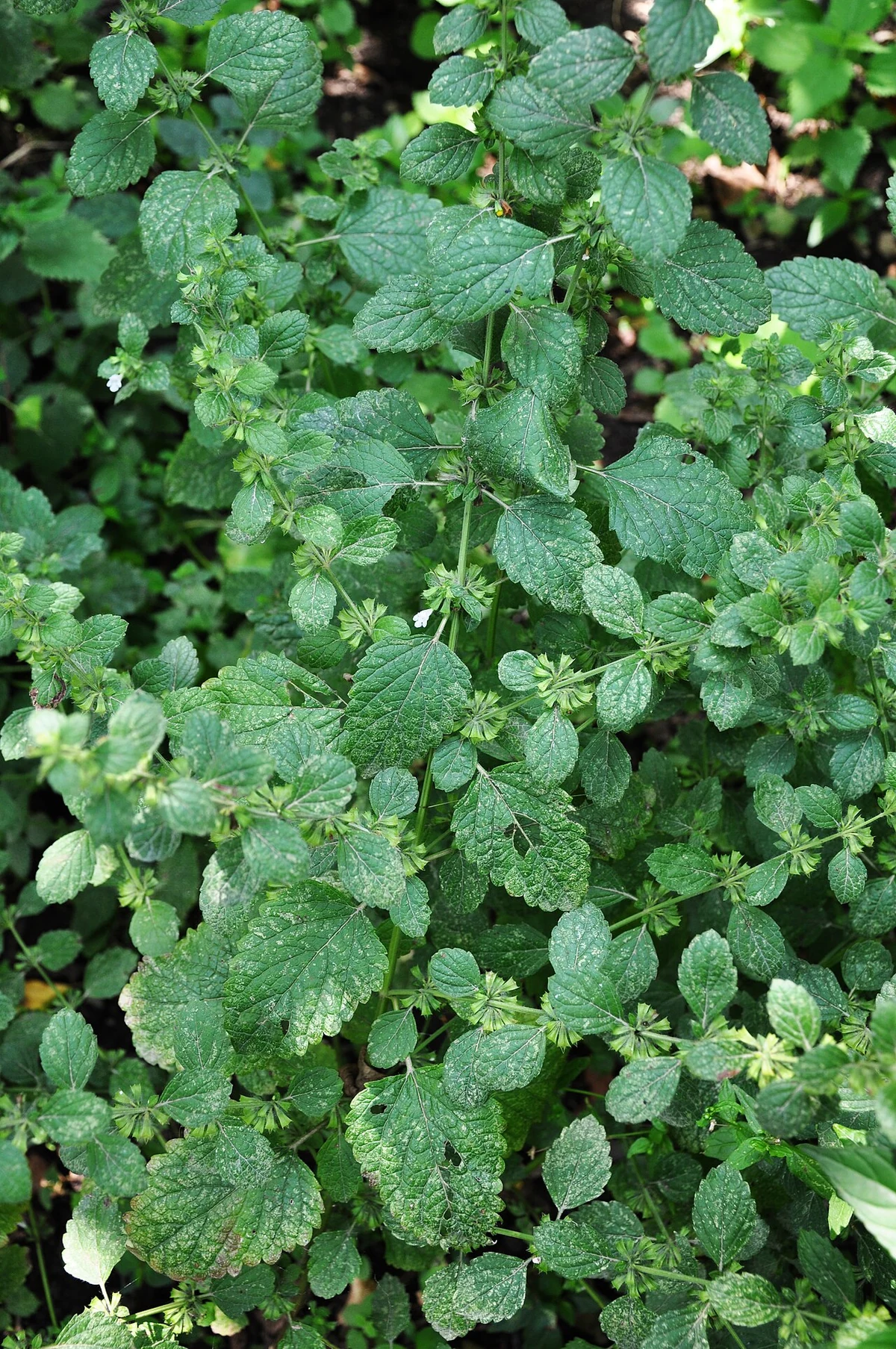
Green, textured leaves of lemon balm (Melissa officinalis). Resized and converted to WebP; no cropping or content edits.
Lazaregagnidze · CC BY-SA 4.0 · Source · EXIF orientation respected; resized without cropping or upsampling; converted to WebP at quality 88. No other content edits.
A scented garden plant with several names
Lemon balm is a perennial of the mint family, with opposite, softly textured, toothed leaves and small pale flowers. Crushed, the leaf smells of lemon. It has been cultivated in Europe for a long time and readily escapes from gardens, so a wild-growing patch may well have a garden origin. Its identifying name is Melissa officinalis; plants sold under similar names, such as bee balm or lemon verbena, belong to other genera.
The material used was chiefly the leaf and, in older household practice, the tender leafy tops. Fernie links balm directly with the wild bastard balm, but Melittis melissophyllum is a separate plant. The old books record practice in great detail, and their plant names are best read alongside a modern botanical name.
A remedy for heart and household
Culpeper places balm in the garden and in the domestic sickroom. He recommends keeping the dried herb and a syrup made from its juice, and he describes an electuary in which the plant was carried in honey. He connects balm with low spirits, a weak stomach and melancholy, and with the heart, which in his medicine was a centre of both bodily warmth and feeling.
Fernie records a later world of balm tea and restorative cordials. His Carmelite water combines balm spirit with lemon peel, nutmeg and angelica root, a compound aromatic spirit rather than a simple herb tea. He also passes on stories of balm renewing youth and of remarkable cures, which carried the plant's fame far beyond the herb garden.
A household dispensary and its social obligations
Culpeper's interest goes beyond balm's effect on melancholy. He asks that a gentlewoman's house keep the dried herb and its syrup ready for poor, sick neighbours. The passage imagines a household with a garden, equipment, a store of sugar and a duty to give remedies away. Read only as a list of plant properties, it would lose this setting: the medicine depended on someone who harvested, prepared, kept and gave it.
His honey electuary also shows how flexible such recipes were. He allows other suitable simples to be added alongside balm instead of fixing one mixture. A simple, in this vocabulary, was a single medicinal ingredient; a compound combined several. That is why balm appears in so many different preparations, from a plain syrup to a mixed electuary.
The book calls on learned authorities while speaking to household readers. Its heart, spirits and black choler belong to an older account of emotion and the body, in which low spirits and a weak stomach could be treated together. In that world, a garden herb kept for the sick was an act of charity as well as of medicine.
Sources: [C]
Village balm, the cooking fire and the blessing bundle
Udziela's collection records balm drinks taken for internal pain at Dobczyce and for cough at Świątniki Górne. At Polanka Haller his notes name stomach cramps, abdominal discomfort, dizziness and general strengthening. Udziela's own word for the preparation is boiling, and his notes record the purposes rather than measured quantities. The range of complaints shows how widely one garden plant was relied on within a single district.
At Gaj there was a quite different use: crushed balm and tansy were thrown onto the fire so that milk heating nearby would not curdle. It belongs to the household's care for its food and to the beliefs that gathered around the hearth.
Balm was also taken for blessing on 15 August in Dobczyce, Gaj, Siepraw and Świątniki Górne. The named villages make the record more exact than a general statement about Slavic healers. The notes were collected in Christian rural communities in the late nineteenth century, and the feast day is part of the tradition as it was lived.
Sources: [U]
Cordial, cake and rejuvenation story
Fernie places balm between the pharmacy and the kitchen. His Carmelite water contains balm spirit, lemon peel, nutmeg and angelica root, while his account of French household cakes uses bruised young shoots with eggs, sugar and rosewater. He associates the cakes with women after childbirth. Aroma, sweetness and the language of restoration joined the medicine cupboard to the kitchen table.
The rejuvenation passages form another layer of the plant's story. Fernie passes on claims about balm and youth associated with Paracelsus, a London dispensatory and Evelyn; those earlier works were not separately checked for this article. He also tells a Staffordshire story in which a mysterious traveller rewards hospitality with knowledge of balm, followed by a remarkable recovery from consumption. Kindness, a secret remedy and a cure make the plant part of a moral tale.
Fernie's chapter sets these records side by side: a documented compound, a regional food and a healing legend. Each answers a different question about the past — how a preparation was made, what people ate, and what a community thought worth retelling.
Sources: [F]
Following the leaf rather than a fixed date
Practical note on gathering (editorial guidance, not a period recipe): sound leaves are picked during active growth, preferably before the plant is taken over by flowering stems. Depending on local conditions, good harvests come from late spring into summer, sometimes with a second crop after cutting. The aim is aromatic leaf rather than woody stem, and a cultivated patch recovers well when it is cut with restraint, leaving enough growth to recover and flowers for insects.
Balm loses its fresh character when it is bruised, packed wet or dried slowly in a thick heap. It dries best spread out promptly in a shaded, ventilated place and, once fully dry, keeps in a labelled, tightly closed container away from heat. A clear lemon scent marks well-kept leaf; darkened, faint or musty material has lost its quality.
Sources: [F]
Tea, syrup, electuary and tincture
The simplest preparation has lasted the longest. The European Medicines Agency's monograph on lemon balm leaf, written for traditional herbal medicinal products, records the traditional adult infusion as 1.5–4.5 g of dried, cut leaf in 150 ml of boiling water. The agency's tea-preparation template describes the method: the leaf is covered with freshly boiled water, left covered for five to fifteen minutes and strained, and the tea is made fresh each time. The monograph places this infusion within traditional use for mild stress, sleep and digestive complaints, the same territory of low spirits and a weak stomach that Culpeper described.
Culpeper's sweet preparations followed a different sequence. A syrup began with juice pressed from the plant, combined with sugar; an electuary carried the herb in honey, with other suitable ingredients where the maker chose. His text records these forms as household manufacture, without the exact sugar proportions of a modern preserving recipe.
The EMA also distinguishes a 1:1 liquid extract from a 1:5 tincture made with a specified mixture of water and ethanol. Strength and solvent are part of what a preparation is, and neither is the same as Carmelite water, a compounded aromatic spirit. An old label reading only balm drops could mean any of these, which is why the historical records name the method as carefully as the plant.
From old herbals to the present-day cupboard
Lemon balm's history runs without a break from Culpeper's sickroom to the present day. The uses that have lasted longest — a calming drink for troubled spirits and sleep, and comfort for the stomach — are close to those the old herbals named. They are also the uses for which the EMA describes leaf preparations within its traditional-use framework, together with its own conditions of age and duration of use. The more extraordinary stories of renewed youth form a separate, legendary strand of the plant's history.
Together, the sources show balm as a herb of the garden, the kitchen and the household medicine chest, kept for the family and given to neighbours.
Sources: [E]
Sources
- [C] Nicholas Culpeper. The Complete Herbal (1850). Balm, digitised 1850 edition
Historical uses and preparation categories
Expanded historical edition; therapeutic claims are not modern recommendations.
- [F] William Thomas Fernie. Herbal Simples Approved for Modern Uses of Cure, second edition (1897). Balm, printed pp. 39–42
Historical preparation and cultural context
Contains obsolete claims and occasional botanical errors. Harvest and hygiene guidance is editorial, not a verbatim period recipe.
- [E] European Medicines Agency, HMPC. melissae-folium: summary and monograph (2014). Overview, risks and linked monograph; accessed 29 October 2026
Current safety and boundaries of traditional-use preparations
Does not establish all historical claims.
- [U] Seweryn Udziela. Rośliny w wierzeniach ludu krakowskiego, Lud 30 (1931). Entry 79, Melissa officinalis; field collection 1894–1899
Named village uses, milk-related fire custom and herbs blessed on 15 August
Documents reported folk practice; the mixture with tansy is not a recommended fumigation or food preservative.
- [M] European Medicines Agency, HMPC. Community herbal monograph on Melissa officinalis L., folium (2013). Printed pp. 3–5, preparations, posology and precautions
Leaf tea quantity, differences between tincture and liquid extract, age and duration limitations
Traditional-use monograph; does not establish rejuvenation or the efficacy of historical compound cordials.
- [T] European Medicines Agency, HMPC. Patient Leaflet template concerning advice on the preparation of herbal teas as (traditional) herbal medicinal products by end-users (2016). Printed pp. 4–7, definitions and preparation templates
Usual infusion timing, covering, straining and preparation immediately before use
General method; a product-specific instruction takes precedence and plant quantities come from the individual monograph.