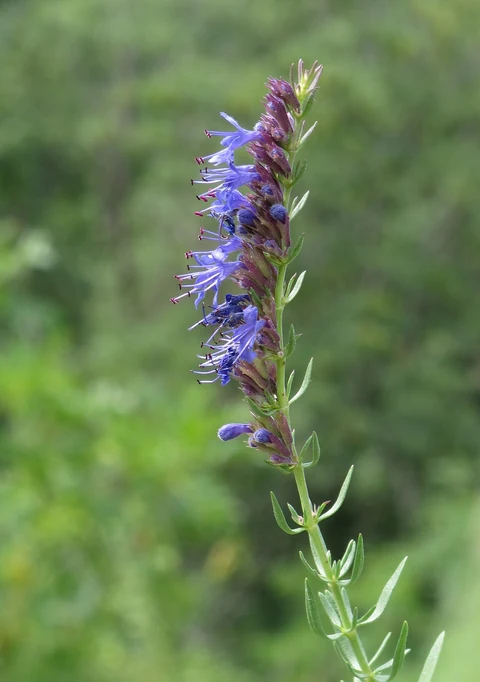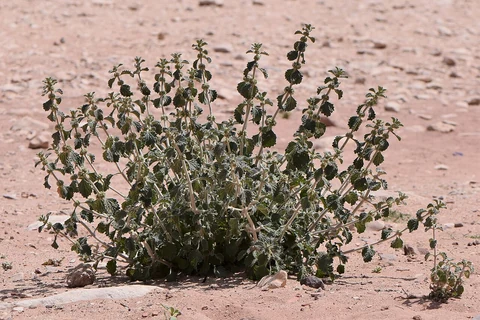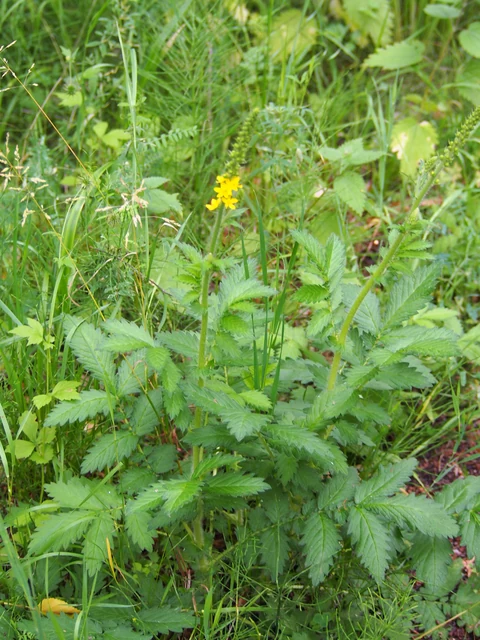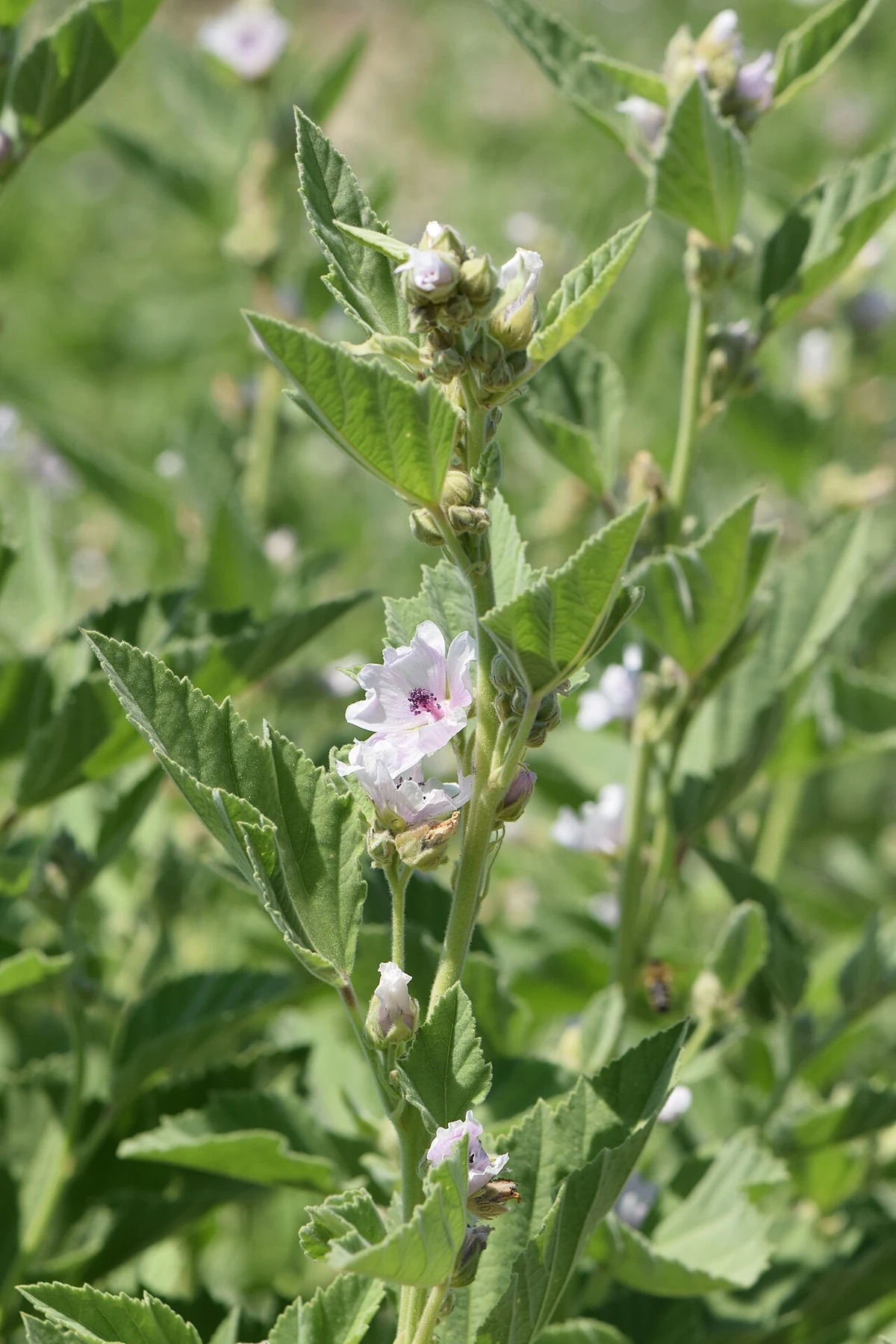
Marshmallow (Althaea officinalis): pale flowers, buds and hairy leaves. Resized and converted to WebP; no cropping or content edits.
Krzysztof Ziarnek, Kenraiz · CC BY-SA 4.0 · Source · EXIF orientation respected; resized without cropping or upsampling; converted to WebP at quality 88. No other content edits.
The marsh plant behind the name
Marshmallow is a tall perennial with softly hairy, grey-green leaves, pale pinkish flowers and a substantial root system. It occurs in parts of Europe in damp habitats, including coastal settings, and is also cultivated. Culpeper identifies salt marshes along the Thames as one English locality. That geographical detail is more useful than treating the plant as a ubiquitous meadow herb.
This article concerns Althaea officinalis, especially its root. Common mallow, Malva sylvestris, is discussed separately. Fernie's older botanical language is not followed where it blurs their identity. Modern confectionery called marshmallow may contain none of the plant; only its name links it with the plant.
A medicine organised around softening
Culpeper describes root material thickening water into a jelly-like liquid. This physical observation helps explain the long reputation for softening and soothing. He puts marshmallow into broths, decoctions, syrups, poultices and ointments, often alongside other mucilaginous seeds or plants. The household preparation was judged partly by its texture.
Fernie similarly connects the root with irritated throats, chest complaints and digestive discomfort. He discusses the French sweet preparation pâte de guimauve while noting that commercial confectionery could already have lost the original plant. It is the history of a useful texture being adapted to food and pharmacy.
Both authors also extend the root to much broader purposes, from urinary stones and dysentery to the protection of the skin from red-hot iron.
Along the Thames and in the village garden
Culpeper supplies an unusually specific English landscape: salt marshes from Woolwich towards the sea, on the Kent and Essex shores. That locality helps make sense of the name marshmallow. His description also attends to the pale, flexible root and the way it makes water viscous. Place and material observation stand beside the more expansive medicinal claims.
Udziela's Kraków-area entry brings the plant into another setting. He records the vernacular name ślaz and, at Gdów, garden mallow. Under his Althaea officinalis heading, root decoctions were drunk for cough in Brzezowa, Dobczyce, Rzeszotary and Skawina; Dobczyce also supplied a throat-rinsing use. These are preparations of the root.
The village observations and the Thames habitat account describe different relationships with the plant. One concerns where an English herbalist knew it growing; the other names uses reported by households in a cultivated rural landscape.
Leaves in a compound application
Udziela records marshmallow leaves applied to painful swellings and wounds, leaf applications around the neck, and baths. At Gaj a lukewarm mixture of mallow and chamomile was used to wash injuries in people and farm animals. Another Rzeszotary preparation combined chopped mallow, mint and biedrzeniec with fat and rye flour, spread on paper or cloth. The materials describe a poultice-like dressing with a carrier and a support, rather than a simple cup of tea.
The Polish complaint called oberwanie does not map neatly onto one modern diagnosis. It is kept here in its own word. Similarly, the collector's heading provides the plant identification for the entry, but the everyday word ślaz can be broader in ordinary speech. The mixture should therefore be described with its historical wording and context.
Culpeper's compound preparations make a useful comparison: he combines mucilaginous materials, including marshmallow root, linseed and fenugreek, in poultices and ointments. Both sources show households seeking texture as well as a named medicinal plant. They are records of a careful preparation craft.
The sweetmeat and the changing meaning of marshmallow
Fernie's French pâte de guimauve occupies the boundary between an apothecary's soothing product and confectionery. He connects its history with the root, then doubts whether the commercial sweet of his own day still contains the plant. That qualification is valuable: the shift from plant preparation to a familiar sweet name was already visible to a nineteenth-century writer.
His account also mentions French spring salads using tender upper growth and regional English names such as meshmellish in Devon and bull flowers in Somerset. These details concern edible or visible plant parts rather than only the dried root of commerce. They broaden the story while remaining separate from the specific root macerate.
The dramatic tale that a marshmallow mixture protected hands during an ordeal with hot iron belongs to another register again. It expresses confidence in a coating or protective substance through an extraordinary story. Read together, the sweetmeat, the regional names and the ordeal reveal the range of meanings attached to softness and protection.
Roots require a different harvest from flowers
Editorial collection guidance: A root harvest involves the whole plant and is best sourced from cultivation rather than a vulnerable wild marsh population. Establish identity while leaves and flowers are present; do not identify a detached pale root by taste. Dormant-season lifting is a practical cultivation approach, with timing adjusted to local climate and plant growth rather than a universal date.
Remove adhering soil carefully, wash and cut the root so it can dry evenly. Dry promptly with good airflow and store only when dry throughout. Keep the pieces labelled with species and part. A moist, starchy root can deteriorate even when its surface looks sound. Leaf, flower and root are different materials, and this account follows the root.
Present-day editorial handling guidance, not a recipe or a claim attributed to the historical author. Historical source supports identity, part and use only.
How a macerate differs from a decoction
A cold macerate soaks cut root in water; a decoction heats it. Fernie explicitly distinguishes cold extraction of mucilage from the additional starch drawn out with hot water, so marshmallow illustrates why stronger boiling was not always the preferred method.
The European Medicines Agency's monograph on marshmallow root, written for traditional herbal medicinal products, records 0.5–3 g of root per 150 ml of water for adults, within traditional use for throat irritation. Its assessment report documents the cold method: cut dried root in cold drinking water, covered for thirty minutes and stirred often, then strained, warmed to drinking temperature and used straight away.
A syrup incorporated an aqueous root preparation into a sweet formulation; Fernie describes extracting into cold water before adding sugar, while Culpeper records flower syrups and conserves. The old poultices, by contrast, laid softened material on the body.
The soothing root
Marshmallow's history follows one physical quality: the way its root turns water silky. Culpeper knew it from the Thames salt marshes and made it into broths, syrups, poultices and ointments; Fernie followed it into the French pâte de guimauve and spring salads; around Kraków it was boiled for cough, used as a throat rinse and laid on swellings and wounds. Today the European Medicines Agency describes marshmallow root preparations within its traditional-use framework for irritation of the mouth and throat, with its own conditions of use.
Softness, soothing and protection were the meanings the root carried from the marsh to the household.
Sources
- [C] Nicholas Culpeper. The Complete Herbal (1850). Mallows and Marshmallows, pp. 111–112
Period herbal description and preparation history
Expanded 1850 edition; historical claims are not treatment advice.
- [F] William Thomas Fernie. Herbal Simples Approved for Modern Uses of Cure, second edition (1897). Mallows, printed pp. 322–325
Historical preparation and folklore
Contains obsolete claims and botanical conflations; practical harvest and hygiene notes are editorial.
- [E] European Medicines Agency, HMPC. European Union herbal monograph on Althaea officinalis L., radix (2016). Definitions and safety sections, accessed 29 October 2026
Current boundary around specified preparations
Not validation of all historical claims.
- [U] Seweryn Udziela. Rośliny w wierzeniach ludu krakowskiego, Lud 30 (1931). Entry 9, Althaea officinalis; field collection 1894–1899
Root drinks, leaf applications and compound preparations in named villages
Collector's botanical heading identifies the entry; short vernacular references do not independently identify every mixture specimen.
- [A] European Medicines Agency, HMPC. Assessment report on Althaea officinalis L., radix (2016). Traditional dosage discussion citing The Expanded Commission E Monographs (Blumenthal et al., 2000)
Cold maceration for 30 minutes with stirring, followed by straining and warming
Historical and regulatory preparation review, used only to clarify technique; not a review of clinical efficacy in this article.