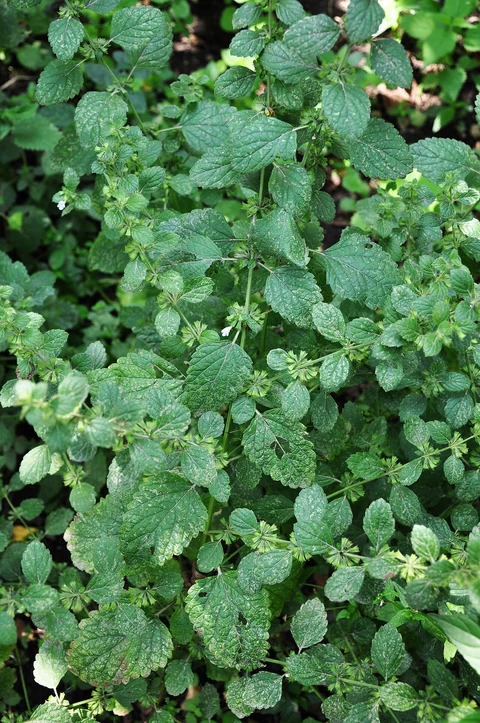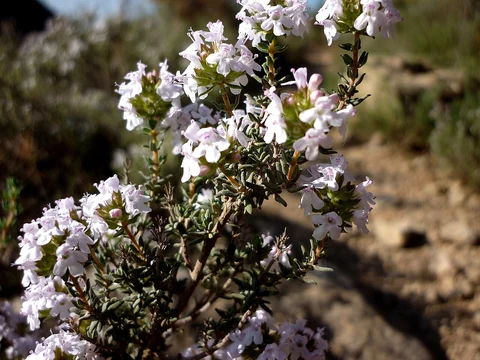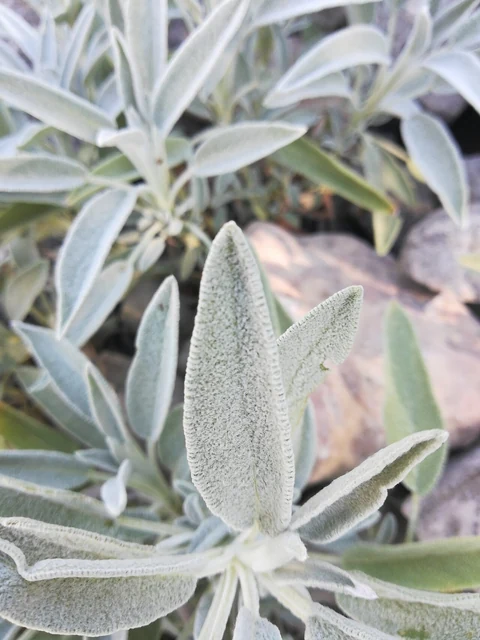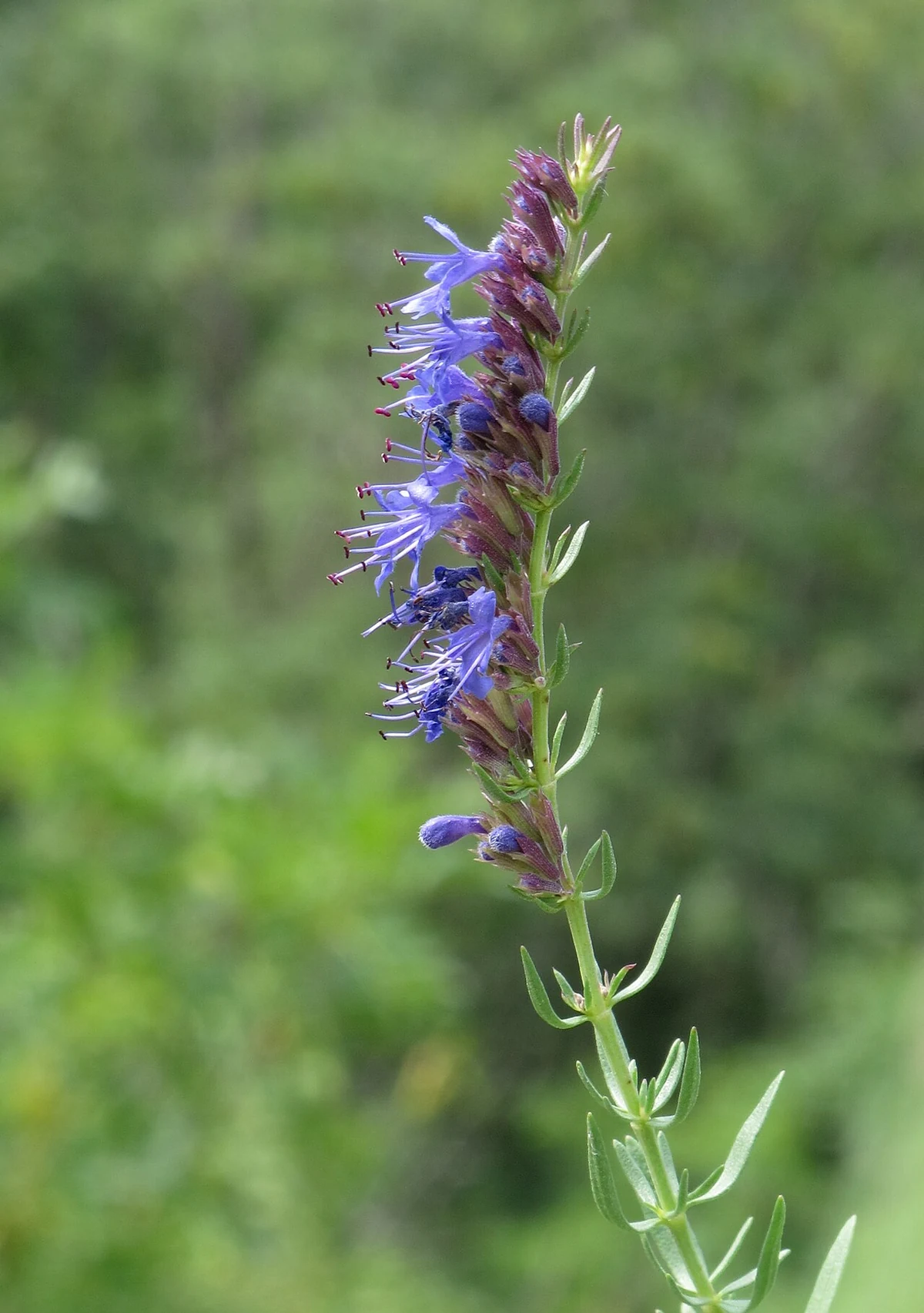
Hyssop (Hyssopus officinalis): close-up of purple flowers. Resized and converted to WebP; no cropping or content edits.
Robert Flogaus-Faust · CC BY 4.0 · Source · EXIF orientation respected; resized without cropping or upsampling; converted to WebP at quality 88. No other content edits.
Garden hyssop needs a precise identity
Hyssopus officinalis is a woody-based aromatic perennial of the mint family, with narrow opposite leaves and spikes of usually blue-purple flowers. It grows in parts of southern and central Europe and has long been cultivated in herb gardens farther north. Leafy flowering tops are the main material in this account.
The name hyssop is unusually treacherous. Hedge hyssop, Gratiola officinalis, is a different plant. The plant called hyssop in biblical translations has its own long history of identification. Fernie's scriptural discussion belongs to the history of interpretation, while Culpeper's separate entries demonstrate that even an old herbal distinguished garden and hedge plants.
Chest preparations and the household throat
Culpeper describes hyssop with honey, figs, wine or vinegar, in preparations directed at the chest, throat and digestion. Some formulas also contain rue or other active plants. These are compound medicines, and his entry extends the herb as far as epilepsy and snakebite.
Fernie records tea from green tops, soup, powdered herb and distilled water. The plant's warm bitter aroma helped make it a bridge between seasoning and medicine. He also gives doses of the distilled oil, a much more concentrated product.
Józefek in the Kraków region
Udziela records Hyssopus officinalis under the local name józefek. At Dobczyce it was used in a mouth rinse for painful gums, and at Wieliczka for unpleasant breath. He also records a compound external application with sage and southernwood, fumigation of cattle at Brzezowa and inclusion among herbs blessed on 15 August.
This material shows hyssop crossing the boundaries of human care, animal husbandry and ritual. The named places and the Christian feast are part of the evidence, and the record includes fumigation and the treatment of children.
Sources: [U]
Collecting tops and understanding the preparations
Editorial collection guidance: For a garden harvest, clip healthy leafy tips near flowering on a dry day, leaving the woody structure and plenty of regrowth. The flowering season varies by region and exposure. Dry small loose bundles or a thin layer of cut material with airflow, then store labelled and protected from damp.
A water infusion steeps the herb in hot water and then strains it; a decoction continues heating. Udziela's mouth rinses are described as decoctions, whereas Fernie's tea uses steeped tops. Their words identify different processes, not necessarily identical strengths. A tincture or distilled water would require its own specification.
In the kitchen, culinary hyssop seasoned a dish in modest quantities. The old pharmacy also used concentrated oil, hot vapour directed into the ear and mixed remedies containing rue.
Present-day editorial handling guidance, not a recipe or a claim attributed to the historical author. Historical source supports identity, part and use only.
A garden familiar enough to need no description
Culpeper introduces garden hyssop by saying that it is too familiar to require a description. For the historian that is revealing. His reader was expected to know a cultivated plant already. The neighbouring hedge-hyssop entry, by contrast, contains a description and an explicit warning about violent purgative action. Read together, the two entries show that the shared name did not make the plants equivalent even within the older herbal.
Fernie gives garden hyssop a more decorative setting. He recounts Parkinson's praise of a golden or variegated form worn as an ornament, and links its fragrance and foliage with planting on graves. A plant valued for the chest could also be selected for appearance, remembrance or adornment. The variegated forms were garden selections.
His attempt to connect the garden plant with scriptural hyssop belongs to a long interpretative tradition. These naming difficulties are part of the history of the herb's prestige: a familiar garden aromatic could acquire associations far beyond its garden bed.
Honey, vinegar, figs and the logic of a compound
Culpeper's hyssop is repeatedly combined with other materials. Honey makes a licking medicine or a sweetened preparation; vinegar enters a gargle; figs accompany chest and throat uses. Rue, iris root and cresses appear in some more active combinations. The carrier and companions are therefore integral to the prescription.
Oxymel, mentioned in the account, identifies a honey-and-vinegar vehicle rather than a distilled oil. Wine preparations, fresh bruised herb and heated vapour are other operations again. The old writer moves readily between swallowing, gargling, applying and smelling. His medical framework connects these uses through qualities and bodily humours, not through one standardised extract used by one route.
The passage on epilepsy shows the reach of the old herbal, which confidently recommends the plant for that condition.
Sources: [C]
Mouth care, cattle and a small culinary use
Udziela's józefek entry is unusually useful because two nearby places give distinct mouth-care purposes: painful gums at Dobczyce and unpleasant breath at Wieliczka. Both involve a decoction used for rinsing. The difference is modest but worth preserving: the ethnographer records what people did and why they said they did it.
At Dobczyce the compound with sage and southernwood was an external application for diarrhoea, including in children. At Brzezowa the plant was burned with other herbs around cattle. These are different mixtures and routes. Blessing on 15 August places the material in a Catholic seasonal practice as well as a domestic remedy cupboard.
The aromatic character can still be met in ordinary culinary use of garden hyssop. Fernie records powdered tops and blossoms added to salad herbs and green tops in soup. As an editorial adaptation, wash a small culinary quantity of fresh leaves, chop them finely and add sparingly to a finished soup, tasting before adding more. Its bitter, strong flavour calls for seasoning judgement rather than a medicinal handful.
Garden, gargle and blessing
Hyssop's history gathers around a garden herb familiar enough that Culpeper saw no need to describe it. He combined it with honey, figs, wine and vinegar for the chest and throat. Fernie knew it as tea, soup, powder, distilled water, a golden ornament and a plant for graves. Around Kraków, józefek rinsed painful gums at Dobczyce and sweetened the breath at Wieliczka, fumigated cattle at Brzezowa and went to the blessing on 15 August.
The herb and its many carriers, from honey and figs to vinegar and smoke, are the heart of its long household history.
Sources
- [C] Nicholas Culpeper. The Complete Herbal (1850). Hyssop; distinct from Hedge Hyssop on pp. 92–93
Historical herbal description and preparations
Expanded historical edition, not current treatment guidance.
- [F] William Thomas Fernie. Herbal Simples Approved for Modern Uses of Cure, second edition (1897). Hyssop, printed pp. 277–280; garden-hyssop subsection
Period preparation and custom
Obsolete medical claims; practical harvesting and hygiene advice is editorial.
- [U] Seweryn Udziela. Rośliny w wierzeniach ludu krakowskiego, Lud 30 (1931). Entry 64, Hyssopus officinalis, printed p. 52; fieldwork 1894–1899
Local ethnographic practices
Regional observation and reported belief, not proof of efficacy.