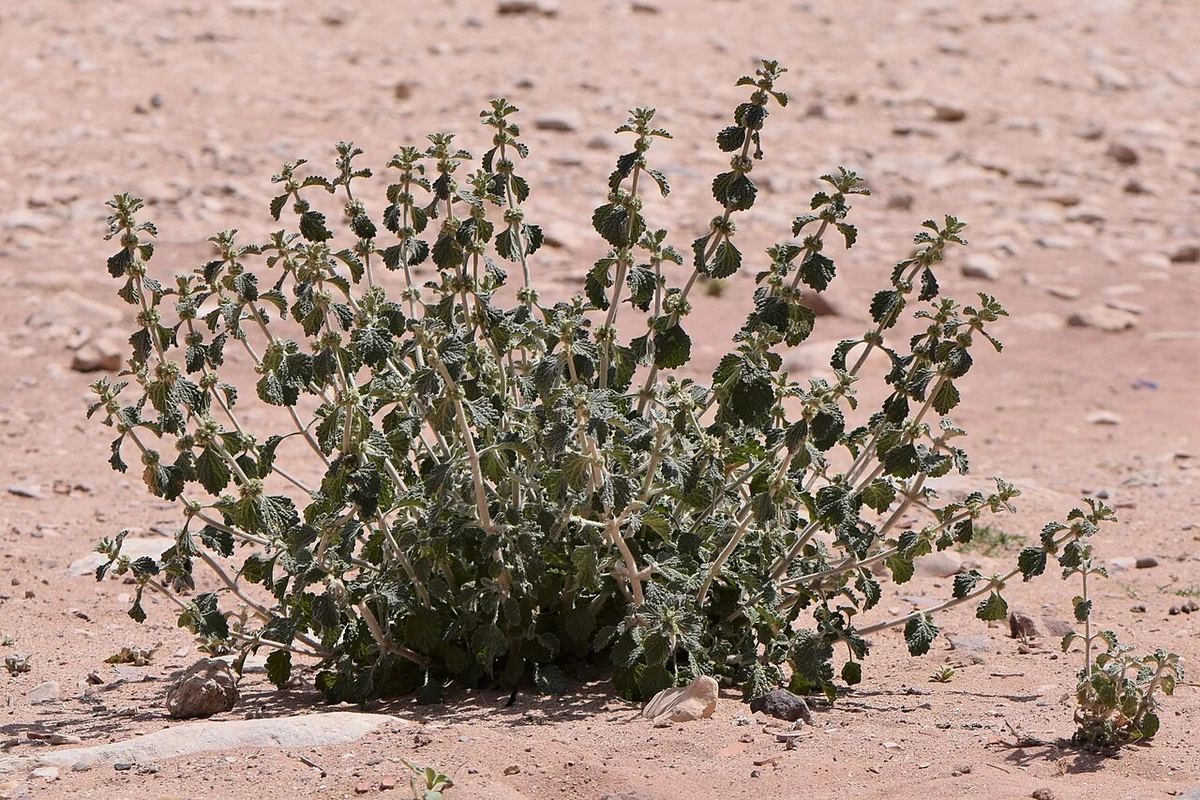
White horehound (Marrubium vulgare) growing on dry ground in Petra. Resized and converted to WebP; no cropping or content edits.
Krzysztof Ziarnek, Kenraiz · CC BY-SA 4.0 · Source · EXIF orientation respected; resized without cropping or upsampling; converted to WebP at quality 88. No other content edits.
A white, woolly and bitter plant
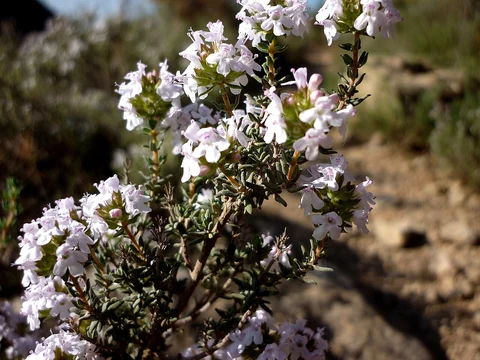
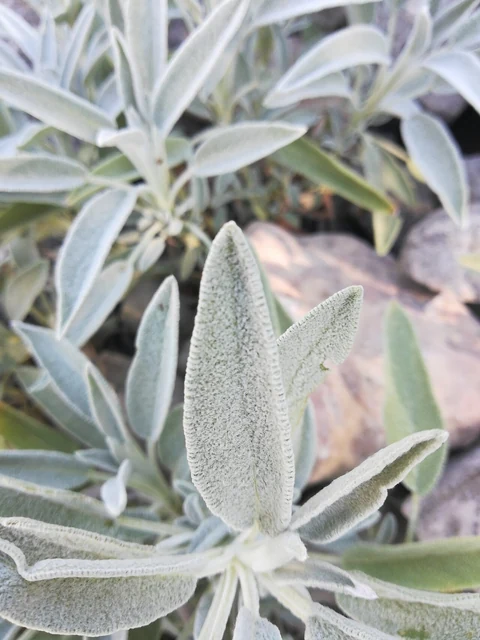
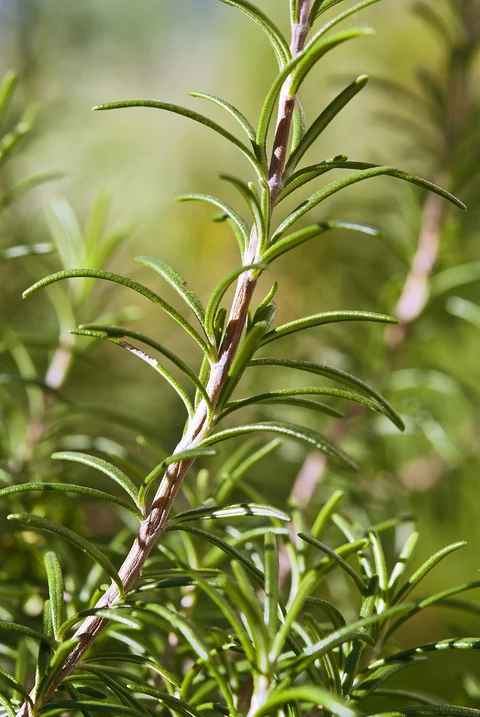
White horehound has square stems, wrinkled rounded leaves with a pale woolly appearance and small white flowers in whorls. It is a perennial mint-family plant of dry, open habitats in Europe and is cultivated as a herb. The flowering aerial parts are the relevant medicinal material.
Culpeper explicitly says that his entry concerns the white kind. Fernie's chapter then moves into black horehound, Ballota nigra, and water horehound, Lycopus. These are different genera, not interchangeable colour forms. The white horehound of this article is Marrubium vulgare.
The cough herb and the bitter stomach remedy
Culpeper describes dried-herb decoction, green juice with honey and an apothecary's syrup for cough and thick phlegm. Fernie likewise presents white horehound as a familiar cough remedy, but adds a strong culinary image: candied horehound sold as a sweetmeat. He reports garden cultivation and horehound beer in Norfolk.
The bitter flavour also connected the plant with appetite and digestion. These uses overlap with the traditional categories in the modern monograph. The old herbals also extended the plant to consumption, the serious wasting disease of their time, to poisoning and to severe asthma.
What a horehound sweet actually contained
Fernie's method begins by extracting fresh plant material in water, then adding sugar and concentrating the liquid until it can set and be cut. The sequence matters: the herb was not simply powdered and hidden in a sweet. A syrup remained more fluid, while a confection concentrated the sweet base further.
In a household remedy of this kind, flavour and strength travelled together, and two sweets could carry different amounts of plant extract while tasting equally bitter.
Sources: [F]
Harvest and a simpler water preparation
Editorial collection guidance: Collect leafy flowering tops from an identified cultivated plant in dry weather, leaving the root system and enough stems for recovery. Culpeper's July flowering and August seed reference belongs to his region; use the actual local plant stage. Dry loose material with ventilation and store it labelled, dry and away from strong light.
An infusion was made by measuring the herb, adding freshly boiled water, covering during steeping and straining. Honey or another sweetener changed the flavour, as it did in Culpeper's green juice with honey.
Pressed juice, alcoholic extracts, syrup and candy are separate preparations. Culpeper also describes an ointment made with animal fat for external use.
Present-day editorial handling guidance, not a recipe or a claim attributed to the historical author. Historical source supports identity, part and use only.
Norfolk's garden corner and the apothecary's shelf
Fernie asserts that scarcely a Norfolk cottage garden lacked horehound. The statement locates his idea of the plant in a recognisable landscape: a cultivated corner near the home, with material available for a bitter drink or sweet. His reference to horehound beer belongs to that local domestic reputation. He gives the beer's reputation rather than its brewing process.
Culpeper, by contrast, explicitly sends the reader to an apothecary for a syrup. The plant moved between household care and the professional shop. The plant could be gathered locally, yet a prepared medicine could also be bought from a specialist. Neither source implies that every family made every preparation from scratch.
The differences between fresh juice, dried herb and confection are equally important. Pressing expresses liquid from the green plant; steeping or boiling brings plant material into contact with added water; candy making concentrates an already sweetened liquid. Each operation changes the relation between the original plant and the final portion. A strongly flavoured sweet may contain a very different amount of herb from a measured infusion, however similar their names sound.
Following the old confection through its stages
Fernie's candy description can be read as a sequence. First the fresh herb is heated in water to extract it. Sugar is then added to the liquid, and further heating thickens the mixture until it can be poured into a paper case and cut after cooling. The transition from a drink to a solid sweet comes from concentrating the sugar mixture, not from discovering a new plant part.
The account gives the sequence rather than weights, yields or temperatures, and it is kept here as preparation history.
Culpeper's external ointment in animal fat had a different purpose from the edible sweet. His uses for bites, serious sores and reproductive complaints belong to the much wider medical reputation of his period. The continuity from his time to Fernie's lies in the plant and its preparation forms.
A reproducible bitter cup
The European Medicines Agency's monograph on white horehound, written for traditional herbal medicinal products, records the traditional infusion as 1–2 g of cut herb in 250 ml of boiling water, three times daily, a daily total of 3–6 g. The agency's general procedure describes the method: the herb is covered with freshly boiled water, left covered for five to fifteen minutes and strained, and each portion is made fresh. Sweetening changes the taste of the bitter cup, as it always did.
Fernie's black and water horehounds lead into other stories, including dyes and different remedies. The stored jar of this herb is labelled white horehound, Marrubium vulgare, aerial herb.
A bitter herb made palatable
White horehound's history is that of a bitter plant made welcome. Culpeper boiled the dried herb, mixed its green juice with honey and sent readers to the apothecary for a syrup against cough and thick phlegm. Fernie found it candied as a sweetmeat, brewed into Norfolk horehound beer and grown in cottage gardens. Today the European Medicines Agency describes horehound preparations within its traditional-use framework for cough with a cold, mild digestive symptoms and temporary poor appetite, with its own conditions of age and use.
The old cough sweet carried the bitter herb from the garden corner into the pocket.
Sources
- [C] Nicholas Culpeper. The Complete Herbal (1850). Horehound, pp. 96–97
Historical herbal description and preparations
Expanded historical edition, not current treatment guidance.
- [F] William Thomas Fernie. Herbal Simples Approved for Modern Uses of Cure, second edition (1897). Horehound (White and Black), printed pp. 267–269; white-horehound subsection
Period preparation and custom
Obsolete medical claims; practical harvesting and hygiene advice is editorial.
- [E] European Medicines Agency, HMPC. Marrubii herba: public summary (2014). Overview and safety, accessed 29 October 2026
Defined traditional-use preparations
Does not validate all historical uses.
- [P] European Medicines Agency, HMPC. Community herbal monograph on Marrubium vulgare L., herba (2013). Preparation and contraindications, pp. 3–5; full PDF checked
Measured infusion, bile-duct/liver/ileus restrictions and pregnancy advice
Applies to specified white-horehound preparations.
- [T] European Medicines Agency, HMPC. Draft template for a European Union herbal monograph: herbal teas (2016). Infusion procedure, pp. 4–7
General covered infusion technique
Not a confectionery or storage validation.