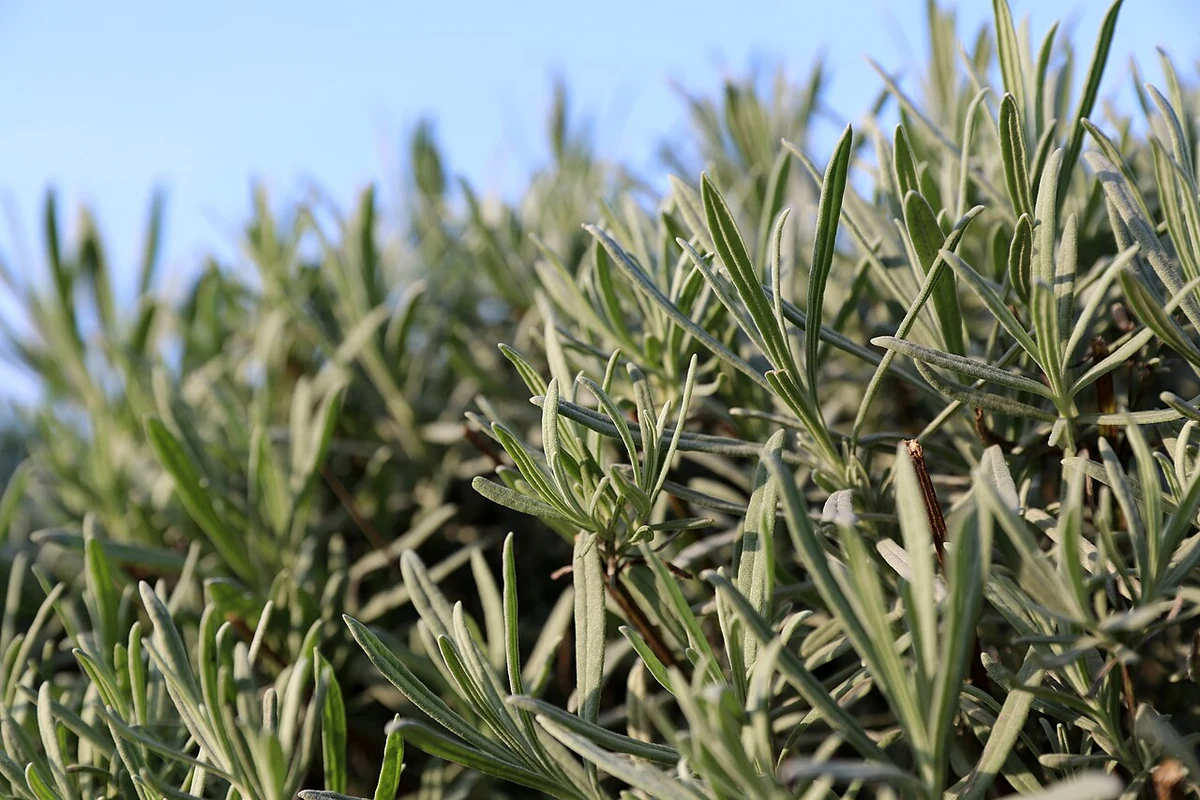
Leaves of lavender (Lavandula angustifolia), cultivar 'Mailette', in a Vienna garden. Resized and converted to WebP; no cropping or content edits.
Manfred Werner - Tsui · CC BY-SA 3.0 · Source · EXIF orientation respected; resized without cropping or upsampling; converted to WebP at quality 88. No other content edits.
Which lavender is meant?
Narrow-leaved lavender is a woody-based, aromatic Mediterranean plant with slender grey-green leaves and flower spikes borne above the foliage. Cultivation carried it across much of Europe. The dried flowers and the distilled oil are different materials. Lavandin hybrids and spike lavender can share a familiar scent while differing botanically and chemically from Lavandula angustifolia.
This distinction is easy to lose in an old book. Fernie discusses more than one lavender and connects them to both English commercial growing and southern European production. Culpeper's language likewise belongs to a period before today's product definitions. This article follows a named species and plant part: the flowers of Lavandula angustifolia.
The household scent and the medicinal head
Lavender's association with clean linen is central to Fernie's account. Flowers were dried for storage among clothes and bed linen, a use in which scent, household care and pleasure overlapped. He also describes cultivation in English counties and the collection of flower material for oil. This was therefore not solely a wild Mediterranean tradition: it could be a managed crop and a traded ingredient.
In the older medical account, lavender belonged especially to the head. Culpeper relates it to ailments explained as coldness or obstruction, while Fernie discusses headache, faintness and flower tea. These descriptions reveal the organising ideas of their periods, and they reached as far as epilepsy and other serious disorders of the head. The domestic sachet and the medicinal spirit shared an aromatic plant, but they served different purposes.
From southern hillsides to English rows
Fernie places wild lavender in Spain, Piedmont and southern France, then describes an English commercial crop in Surrey, Hertfordshire and Lincoln. His picture is of long planted rows and flowering tops gathered for fragrant oil. This is valuable regional evidence for the world in which his book appeared. Different localities grew different lavenders and distilled them in their own ways.
He explicitly contrasts a broad-leaved French plant with the narrower-leaved crop, judging the former more productive in oil but inferior in quality. Yield and fragrance were therefore different commercial considerations. That observation helps explain why lavender could be a specialised agricultural product while remaining familiar in a cottage garden. What a distiller wanted from a field and what a household wanted from a bunch were related, but not identical.
The passage also makes the selected plant part important. Flowering tops, stalks and loose dried flowers do not contribute equally to every preparation. When a modern label identifies Lavandula angustifolia flower, it gives information that the broad historical expression lavender water often leaves unresolved. Nineteenth-century bottles were labelled by name and purpose rather than by precise botanical material.
Linen, language and a flower for middle age
The custom of putting lavender among clean linen is more than a decorative footnote. It locates the plant in the work of washing, drying, folding and storing cloth. Fernie connects the habit with the expression laid up in lavender and discusses the word's association with washing. The linen cupboard offers a different setting from a sickbed: a person might know the scent intimately without ever swallowing a lavender remedy.
He also quotes Perdita's grouping of lavender with other midsummer flowers in The Winter's Tale, where the flowers are offered to people of middle age. The association is literary. Beside it, Fernie's discussions of conserves and of desserts served with flowering spikes reveal lavender's ornamental and culinary presentation.
This range of uses explains the plant's cultural durability. Lavender could mark clean household order, decorate hospitality and supply a familiar fragrance while acquiring a separate medical reputation for the head and nerves.
Sources: [F]
Why red lavender was a compound
Fernie's red lavender preparation combines lavender and rosemary aromatics with cinnamon, nutmeg and red sandalwood in spirit. The colour and spice ingredients belong to the product's identity; it is not simply lavender flowers steeped until the liquid turns purple. He links an older version with the name palsy drops. The name records the inherited purpose of the cordial, palsy being the old word for paralysis.
Culpeper likewise moves between flower wine, distilled water and a penetrating chemical oil, and he already warns that the oil must be used with caution. Even in his herbal, tea, wine, distilled water and oil were recognised as preparations of different strength and behaviour.
Harvest for flowers, rather than woody stems
For a garden flower harvest, cut healthy spikes when flowers are opening, choosing a dry interval after dew has evaporated. The exact stage depends on whether the aim is a decorative bunch, loose dried flowers or commercial oil production. A single instruction such as harvest in July cannot fit southern France, a high-altitude site and a northern European garden equally well.
Make small loose bunches or spread the spikes where air circulates freely, avoiding damp bundles and strong sun. Once thoroughly dry, rub the flowers gently from the stems and keep them in a labelled dry container. Leave plenty of flowering material for pollinators and do not cut deeply into old wood. This is practical editorial guidance for preserving the flower material described in the sources.
Sources: [F]
Three preparations with three different purposes
The simplest household use was a dry flower sachet: thoroughly dried, identified flowers in a clean, breathable fabric bag, closed and laid among stored linen, loose enough to stay soft and easy to refresh. This is an editorial description of the dry-flower custom that Fernie records.
The European Medicines Agency's monograph on lavender flower, written for traditional herbal medicinal products, records the traditional adult infusion as 1–2 g of dried Lavandula angustifolia flowers in 150 ml of boiling water. The agency's tea-preparation template describes the method: the flowers are covered with freshly boiled water, left covered for five to fifteen minutes and strained. It continues the flower tea that Fernie discusses alongside headache and faintness.
Steam-distilled oil concentrated the volatile constituents and was a different product from the infusion, from an infused fixed oil and from cosmetic fragrance. Fernie's compound red lavender spirit belonged to a separate pharmaceutical tradition built from several aromatic ingredients.
Linen, sleep and the aromatic head
Lavender's history moves between the linen cupboard and the medicine chest. Culpeper made it a herb of the head; Fernie followed it from wild southern hillsides to English field rows, into sachets, conserves, flower tea and the compound red lavender drops once known as palsy drops. Today the European Medicines Agency describes specified lavender preparations within its traditional-use framework for mild stress and as an aid to sleep, with its own conditions of use.
Its sensory and domestic uses, from folded sheets to a calming drink, are as much a part of its history as the old medical claims.
Sources
- [C] Nicholas Culpeper. The Complete Herbal (1850). Lavender, printed pp. 103–104, digitised 1850 edition
Period uses and forms of preparation
An expanded historical edition, not a current treatment guide.
- [F] William Thomas Fernie. Herbal Simples Approved for Modern Uses of Cure, second edition (1897). Lavender, printed pp. 296–300
Nineteenth-century herbal practice and reported customs
Medical claims and historical anecdotes require critical reading; harvesting and hygiene advice is editorial.
- [E] European Medicines Agency, HMPC. Lavender oil: public summary and preparation safety (2012). Preparation definitions and safety sections; accessed 29 October 2026
Safety boundary for specified preparations
Not evidence that all historical remedies work.
- [B] European Medicines Agency, HMPC. Lavandulae flos: botanical identity and monograph record (2012). Botanical name and first-version monograph listing
Identity of flower material as Lavandula angustifolia
The flower overview has no public summary; oil safety is not automatically flower dosage guidance.
- [M] European Medicines Agency, HMPC. Community herbal monograph on Lavandula angustifolia Miller, flos (2012). Printed pp. 3–4, flower tea and precautions
Flower-specific infusion quantity and distinction from oil preparations
Traditional-use preparation for mild stress and sleep; not a prescription for children or serious illness.
- [T] European Medicines Agency, HMPC. Patient Leaflet template concerning advice on the preparation of herbal teas as (traditional) herbal medicinal products by end-users (2016). Printed pp. 4–7, definitions and preparation templates
Usual infusion timing, covering, straining and preparation immediately before use
General method; a product-specific instruction takes precedence and plant quantities come from the individual monograph.