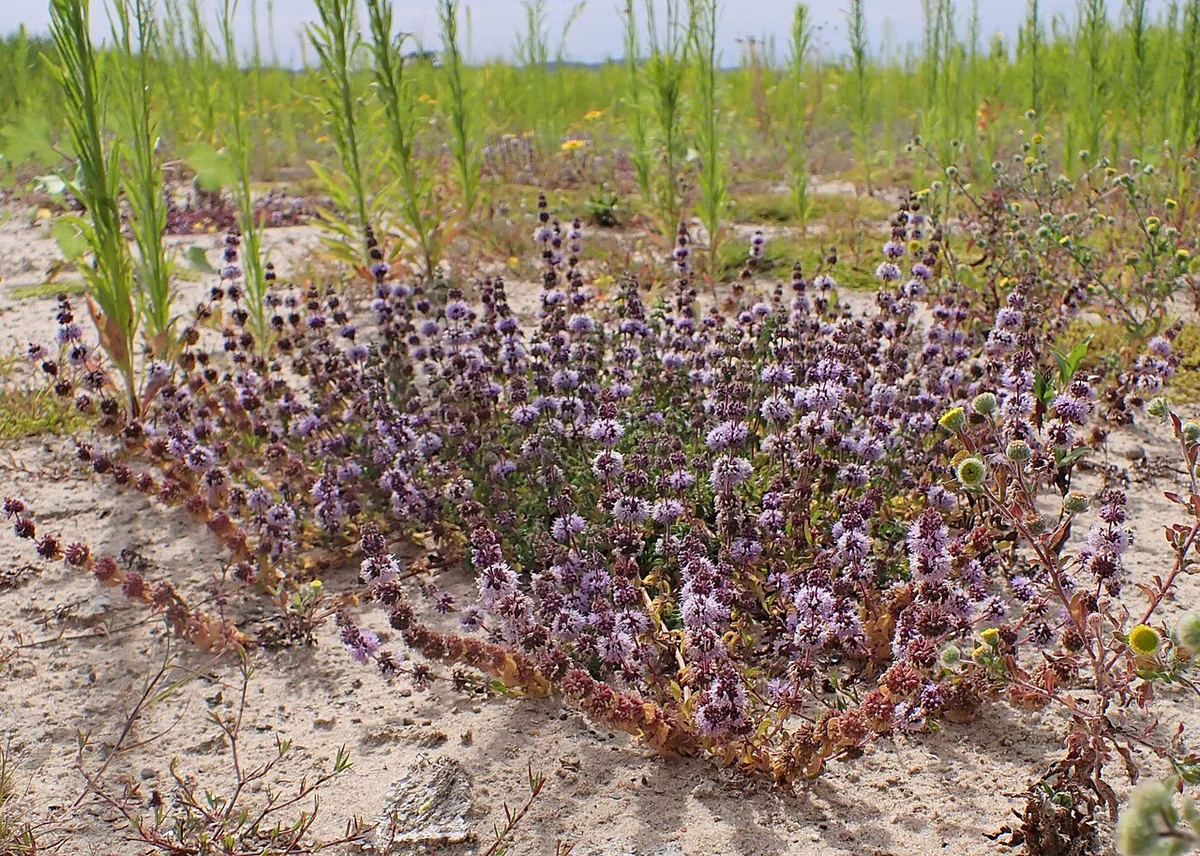
Flowering pennyroyal (Mentha pulegium) on sandy ground beside the Odra. Resized and converted to WebP; no cropping or content edits.
Krzysztof Ziarnek, Kenraiz · CC BY-SA 4.0 · Source · EXIF orientation respected; resized without cropping or upsampling; converted to WebP at quality 88. No other content edits.
One mint is not another
European pennyroyal is Mentha pulegium, a small aromatic mint associated with damp ground. Its flowers form rings around the stems. Culpeper describes creeping and more upright forms, garden cultivation and wild plants along routes east of London. These observations place it in a recognisable English landscape.
It is not peppermint, spearmint or the North American plant also called pennyroyal. Nor is Culpeper's wall pennyroyal the same herb. Botanical identity is the starting point of this account.
The old language of warming and expulsion
Culpeper describes pennyroyal as warming and as acting on thick bodily fluids. His list includes respiratory, digestive, joint and reproductive uses, often attributed to earlier authorities such as Dioscorides or Pliny. The entry demonstrates how ancient authority travelled through later English herbal writing.
The reproductive uses, for bringing on menstruation, ending a pregnancy and childbirth, form a central part of that historical record.
The same entry ranges from faintness to skin complaints. That breadth reflects the explanatory system and the accumulation of inherited recommendations.
Sources: [C]
How the historical preparations differed
The source describes water and wine preparations, compounds with honey or other kitchen ingredients, external applications and aromatic uses. A decoction heated the plant in a liquid; a plaster retained a compound against the skin.
Essential oil is another product: a concentrated volatile fraction, far stronger than a cup of herb tea. Poison-centre records describe severe illness and deaths after people swallowed pennyroyal oil.
In the garden and on damp ground
Editorial collection guidance: a photograph showing the flower rings and growth habit documents the plant without harvesting it, and where collection is lawful a small labelled specimen is enough for identification beside the other mints.
Historical flowering dates are local observations. The damp ground the plant favours is often a sensitive or protected habitat.
Present-day editorial handling guidance, not a recipe or a claim attributed to the historical author. Historical source supports identity, part and use only.
Sources: [C]
From damp ground to the herb market
Culpeper's two growth forms and his references to Essex gardens place pennyroyal in both wild and cultivated settings. Fernie later names moist heaths, pastures and brook margins, then describes production around Mitcham and sale chiefly as dried material. A plant beside a ditch, a garden specimen and a traded bundle each had its own setting.
Fernie's vernacular names include ones describing creeping growth and a liking for ditches. Such names are small records of attention to habitat. His Devonshire Organ Tea and Organ Broth preserve another local vocabulary, but he also uses Organ in discussing marjoram elsewhere in the book. A regional name travels with its source context.
Culpeper gives August as the flowering season in his English account. That is a local seasonal description of his English setting.
What a pudding once meant
Pudding Grass is among Fernie's names for pennyroyal. He explains it through savoury stuffing and mentions a preparation enclosed in an animal casing. This is useful culinary history because a modern reader may imagine a sweet dessert instead. The plant's historical place in food cannot be understood simply by transferring the present meaning of pudding backwards.
The same discussion places aromatic seasoning, dried herb sales and medicine close together. That proximity helps explain how a household might regard the plant as familiar before considering a concentrated preparation. Familiar seasoning and concentrated medicine came from the same plant.
Fernie also explains the plant's name through a reputation for driving away fleas. This is an account of historical naming and perceived usefulness. The history is richer when those household associations are retained.
Sources: [F]
Whose testimony reached the printed page?
Fernie's reproductive discussion exposes disagreement rather than consensus. He reports women's confidence in the plant and contrasts it with a medical authority who denied the claimed action. He also imagines a transaction in which the purchaser gives a public reason for buying the herb while keeping her purpose private. This is evidence of how one Victorian writer framed secrecy, professional authority and women's experience.
Culpeper's entry has its own layering of voices: recommendations are assigned to Dioscorides, Pliny and Matthiolus, alongside the later compiler's organisation. The most faithful account preserves who is speaking and which form of the plant is mentioned.
Warmth could mean more than the plant
One of Culpeper's external uses follows bathing or sweating in a heated room. The whole episode includes bodily warming, the surrounding environment and a plant applied to a joint. Other passages concern smell or a plaster, again involving different routes. These distinctions explain what the old author thought he was doing.
Sources: [C]
Smell, warmth and ancient authority
Pennyroyal's record reveals the authority of ancient writers, the role of smell and warmth in household medicine and the reach of a small mint of damp ground. Culpeper gathered Dioscorides, Pliny and Matthiolus behind its uses for the chest, digestion, joints, faintness, skin and women's medicine. Fernie followed it from moist heaths to Mitcham's dried-herb trade, to pudding grass in savoury stuffing, to the fleas it was named for and to the women who trusted it.
It is one of the most striking examples of how one plant family held both gentle kitchen herbs and strong medicines.
Sources
- [C] Nicholas Culpeper. The Complete Herbal (1850). Pennyroyal, pp. 136–137
Historical descriptions and preparation forms
Expanded Thomas Kelly edition; not contemporary advice.
- [P] Serkalem Mekonnen, National Capital Poison Center. Pennyroyal oil: a potentially toxic folk remedy (webpage accessed 2026). Full story and prevention guidance
Severe poisoning, liver failure and risk to infants
Safety guidance; not a household dosing standard.
- [F] William Thomas Fernie. Herbal Simples Approved for Modern Uses of Cure, second edition (1897). Mints, pennyroyal discussion, pp. 334–336
Mitcham trade, culinary and regional names, preparation distinctions and conflicting claims about reproductive use
Historical compilation with unsafe medicinal recommendations; its claims are evidence of belief and commerce, not reliable dosing or efficacy.