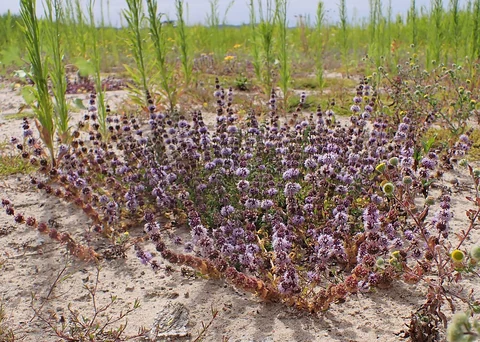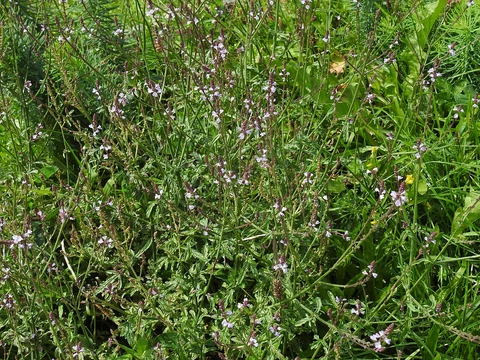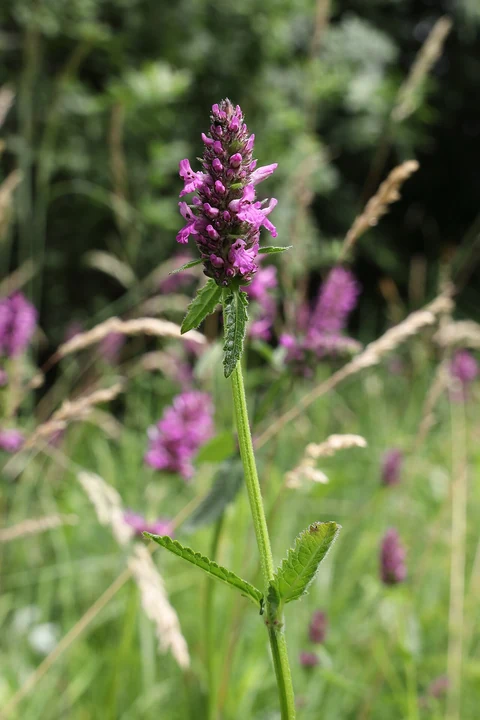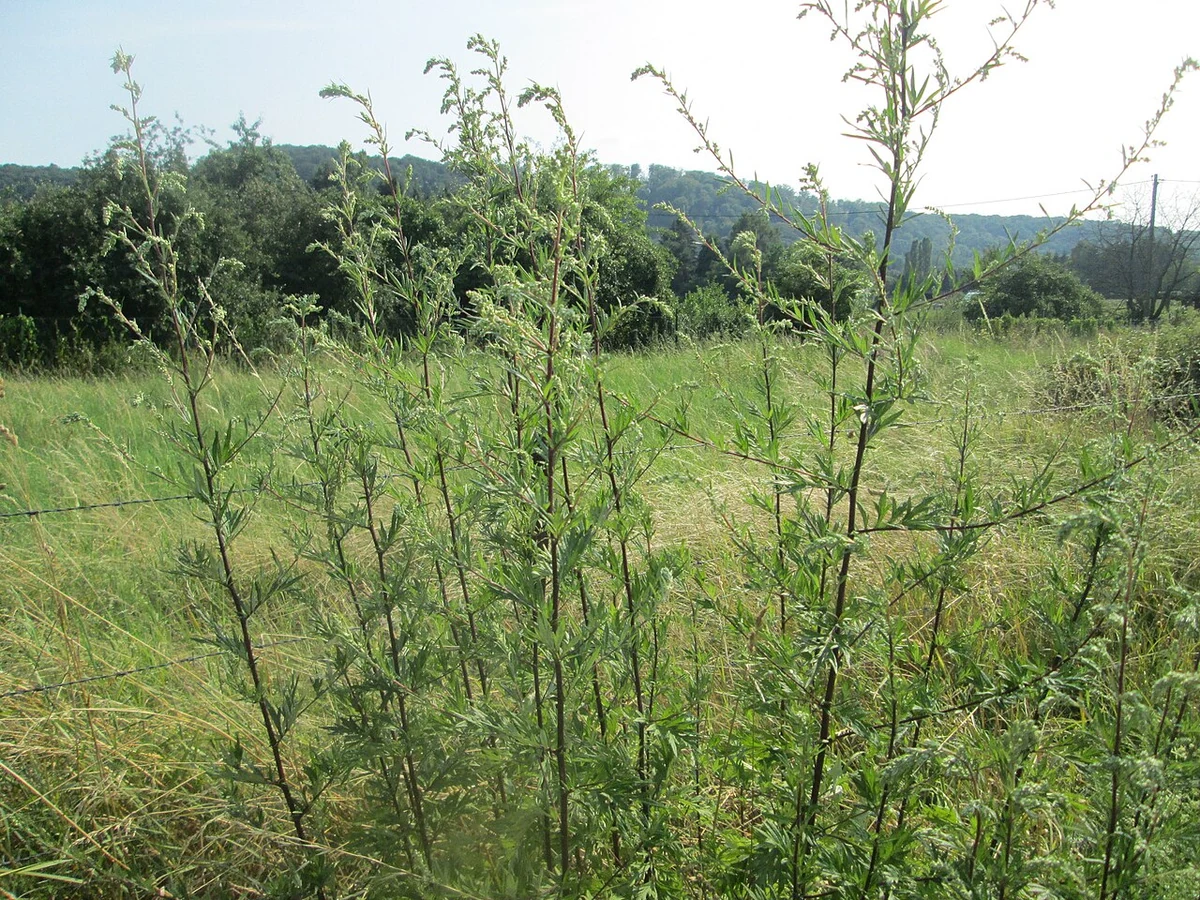
Branching stems of mugwort (Artemisia vulgaris) in a meadow. Resized and converted to WebP; no cropping or content edits.
AnRo0002 · CC0 · Source · EXIF orientation respected; resized without cropping or upsampling; converted to WebP at quality 88. No other content edits.
Dark above, pale underneath
Mugwort is a tall perennial with divided leaves that are darker green above and pale beneath. Culpeper describes branching stems, small flower heads and a persistent root system. The aerial herb is prominent in the old accounts, although his entry also mentions roots and juice.
Artemisia vulgaris is distinct from the silvery wormwood Artemisia absinthium. It is also distinct from the Asian Artemisia species used in moxibustion. Shared genus names conceal differences in species, preparation and practice. This article concerns European records attached to common mugwort.
Sources: [C]
Warmth and women's medicine
Culpeper places mugwort under Venus and describes heated herbal preparations for reproductive complaints. He also records ointments with animal fat, compound baths and claims about pain, urinary problems and opium exposure.
These claims belong to his medical system, in which mugwort was above all a warming herb for women.
The prominence of warmth is still culturally informative. A bath or warmed bundle offered a sensory experience of care, and several plants could be combined in it.
Sources: [C]
Children, backs and cattle in village records
Udziela records mugwort baths for weak children at Bieżanów and Dobczyce, warmed applications at Radziszów and compresses for back pain at Dobczyce. In Wieliczka it was combined with thyme in an application for zawianie, a folk explanation connecting illness with exposure or draught.
The account also describes decoctions given to cows after calving and an explanation that they cleansed the animal's interior. At Gaj, a belief held that a dog eating mugwort could recognise a witch. That striking statement belongs to local supernatural belief.
The plant was also blessed with other herbs on 15 August. The Christian calendar is part of the record as it was lived.
Sources: [U]
The preparations
Editorial collection guidance: The historical forms include decoctions for baths, warmed plant bundles, expressed juice and ointments made with fat. A herbal bath, a drinking tea, an alcoholic tincture and a concentrated essential oil were different preparations.
For study, record flowering time locally, identify the leaf surfaces and take only limited lawful aerial material. Leave the perennial base and enough flowering growth. Dry a thin layer in shade with ventilation, and label the species rather than simply Artemisia.
Present-day editorial handling guidance, not a recipe or a claim attributed to the historical author. Historical source supports identity, part and use only.
Two summer calendars, several kinds of protection
Fernie places mugwort within the customs of St John's Eve, describing a crown of sprays and the belief that John the Baptist wore a girdle of it in the wilderness. He associates protective gathering on that eve with Germany and Holland. These are reports in an English compilation, without named informants or exact places.
Udziela's Kraków-region evidence concerns another date, the blessing of herbs on 15 August. The difference matters. The same botanical species could be drawn into several Christian feasts and several local explanations of protection.
Fernie also records mugwort placed in shoes against weariness and pieces of old root carried as amulets. The footwear, girdle and suspended root all bring the plant into physical proximity with the person, but none is a drinking preparation. Each form brought the plant close to the body in its own way.
A plant shared by the household and the byre
Udziela's entry becomes particularly informative when read place by place. At Bieżanów and Dobczyce the concern is a weak child; Radziszów adds chills and a warmed application. Skawina's bath is described in much broader language, as helpful for many weaknesses. Each village had its own complaint and setting, joined by the shared plant and its warmth.
The veterinary passages describe recovery after calving and a cleansing explanation for changes in the animal's urine. That explanation belongs to the people recorded. The practical stakes were considerable within the story itself: a cow's recovery was linked with the return of good milk. The passage places the herb in everyday household concerns.
Gaj's witch-recognising dog introduces a different kind of efficacy altogether. Recognition of an unseen enemy cannot be reduced to the same claim as warming a painful back. Yet the collector places both within one plant entry, and together they show the range of questions a familiar herb could be asked to answer.
Sources: [U]
A mermaid's advice and a far-off moxa
Fernie includes a Clyde mermaid story in which the supernatural speaker laments a young woman's death and recommends seasonal plants. It is a memorable literary form for expressing the hope that knowledge of local herbs might avert loss. The passage is a story repeated by Fernie.
His chapter also shifts from European uses to a description of Japanese moxa. The change of place and technique is conspicuous: a European household bath and an East Asian burning treatment are different practices.
Even apparently simple botanical claims need scrutiny. Fernie describes mugwort as scentless and contrasts its chemistry sharply with wormwood; Culpeper, by contrast, notices a scent. The two herbals disagree about the plant's scent.
What the containers tell us
Culpeper's fat-based ointment, expressed juice, dried powder and compound bath imply different kinds of household work. Fat retained plant material in a spreadable base; a water preparation made it available for bathing; drying allowed material to be kept beyond the growing season. His account also distinguishes roots from leaves and mentions other herbs in compounds. A museum label or family-history transcription preserves those details.
Sources: [C]
Warmth, animals and unseen causes
Mugwort's value here is historical: a readily available plant connected warmth, household care, animals and beliefs about unseen causes of illness. Culpeper made it the warming herb of Venus, in heated preparations, fat-based ointments and compound baths. Fernie crowned it on St John's Eve, put it in shoes against weariness and hung its old root as an amulet. Around Kraków it bathed weak children, warmed backs and chills, joined thyme against zawianie, was given to cows after calving, revealed witches to a dog at Gaj and was blessed on 15 August.
Keeping those connections visible gives the reader the full account of the people who used the plant.
Sources
- [C] Nicholas Culpeper. The Complete Herbal (1850). Mugwort, pp. 122–123
Historical descriptions and preparation forms
Expanded Thomas Kelly edition; not contemporary advice.
- [U] Seweryn Udziela. Rośliny w wierzeniach ludu krakowskiego, Lud 30 (1931). Entry 18, Artemisia vulgaris, pp. 42–43
Local practices recorded principally in 1894–1899
Reported use does not establish efficacy.
- [F] William Thomas Fernie. Herbal Simples Approved for Modern Uses of Cure, second edition (1897). Mugwort and Wormwood, pp. 352–356
St John's Eve associations, protective footwear and root amulets, literary folklore and historical preparation categories
Late compilation; reported regional customs lack detailed field provenance. Botanical chemistry and sweeping treatment claims are not accepted as current facts.