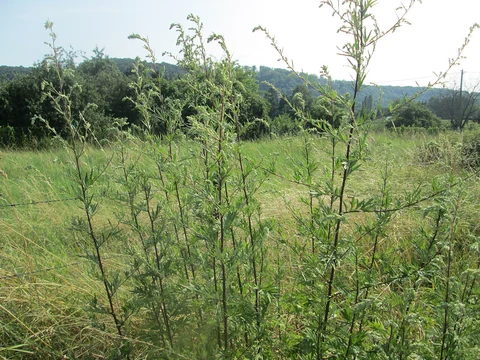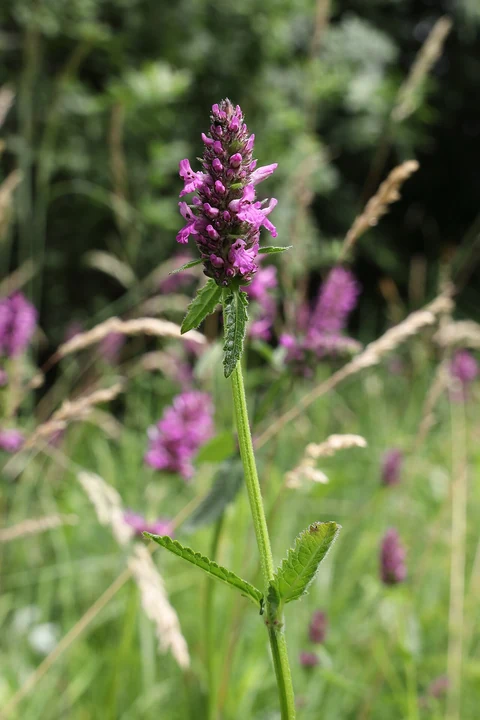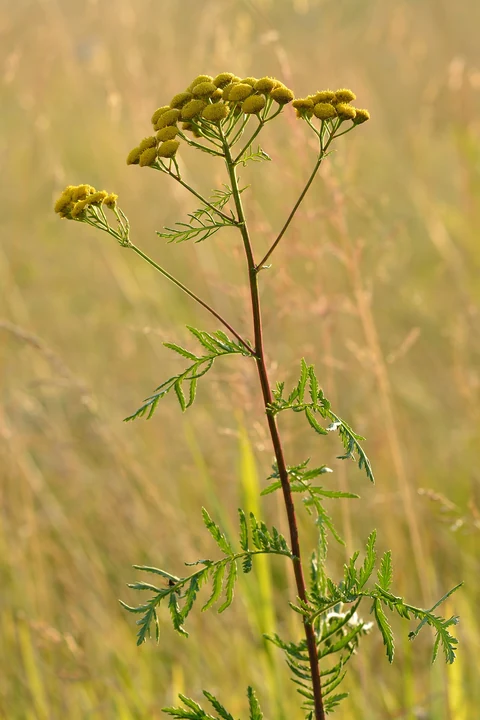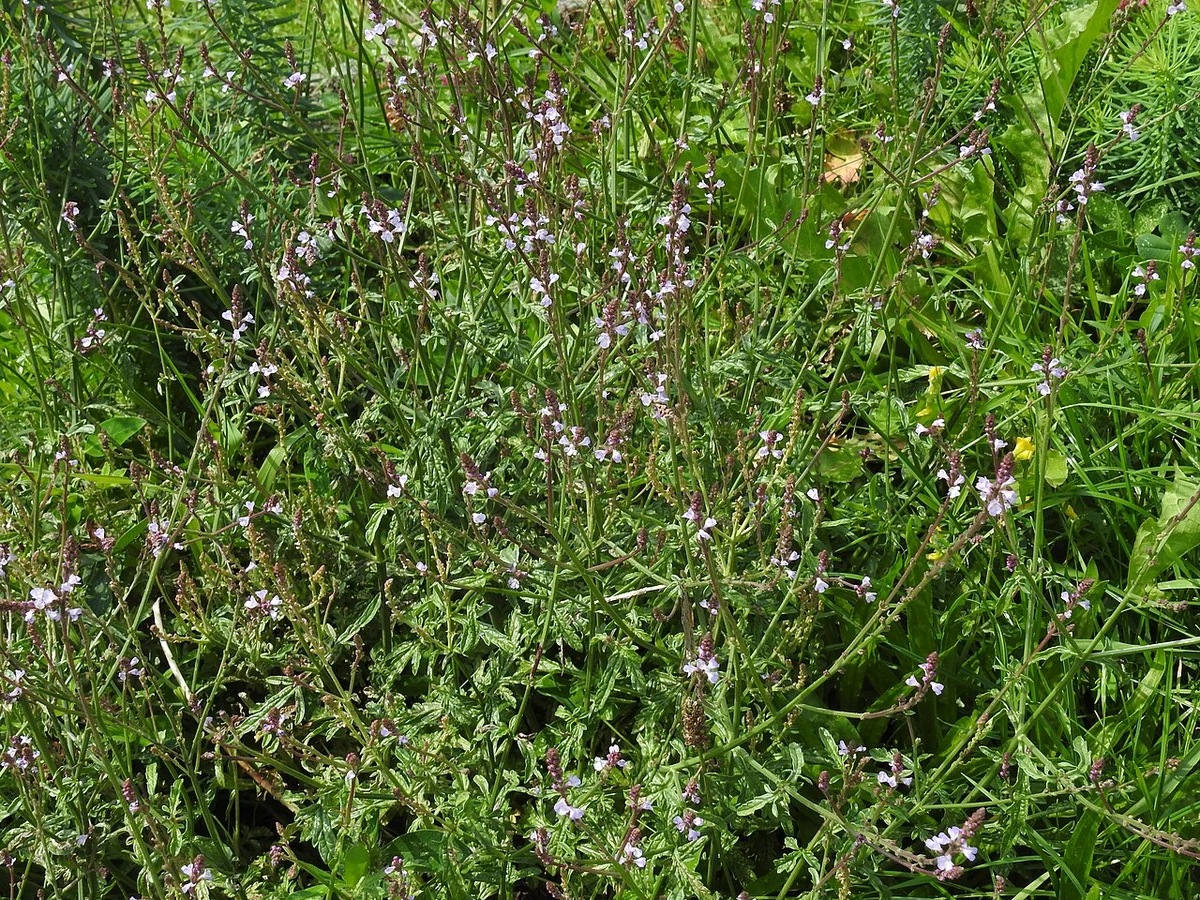
Vervain (Verbena officinalis): slender stems and small pale-purple flowers. Resized and converted to WebP; no cropping or content edits.
Robert Flogaus-Faust · CC BY 4.0 · Source · EXIF orientation respected; resized without cropping or upsampling; converted to WebP at quality 88. No other content edits.
A small flower on a long spike
Common vervain has slender, branching stems, cut or toothed leaves and tiny pale flowers arranged on long spikes. Culpeper locates it in hedges, waysides and waste ground. Its unobtrusive appearance contrasts with the unusually broad medicinal reputation his entry assigns to it.
The botanical subject is Verbena officinalis. Lemon verbena, Aloysia citrodora, and ornamental bedding verbenas are different plants. The old common-vervain entry belongs to Verbena officinalis alone, and its flowering aerial parts and roots have separate uses in the source.
Sources: [C]
An extensive list and its organising logic
Culpeper calls vervain hot and dry, associates it with Venus and recommends it for a wide range of internal and external complaints. His account runs through digestion, jaundice, cough, urinary problems, wounds and skin conditions. The scope shows how far the plant's reputation reached.
The old language of opening obstructions, cleansing and consolidating links complaints that modern readers might otherwise find unrelated. Understanding that vocabulary makes the entry intelligible in its own terms.
Sources: [C]
From juice and ointment to a suspended root
The source describes bruised leaves, expressed juice, preparations with honey, ointments with animal fat, vinegar mixtures and distilled water. It also describes a dried root worn on a ribbon near the stomach for certain chronic complaints. That last practice is materially different from swallowing an extract.
The juxtaposition shows that the boundaries between medicine and an amulet were not always those a modern reader expects. A household herbal could place contact, ingestion, smell and symbolic proximity within the same therapeutic repertoire.
The account also includes applications to the eyes and bruised leaves laid on wounds.
Sources: [C]
A small but precise Polish observation
Udziela records the local name koszyczysko at Radziszów and the inclusion of Verbena officinalis among herbs blessed on 15 August. The entry does not give a local tea recipe, dosage or disease indication.
The two sources are compared here, each with its own attribution.
The brief ritual record is still valuable. It places a modest roadside plant within a seasonal gathering practice and a religious calendar, showing that significance was not limited to plants with conspicuous flowers or culinary value.
Holy herb, frog's foot and the problem of names
Fernie's chapter gathers an extraordinary collection of names around a visually modest plant. Holy Herb expresses sacred status; Frogfoot refers to a perceived resemblance of the leaf; Simpler's Joy connects it with the collector of medicinal plants. The names reveal different ways of valuing the herb: ritual importance, recognisable shape and practical availability.
His account ranges further, invoking Egyptian divinities, Druids, Calvary and Roman ritual. This breadth makes attractive reading, gathered in a nineteenth-century compilation. Near the chapter's end Fernie himself suggests that verbena could have designated herbs used in sacred rites more generally. The word verbena could therefore carry more than one plant in ancient sources.
A later herbal tradition assembled many sacred associations around the name, and Udziela's precisely named Radziszów blessing adds a firm local observation of the plant's sacred place.
An amulet that stayed beside medicine
Culpeper's root suspended on a white ribbon is striking partly because it sits beside juices, ointments and distilled waters. Fernie, writing much later, reports a pamphlet by a Mr Morley advocating a renewed use of vervain for scrofulous disease. In that account the worn root appears again, accompanied by leaf preparations.
He proposes a story in which wearing the plant changed from religious observance to medicine, with bruising introduced to make the contact seem physically active. This is his interpretation of historical change. The ribbon and the prepared leaf coexisted, and their users may not have drawn a sharp boundary between them.
Scrofula belongs to the medical vocabulary of its time. The account is valuable for showing the persistence and attempted revival of a practice.
The social uses of water and a modest-looking plant
Among the traditions Fernie attributes to earlier authors is a claim that water in which vervain had stood could make dinner guests merrier when sprinkled in the room. This places the plant in a social setting rather than a sickroom. The claim concerns the atmosphere of hospitality, an attributed belief about a gathering.
Culpeper's water preparations have quite different purposes. His distilled water is presented as a medicine, while other applications involve vinegar, honey or fat. These materials do not merely decorate the herb's name: they change the route, texture and intended site of application. Distillation, steeping and bruising are distinct operations.
The surviving passages describe a varied material culture: plants gathered, roots suspended, leaves pressed, liquids sprinkled, and compounds placed against the body.
Reading a short field entry at its proper scale
Udziela's single locality tells the reader exactly where the name and blessing were recorded. A family account from Radziszów, with its own date and informant, could add to it, and the older record's silence on medicinal uses leaves room for what it did not write down.
Sources: [U]
Tiny flowers and great claims
Editorial collection guidance: For a study specimen, identify the plant in flower and record the site and date. Cut only limited aerial growth where lawful, leave roots and enough seed-producing stems, and avoid contaminated verges. Dry thinly in shade with airflow. Label Verbena officinalis and the collected part so that it cannot be confused with lemon verbena.
Vervain's story is strongest when its contrasts remain intact: tiny flowers and great claims, an English medical catalogue and a short Polish blessing record, a swallowed preparation and a root worn on a ribbon. These differences are the substance of the history.
Present-day editorial handling guidance, not a recipe or a claim attributed to the historical author. Historical source supports identity, part and use only.
Sources
- [C] Nicholas Culpeper. The Complete Herbal (1850). Vervain, pp. 187–188
Historical descriptions and preparation forms
Expanded Thomas Kelly edition; not contemporary advice.
- [U] Seweryn Udziela. Rośliny w wierzeniach ludu krakowskiego, Lud 30 (1931). Entry 135, Verbena officinalis, p. 70
Local practices recorded principally in 1894–1899
Reported use does not establish efficacy.
- [F] William Thomas Fernie. Herbal Simples Approved for Modern Uses of Cure, second edition (1897). Verbena, pp. 586–588
Late Victorian account of sacred names, root amulets, Morley's proposed revival and older literary associations
Compilation, not a primary ancient source; claims about Druids, Egypt and Roman ritual require independent verification and botanical caution.