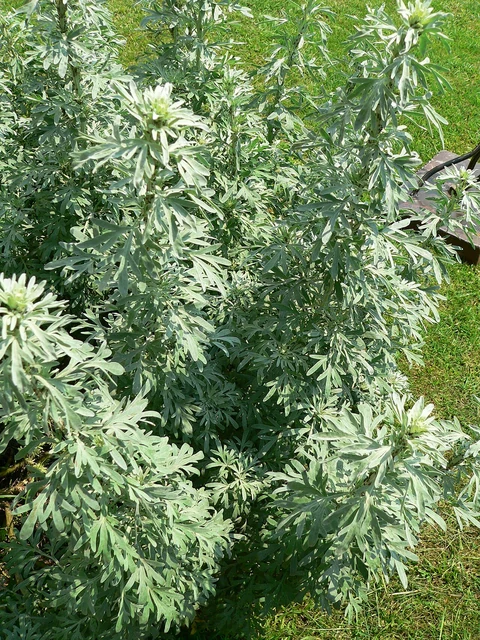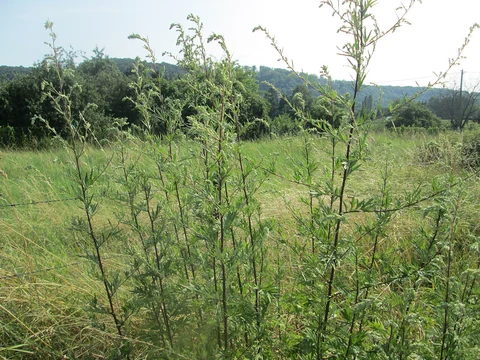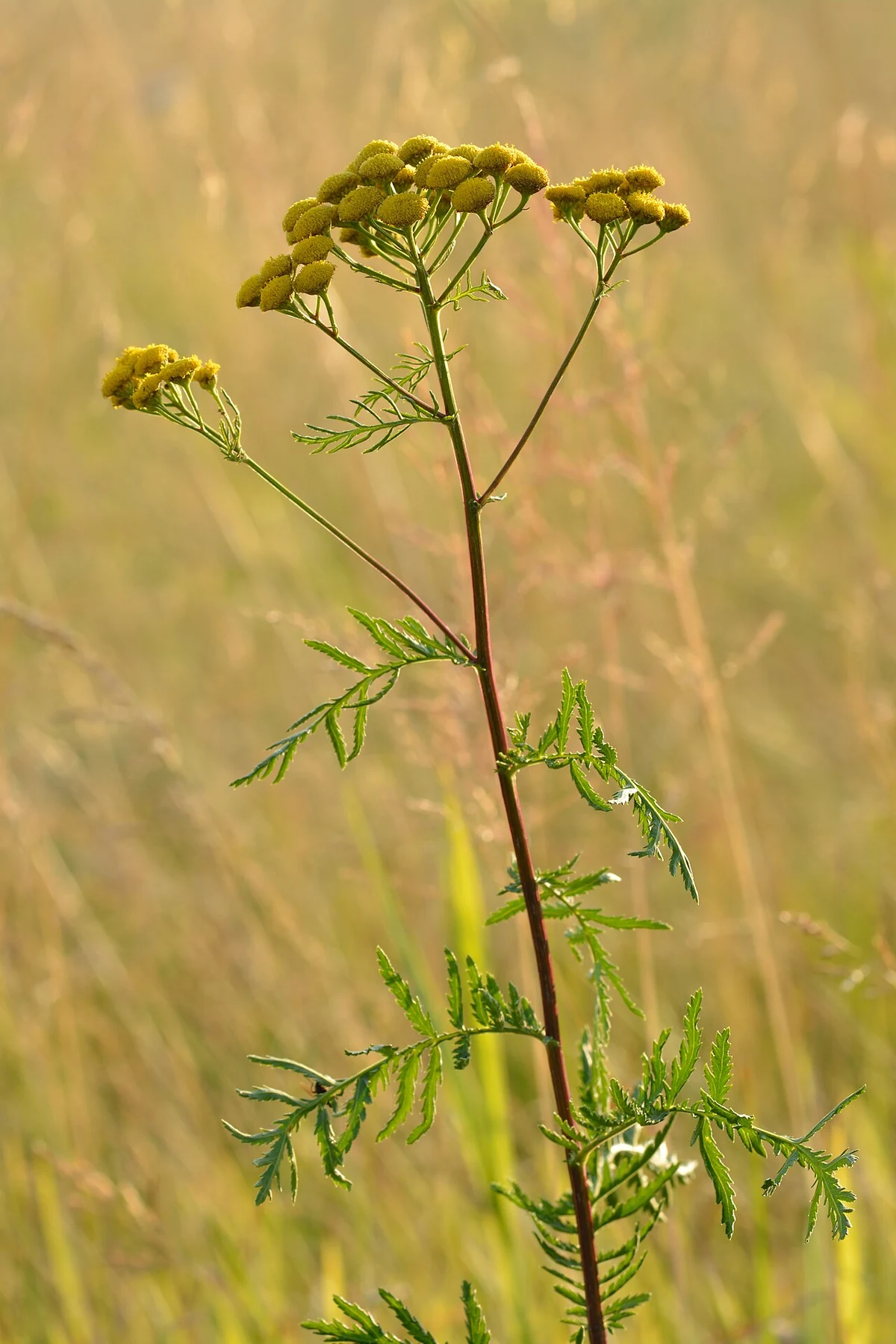
Tansy (Tanacetum vulgare): yellow flower heads and divided leaves. Resized and converted to WebP; no cropping or content edits.
Ivar Leidus · CC BY-SA 3.0 · Source · EXIF orientation respected; resized without cropping or upsampling; converted to WebP at quality 88. No other content edits.
The plant with yellow buttons
Tansy is an aromatic perennial with deeply divided leaves and flat clusters of yellow, button-like flower heads. It grows across parts of Europe and Asia and forms persistent patches. The leaves and flowering tops were the parts gathered for the preparations described here, and the plant's sharp, pungent scent is one of its most recognisable features.
The old names need a little care. Culpeper's garden tansy is a separate entry from the wild tansy, or silverweed, that follows it, and the modern tansy ragwort is a different plant again. The tansy of this article is Tanacetum vulgare, wrotycz in Polish.
A spring food and a many-sided remedy
Culpeper describes a spring dish called a tansy, made with eggs and the herb, and explains it through the medicine of his day: winter was thought to leave cold, moist humours in the body, and the bitter plant helped to correct them at the turn of the season.
He also recommends tansy for worms and for urinary complaints, and gives it a prominent place in women's medicine. He praises its power to prevent miscarriage, and in the same entry links it with bringing on menstruation. Within the flexible medical vocabulary of his time, one strongly acting plant could be given these different purposes, and Culpeper records them side by side. His entry shows how much a single garden herb was expected to do for a household.
Sources: [C]
Village medicine and the farmyard
Seweryn Udziela, who gathered plant lore in the villages of the Kraków region between 1894 and 1899, recorded tansy in several places. At Dobczyce a decoction was drunk for stomach complaints, and the plant also went into baths. In Wieliczka it was taken against intestinal worms. At Zakliczyn near Siepraw, spirit in which tansy had been steeped was rubbed onto the limbs for rheumatic pain. Each village had its own route for the same plant: a drink, a bath, a rub.
The record moves easily from people to animals. Tansy was burned around cows at calving, and mixed herbal decoctions were given to them after the birth. At Gaj, tansy and lemon balm were thrown onto the fire so that milk warming nearby would not curdle.
These notes are exact about place and time. They describe the practice of particular villages at the end of the nineteenth century, written down during fieldwork among the people who used the plant.
Sources: [U]
What was prepared
Together the sources describe a full household range of tansy preparations: water decoctions, expressed juice, plant material steeped in spirit, warmed plant applications and preparations in oil. A spirit rub was made by soaking the herb in alcohol. It was a different thing from an essential oil, the concentrated volatile fraction obtained by distillation.
Each form had its own use. A decoction could be drunk or poured into a bath; spirit was rubbed onto aching limbs; warmed plant material was laid on the body; smoke from the burning herb reached the cows at calving. The old records keep these routes distinct, and a bath at Dobczyce is described as a different practice from a drink taken in Wieliczka.
The list also shows what an ordinary household had to hand — water and a pot, spirit, oil, the fire — and how one plant could be worked into each of them.
The Easter dish and the end of winter
Culpeper's spring tansy belongs to a seasonal understanding of the body. Winter was believed to leave cold and moist humours behind, and a dish of eggs and a bitter herb marked the turn of the year. In that setting bitterness was welcome at a feast: a sign that the food was doing its work, not a fault in the cooking.
Fernie adds a story of Easter ball games in which a tansy cake was the prize for the winners, attributing it to old chroniclers. He connects the dish with the end of Lent and the weeks of fish eating that came before Easter.
He also describes young tansy leaves in cakes, puddings and omelettes, so the plant stood on the table as well as in the medicine cupboard. The same chapter records severe effects from tansy oil alongside the doses he gives. The old writers knew tansy as a strong plant rather than a mild kitchen herb, and the kitchen and the dispensary used it in very different forms.
Shoes, beds and the hearth
Fernie's Sussex example puts tansy leaves inside the shoes as a remedy for ague, the old name for recurring fevers. In Scotland he reports preparations of the flowers used for gout. In the Kraków region, Udziela's villagers rubbed tansy spirit into painful limbs. Each is a separate local practice with its own material and route — leaves against the foot, flowers for gout, spirit on the skin — and together they show how many ways a strongly scented plant entered daily life.
Fernie's household lore turns to insects. Tansy was laid in beds and used to keep flies away from meat. These were everyday uses of an aromatic plant around sleeping places and stored food, part of the same practical knowledge as its medicine.
The hearth practice at Gaj is different again. Tansy and lemon balm were thrown onto the fire to stop milk on the stove from curdling. The herbs never went into the milk itself; the action joined fire, scent and a valuable food at the moment it was most easily spoiled. It is a small, exact record of how a household tried to protect what it depended on.
A plant moving through the livestock household
Udziela also records tansy's local names: wrutyca or rutyca at Radziszów and Polanka Haller, and uwrotyć at Rzeszotary. These are dialect forms of one plant, and they are worth knowing when reading an inherited notebook or an old village account, because they sit close to the names of other herbs.
His calving records describe two practices. At Brzezowa and Skawina herbs were burned so that the smoke would take pain away from the cow's udder. In several villages the cow was given a decoction after the birth, in which tansy was mixed with other herbs. The aim in each case was the animal's recovery and its milk — the welfare of the household economy as much as of the cow.
The sources allow each preparation to be described by its method. A decoction was made by heating the plant in water; a spirit macerate by soaking it in alcohol; fumigation by burning it so that the smoke reached the animal; a warmed application by heating the plant and laying it on the body. None of these was the same as distilling an essential oil. When an old account uses a loose word such as extract, the details of the method show what was actually made.
These records place tansy at the centre of a working farm year: beside the cows at calving, at the hearth, in the bath and in the bottle of spirit kept for aching limbs.
What the old record shows
Taken together, the sources draw a full picture of tansy in European household medicine. It was a bitter spring food eaten at Easter; a remedy against worms in Culpeper's herbal and in Wieliczka; a decoction for the stomach and a herb for the bath at Dobczyce; a spirit rub for rheumatic limbs at Zakliczyn; leaves in the shoes against ague in Sussex; flowers for gout in Scotland; smoke and a drink for cows after calving; and a herb thrown onto the fire to protect the milk.
Each use comes from a named writer or a named village and is reported here as it was recorded. That attribution is what gives the history its value. It shows not one universal remedy but a plant that many communities knew well and used in their own ways.
Sources
- [C] Nicholas Culpeper. The Complete Herbal (1850). Garden Tansy, pp. 178–179
Historical descriptions and preparations
Thomas Kelly expanded edition; not current treatment advice.
- [U] Seweryn Udziela. Rośliny w wierzeniach ludu krakowskiego, Lud 30 (1931). Entry 120, Tanacetum vulgare, p. 66
Named local practices, fieldwork 1894–1899
Reported traditional use, not evidence of efficacy.
- [N] North Carolina State Extension. Tanacetum vulgare, Plant Toolbox (accessed 2026). Description and poison characteristics
Identity, skin irritation and serious ingestion toxicity
Botanical safety account, not medicinal endorsement.
- [F] William Thomas Fernie. Herbal Simples, second edition (1897). Tansy chapter; digital page marker near chapter end is inconsistent
Seasonal food, Sussex footwear custom, Scottish gout preparations and household insect lore
Historical compilation with dangerous oil and reproductive recommendations; no doses adopted.