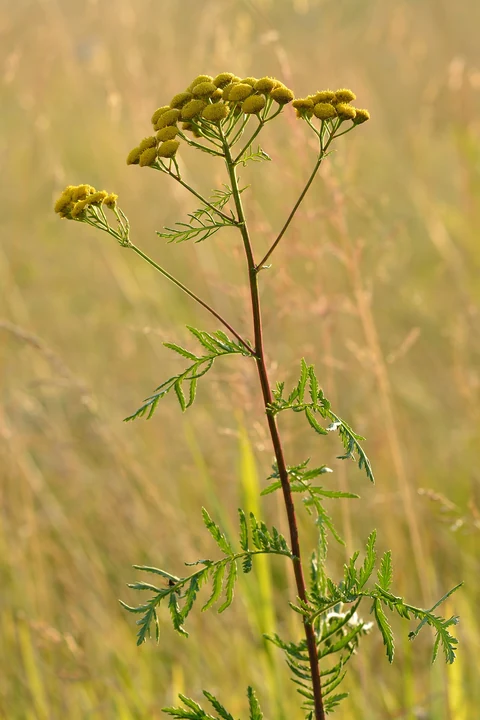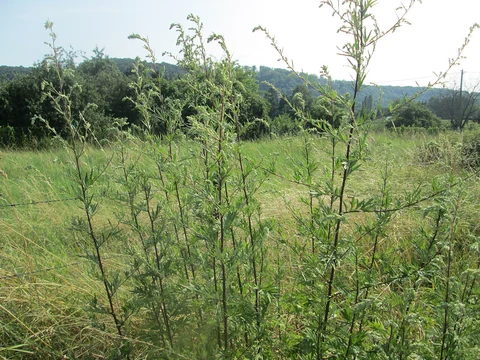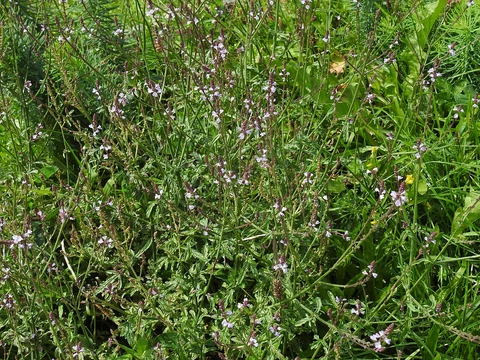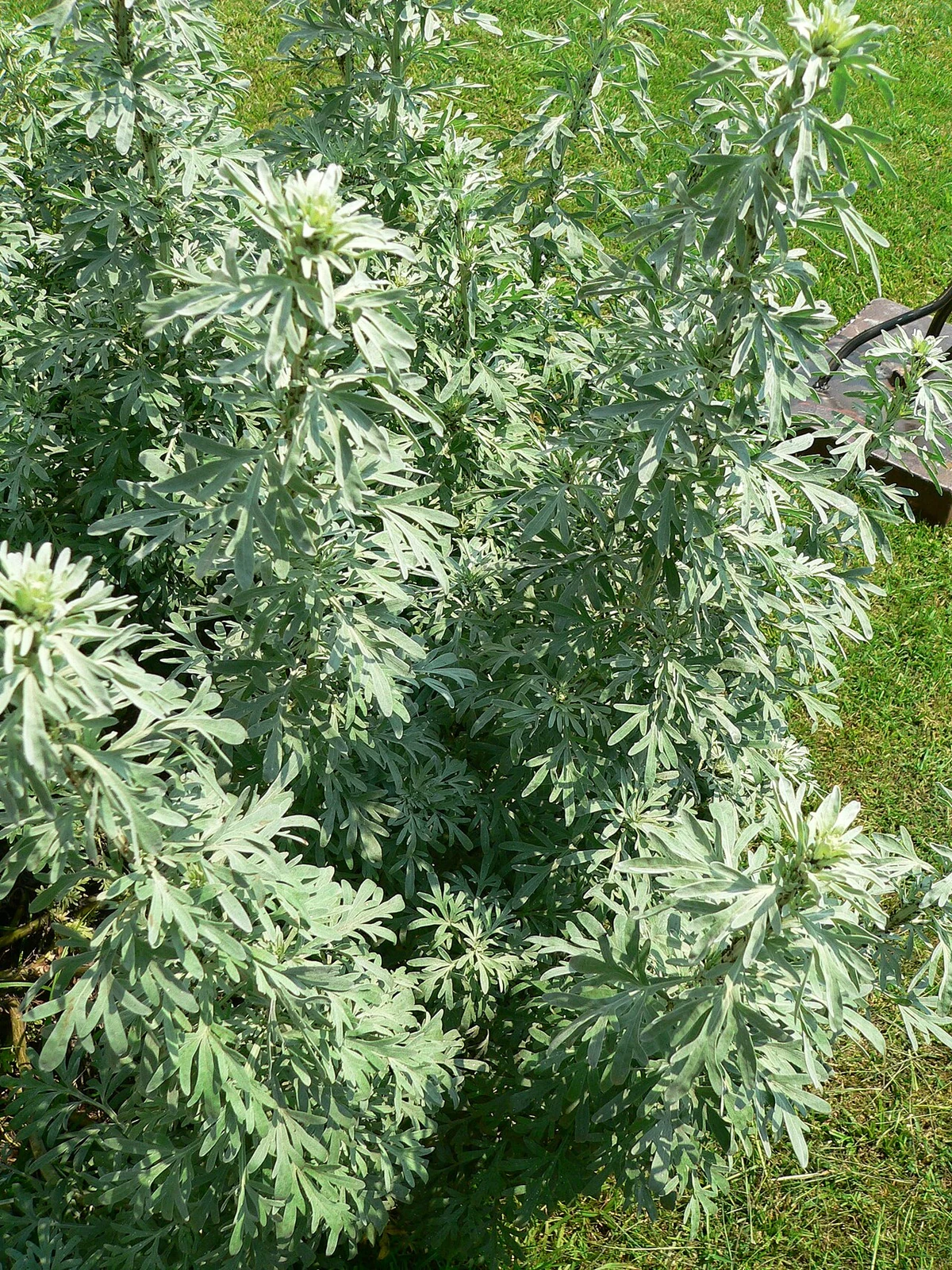
Grey-green, divided leaves of wormwood (Artemisia absinthium). Resized and converted to WebP; no cropping or content edits.
David Monniaux · CC BY-SA 3.0 · Source · EXIF orientation respected; resized without cropping or upsampling; converted to WebP at quality 88. No other content edits.
A silvery herb with several namesakes
Common wormwood bears finely divided silvery-grey leaves and small yellowish flower heads. Its leaf or leafy flowering top is the material defined in the EMA account of Artemisia absinthium. Mugwort, Artemisia vulgaris, is a separate species and has its own article here.
Culpeper distinguishes common, Roman and sea wormwoods while arguing about their relative strength. His discussion keeps them apart. A coastal plant, a garden plant and a commercial herb can have different botanical identities even when a broad English name links them.
Bitterness interpreted through Mars
Culpeper's lengthy account gives wormwood to Mars. Sympathy and antipathy between planets, organs and diseases provide explanations for appetite, digestive, urinary and other uses. The entry also discusses placing the herb among stored clothes against moths.
Astrology supplies the logic connecting many of his recommendations, and the entry is valuable evidence of medical reasoning preserved in the nineteenth-century expanded edition consulted here.
Its fierce bitterness also made wormwood memorable. A sensory quality supported its medicinal reputation.
Sources: [C]
Piołun in local household care
Udziela records decoctions for stomach discomfort in several villages, abdominal applications at Skawina and a compound application with coltsfoot at Dobczyce. At Radziszów a wormwood spirit was associated with intermittent fever. At Rzeszotary piołunkówka was reportedly drunk after childbirth to cleanse the blood.
He also records baths for poorly thriving children and inclusion in herb blessings on 15 August. Cleansing the blood is the folk explanation recorded with the postpartum drink.
The named places preserve variation. Each household used the plant in its own way.
Sources: [U]
Tea, spirit and oil are different preparations
Editorial collection guidance: Water extracts, spirit macerates and flavoured fermented drinks appear within the history. An essential oil is a concentrated volatile fraction and is not liquid tea.
For a study collection, take a small amount of verified cultivated flowering material, leaving sufficient growth. Dry in a shaded, airy layer and label species, part and date. A historical flowering month describes a region, not a fixed European harvest date.
Piołunkówka was a spirit in which the herb was steeped; Udziela records its purposes rather than its strength.
Present-day editorial handling guidance, not a recipe or a claim attributed to the historical author. Historical source supports identity, part and use only.
The herbalist argues with the apothecary
Culpeper's wormwood chapter is unusually argumentative. He accuses doctors and sellers of preferring a weaker wormwood for reasons of reputation, taste or profit, then partly concedes that a weaker material may suit a weaker patient. The argument concerns matching a plant, a body and a locality within his own medical reasoning.
He even proposes that coastal wormwood suits coastal inhabitants because both are shaped by the same air. That is a historical environmental explanation, linking a plant, a place and the people who lived there. His distinction among common, Roman and sea wormwoods is essential to understanding the passage: the discussion is comparative and cannot be reduced to a monograph on Artemisia absinthium alone.
The chapter's jokes, religious polemic and attacks on professional pride are also part of its persuasive method. The author invites the reader to trust his plain reasoning against institutional authority. His voice, with its insults and its confidence, is part of the history.
Sources: [C]
Mars as a working explanation
The association with Mars is developed through places, organs and relationships. Culpeper points to wormwood around forges and ironworks and treats that setting as evidence of a martial nature. He then uses sympathy and antipathy among planets to explain why the herb might address a range of complaints. These connections form the structure of the argument, not an ornamental horoscope placed above an otherwise modern list.
His conversations between personified planets give the explanation a dramatic form. Mars negotiates or quarrels with other celestial figures and offers wormwood as a remedy. The stories teach how the author thinks a medicinal correspondence should be read. They are a lively part of the cultural history of the plant.
This approach also explains why a paragraph about appetite can stand near one about worms, drink or mental dullness. The links arise within a system of qualities and planetary relations. Keeping that reasoning visible is the faithful way to describe old natural medicine.
Sources: [C]
Cloth cupboards, bitter drinks and local piołunkówka
Fernie records wormwood among stored clothes against moths and associates it with cloth manufacture. This domestic material use sits alongside the medicinal bitterness. A plant could be valued for its smell around a chest of textiles without being swallowed. His regional names, including old woman and green ginger, are names he reports rather than separate botanical identifications.
His absinthe discussion belongs to nineteenth-century concern about repeated consumption of a strong drink. It combines observations, contemporary medical interpretations and experiments, and it treats absinthe as a distilled liqueur quite different from a bitter herb drink.
Udziela's piołunkówka is more locally situated. At Radziszów the spirit was associated with intermittent fever; at Rzeszotary it was used after childbirth with an explanation about cleansing blood. The same preparation name therefore carried different purposes. The record also includes a compound at Wiśniowa involving what the source calls fern seed. That ingredient keeps its old vernacular name.
The local baths and abdominal applications show further variation in route. They were meant to strengthen or relieve discomfort, and each served its own person: a poorly thriving child, a mother after childbirth, an adult with an uneasy stomach.
Bitterness, household craft and a medical worldview
Wormwood's history shows how taste, household craft and a medical worldview could reinforce one another. Culpeper made it the herb of Mars, argued over its common, Roman and sea forms and laid it among stored clothes against moths. Fernie followed it into cloth manufacture and absinthe. Around Kraków piołun was boiled for the stomach, laid on the abdomen, used in baths for poorly thriving children, steeped as piołunkówka against fever and after childbirth, and blessed on 15 August. Today the European Medicines Agency describes wormwood preparations within its traditional-use framework for temporary loss of appetite and mild digestive complaints, with its own conditions of use.
Its fierce bitterness made it one of the most memorable herbs of the European household.
Sources
- [C] Nicholas Culpeper. The Complete Herbal (1850). Wormwood, pp. 194–198
Historical descriptions and preparations
Thomas Kelly expanded edition; not current treatment advice.
- [U] Seweryn Udziela. Rośliny w wierzeniach ludu krakowskiego, Lud 30 (1931). Entry 17, Artemisia Absinthium, p. 42
Named local practices, fieldwork 1894–1899
Reported traditional use, not evidence of efficacy.
- [E] European Medicines Agency, HMPC. Wormwood herb: HMPC overview (webpage accessed 2026). Overview and risks
Scope and limitations for specified herbal medicines
Does not validate homemade preparations.
- [F] William Thomas Fernie. Herbal Simples, second edition (1897). Wormwood, pp. 612–614
Textile uses, names and nineteenth-century absinthe discussion
Obsolete chemistry and causal claims; related mugwort customs require separate identification.