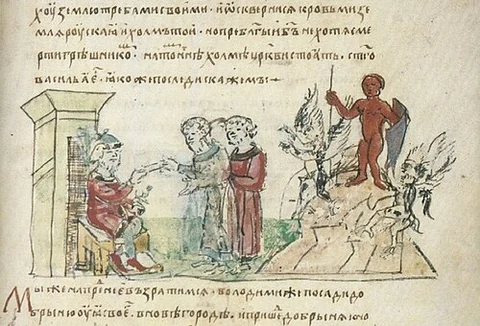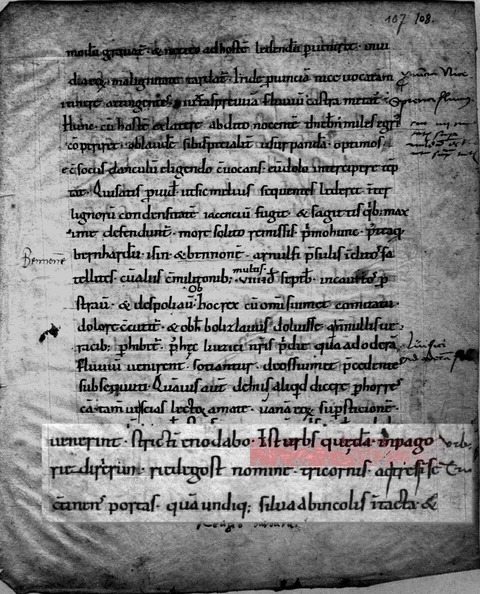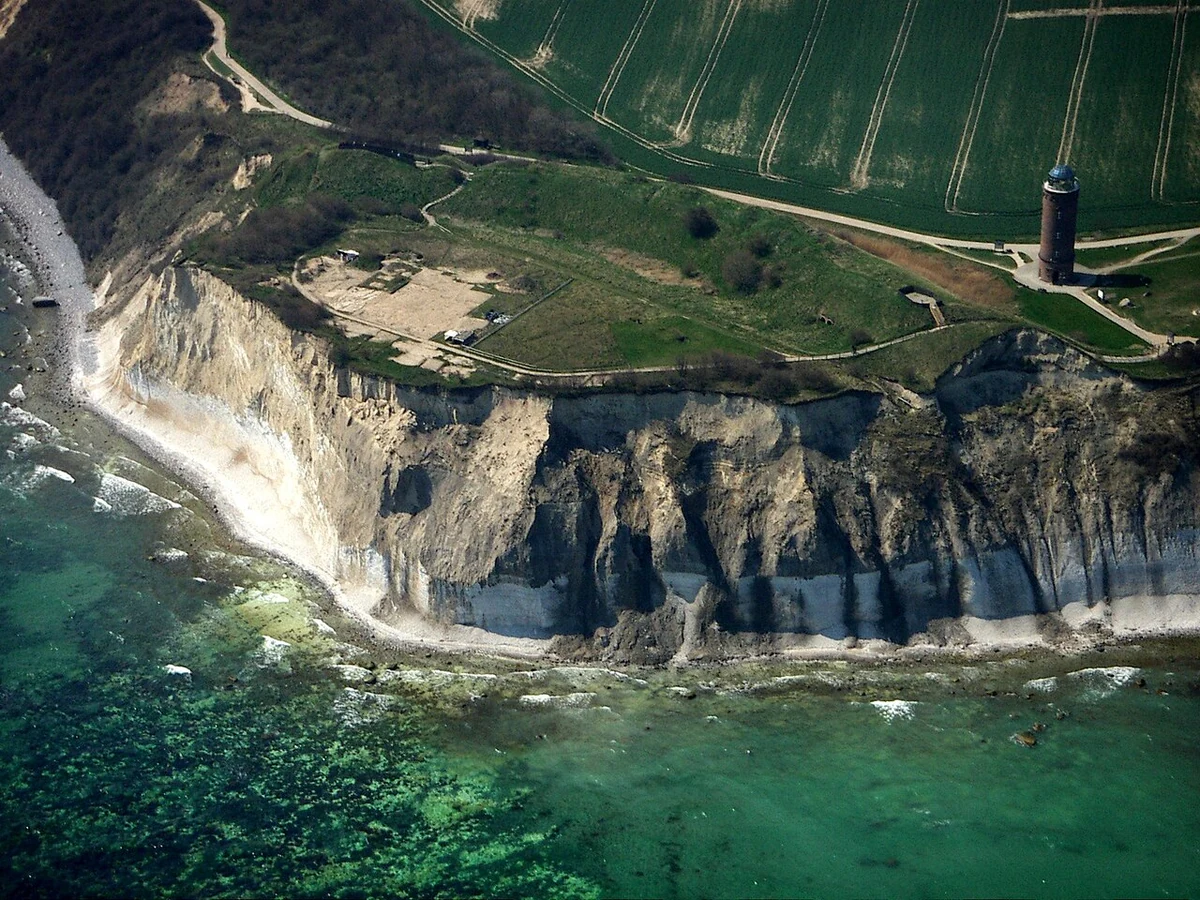
A modern aerial photograph of the surviving hillfort site at Cape Arkona. Resized and converted to WebP; no cropping or content edits.
Stefan Klatt · Public domain · Source · EXIF orientation respected; resized without cropping or upsampling; converted to WebP at quality 88. No other content edits.
A sanctuary inside a conquest narrative
Saxo Grammaticus describes Arkona on Rügen in a narrative of Danish warfare and the destruction of its cult. His account is unusually detailed, but its purpose is not to preserve the inhabitants' religion sympathetically. The sanctuary becomes part of a story explaining conquest and Christian triumph.
That perspective affects tone and selection. Saxo can admire workmanship while condemning worship, record a ritual carefully while describing its participants contemptuously. A useful reading keeps the observed or reported detail separate from the moral verdict attached to it.
The god's name appears in forms such as Suantovitus, commonly rendered Svantovit or Świętowit. This article follows the Arkona account rather than using the name as a label for every four-faced object or every imagined Slavic supreme deity.
Sources: [X]
The building and the four-headed image
Saxo describes a wooden temple within the fortified settlement and an interior separated by hanging textiles. The great image has four heads oriented in different directions, carefully described hair and beard, a garment and a drinking horn. Nearby are equipment and an imposing sword.
These details make the image an arranged material presence. The horn is not merely an emblem; it has a role in the annual rite. The equipment connects the deity's representation with authority and warfare. The textiles and controlled interior distinguish the sanctuary from an ordinary room.
A modern reconstruction can use these particulars, but should mark what remains unspecified. The passage is not a complete measured plan. Its four-headed image also cannot automatically identify an unrelated archaeological object without independent evidence.
Sources: [X]
A harvest rite organised around a vessel
After the harvest, Saxo says, people assembled for a communal rite and feast. The priest prepared the inner space and examined the liquid in the image's horn. A decrease was interpreted as a sign of scarcity; a full measure promised abundance. Advice about conserving or using supplies followed the omen.
The sequence connects ritual with the management of food. The vessel becomes a way to speak about the coming year, and the priest's interpretation bears on collective expectations. This is an analytical reading of the described procedure, not proof that the liquid predicted agricultural conditions.
The old contents are poured out, the vessel is refilled, and a formal act of drinking and petition follows. The material cycle of emptying and replenishing gives the annual observance a visible structure.
Sources: [X]
The cake and the wish for a larger harvest
Saxo also describes an unusually large round cake made with a sweet preparation. The priest stands behind it and asks whether the people can see him. When they answer that they can, he wishes that they might not see him the following year. The narrator explains this as a wish for increased produce, not for the disappearance of priest or people.
That explanation is important. It keeps the gesture tied to abundance rather than allowing a modern retelling to invent a hidden death rite. The cake's scale makes the hope tangible: more food would conceal more of the person standing behind it.
The communal meal then continues. Saxo's disapproval of excess is evident, but the account still records a gathering in which food, divine favour and social participation were closely connected.
Sources: [X]
Wealth and the reach of the sanctuary
The text describes regular contributions, a share of spoils, gifts and valuables kept under priestly care. It also associates horses and armed followers with the cult. These claims portray Arkona as an institution with resources and influence, not just a remote shrine containing an unusual statue.
The interpretation suggested here is that religious authority and material wealth reinforced one another. Gifts acknowledged the sanctuary's prestige; stored wealth and organised service made that prestige visible. Yet Saxo's broad claims about the reach of contributions should not be converted into a census of every Slavic region.
His narrative has reasons to magnify the importance of what the victors destroyed. A powerful sanctuary makes the conquest more consequential. That possibility belongs in the reading alongside the concrete inventory.
Sources: [X]
The white horse and decisions about war
Saxo's sacred horse is explicitly white. Its care and use are restricted, and the text reports the belief that the deity rode it against enemies. Before an expedition, the horse is led across arrangements of spears. The order of its steps provides the sign used to judge the undertaking.
The account is precise enough to show a procedure, but it remains an outsider's report. It should not become an instruction manual for a universal ancient Slavic oracle. Nor should the white colour be projected onto every sacred horse mentioned in another region.
Thietmar's Riedegost account also uses a horse and spears, alongside lots. Comparison reveals a related category of divination while preserving differences in sequence, description and institutional setting. Similarity supports comparison; it does not prove that one complete ritual system can be reconstructed by combining every detail.
Lots, hearth ashes and everyday uncertainty
The Arkona passage extends beyond the sanctuary's horse. Saxo describes lots made from pieces of wood with contrasting sides and a practice in which women mark lines in hearth ash and interpret their number. These details place divination in more than one social setting.
The contrast is revealing: a formal consultation connected with war differs from a domestic act beside the hearth. Both address uncertainty, but access, materials and consequences differ. A single label such as Slavic divination can hide those distinctions.
Saxo's description does not give the personal voices of the women involved. Their motives and explanations must not be invented. The article can nevertheless observe that the text itself acknowledges practices outside the male priest's temple role.
Sources: [X]
Destruction as a reversal of status
Later in the narrative, the image is cut down, dragged out and ultimately reduced to fuel. The treatment reverses its former position: what stood elevated within a restricted sacred interior becomes material handled and burned by the victors.
Saxo also describes fear among inhabitants and the conquerors' concern that an accident during demolition could be interpreted as divine retaliation. That detail shows the destruction as a contested public demonstration. The victors need the act to display the image's powerlessness, while observers may read events differently.
This is why the cult description cannot be detached from the conquest story. The preceding account of wealth and reverence prepares the reader to understand the symbolic force of the ending.
Sources: [X]
Cleaning the room without breathing inside it
Saxo gives the priest a distinctive appearance: his long hair and beard contrast with the ordinary custom attributed to the islanders. Before the annual ceremony, he alone enters the inner space to sweep it. The account says that he repeatedly goes to the doorway to breathe, avoiding the pollution which mortal breath was thought to bring into the deity's presence.
This is an unusually concrete description of a boundary between ordinary bodily life and sacred space. The distinction is maintained through movement: entering, working, withdrawing to breathe and returning. The reader does not need to invent an elaborate theology to see that controlled access and bodily restraint matter in the narrative.
The image, by contrast, is described with trimmed hair and beard resembling local grooming. The difference between the appearance of priest and image is worth retaining. A reconstruction that simply gives every sacred figure the same flowing hair would lose a detail Saxo takes care to supply. His description makes both familiar human workmanship and exceptional priestly conduct part of the sanctuary's effect.
Sources: [X]
The treasury and the worn textiles
Saxo's account of wealth gives specific proportions and quantities: an annual contribution from men and women, a share of spoils, and a large mounted following assigned to the cult. These figures are claims made by the source, not a recovered account book. They nevertheless portray a sanctuary able to gather resources from ordinary contributors, military success and prestigious gifts.
A revealing material detail is the presence of valuable purple textiles damaged by age. Wealth did not necessarily mean everything was newly made or regularly replaced. Objects could accumulate as offerings and remain meaningful after their fabric weakened. Later, during the destruction, Saxo again notices hangings too decayed to bear handling. The repeated detail connects the stored wealth of the cult with the physical scene of its dismantling.
The gift attributed to a Danish king adds another complication. Saxo condemns the donor for honouring a foreign cult, but the report suggests a relationship crossing the religious boundary which his own narrative wishes to police. The sanctuary's reputation, as he represents it, reached beyond the people whose annual rite he describes. This does not substantiate every broad geographical claim in the account; it does explain why offerings and political prestige belong together in the story.
Sources: [X]
An earlier surrender and an incomplete conversion
Near the beginning of book XIV, Saxo recounts an earlier Danish attack on Arkona under Eric. The settlement submits and accepts Christian initiation, but retains the revered image. After the attackers depart, the new religious authority is expelled and the former cult resumes. Saxo presents the episode as evidence of insincerity. A reader can also observe the practical distinction between submission under siege and a durable transformation of institutions.
The later conquest narrative returns to that problem. Leaving the image standing would leave a focus for the cult; destroying it becomes part of securing the new order. In the account's own logic, military victory alone is insufficient. The treatment of the image is meant to settle something the earlier surrender did not.
Saxo's explanation involving the name of St Vitus in the earlier passage belongs to his interpretation and should not be adopted uncritically as the origin of Svantovit. The episode is useful here for comparing the two narrated encounters, not for proving the god was originally a Christian saint or that the inhabitants understood their tradition in the chronicler's terms.
Sources: [X]
A crowd whose reactions were not all the same
During the removal of the image, Saxo reports reluctance among townspeople asked to handle it. Some seek to shift the dangerous task to captives and outsiders. That detail shows how fear and unequal status could shape who was exposed to a risky act. It is not simply a scene in which a whole population abruptly agrees that its former god was powerless.
The narrator also reports different audible reactions, including lament and laughter. He interprets the response of the supposedly wiser inhabitants through shame at their former worship. The reactions and his explanation should be distinguished: a crowd can be represented as mixed even within a triumphal story.
The final use of the cut wood for the victors' cooking makes the reversal especially forceful. A material once kept within a restricted interior now serves an enemy's meal. Saxo then describes a church built with timber prepared for siege equipment, giving the episode another transformation of material purpose. The old image becomes fuel; the instruments of war supply a building for the new religion. These are central elements of the narrative's argument, not incidental carpentry.
Sources: [X]
Other images on the same island complicate the picture
Saxo's subsequent account of Karentia describes several other images with different numbers and arrangements of faces and weapons. Rugiaevitus is associated with multiple faces and swords; Porevitus and Porenutius receive different descriptions. These are not additional measurements of the Arkona image. They belong to other named cult settings within the campaign narrative.
Their presence matters because it prevents the four-headed Svantovit from becoming a universal model for the island, still less for all Slavic religion. Even one author's account of one campaign preserves variation. A four-faced object found elsewhere therefore needs its own provenance and argument before it is identified through Arkona.
The comparison also reveals Saxo's methods. He turns the physical vulnerability of crafted images into a demonstration of religious error, while preserving details of their construction and display. Modern readers can learn from those descriptions without accepting his theological conclusion as an archaeological finding or replacing his different divine names with one convenient label.
Sources: [X]
What can be carried into a modern retelling
A careful retelling can follow the annual sequence, explain the horn and cake, distinguish the horse oracle from domestic signs and make the narrator's position explicit. It can also show how food, war, wealth and sacred authority meet in one institution.
It should not identify every later harvest custom as a direct continuation of Arkona, turn the four heads into an unsupported cosmic diagram or present Saxo's theological explanation as the inhabitants' own. The account is detailed, but it is not complete.
Arkona's value for Slavic heritage lies in that tension. A hostile narrative preserves an unusually concrete set of objects and acts. Reading them closely allows the sanctuary to become historically specific rather than a blank screen for whatever a modern audience wishes ancient religion to have been.
Sources: [X]
Sources
- [X] Saxo Grammaticus. Gesta Danorum, book XIV (written around the turn of the thirteenth century). XIV.1.6–7; XIV.39.2–11, 27–34 and 38–42; Latin passages inspected
Earlier coercive conversion narrative, sanctuary, annual rite, contributions, divination, conquest and comparison with Karentia's images
Latin text mirror; Christian Danish conquest narrative, not neutral participant testimony. Local names and deity spellings follow Saxo's account.
- [T2] Thietmar of Merseburg. Chronicle, German edition Die Chronik des Thietmar von Merseburg (early eleventh-century text; edition 1879). Printed p. 201, continuation of chapter 17 and chapter 18
Lots, horse divination, boar omen, temples and offerings
Hostile Christian narrator; German translation, not manuscript inspection.