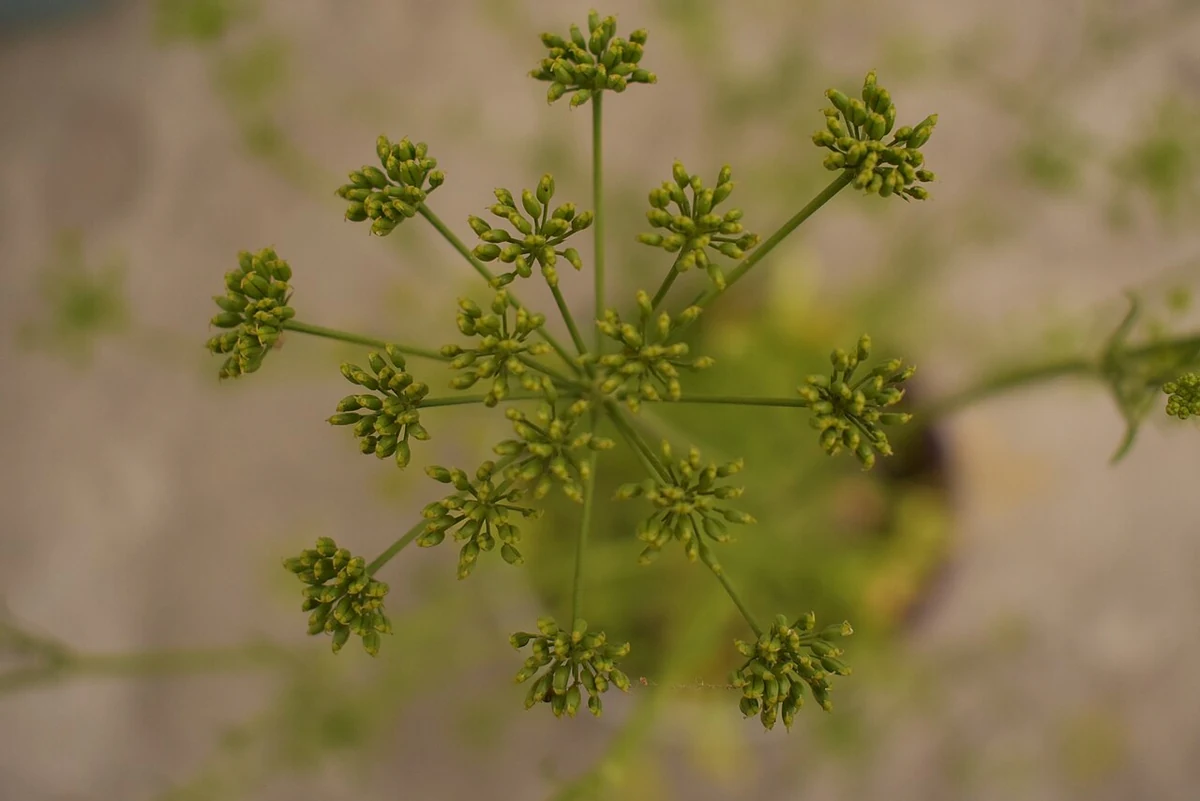
An umbel of coriander (Coriandrum sativum) with green buds and young fruits. Resized and converted to WebP; no cropping or content edits.
Armando Olivo Martín del Campo · CC BY-SA 4.0 · Source · EXIF orientation respected; resized without cropping or upsampling; converted to WebP at quality 88. No other content edits.
Two aromas from one cultivated plant
Coriander is an annual Apiaceae herb with differently shaped lower and upper leaves, small pale flowers and rounded dry fruits. It has a long history of cultivation in Europe and the Mediterranean world. Fresh leaves and ripe dried fruits are familiar foods, but their aromas differ markedly; a recipe must say which part it needs.
Fernie describes English cultivation, particularly in Essex, and the crop being cut and threshed for fruits. His account shows that coriander in a British herbal was not merely an imported exotic. He also mentions escape from cultivation.
Sources: [F]
The confectioner and the dispensary
Sugar-coated coriander fruits were sold as comfits. Fernie associates them with warmth and digestive comfort, especially flatulence. This preparation made an aromatic spice easy to carry and pleasant to chew, and it occupied the border between confectionery and medicine.
He also describes coriander water and the use of the fruit to moderate the unpleasant effects of other medicines, including senna and rhubarb. The role was therefore sometimes supportive within a compound preparation rather than a standalone cure.
Sources: [F]
Trade, food and claims of distant origins
Fernie's chapter links coriander to gin, other flavoured drinks, savoury foods and references from outside Europe. Those references reveal the cosmopolitan character of nineteenth-century herbal writing. The biblical comparison with coriander seed, for example, belongs to the textual tradition he cites.
The European material is more concrete where Fernie describes cultivated crops, confectionery and distilled waters. Beside them stand his more extravagant reports of immortality and strongly narcotic effects, which belong to the wider reputation of the spice.
Sources: [F]
Gathering leaves and ripening fruits
Editorial collection guidance: For fresh leaves, harvest from a healthy identified garden crop, wash and use promptly in food. For fruits, let selected plants mature until the umbels and fruits dry, then collect before they scatter. Finish drying in a clean ventilated place, separate fruits from stalks and store whole in a labelled container. Humid conditions demand particular attention to mould.
Crush or grind only the amount required for a dish. A small dry pan can toast food-grade fruits briefly until fragrant before they are added to a familiar soup, bread or vegetable recipe; avoid burning them. This is an editorial culinary adaptation.
An aromatic water was obtained through distillation in the old dispensary. A simple steeped fruit drink uses water extraction instead, while alcoholic preparations and distilled essential oil differ again. Each had its own carrier and route of use.
Present-day editorial handling guidance, not a recipe or a claim attributed to the historical author. Historical source supports identity, part and use only.
Sources: [F]
An Essex field and the work between plant and spice jar
Fernie's farmers grew coriander under the short name Col. He describes ripe crops being mown and threshed, a sequence that places the spice among organised field crops rather than only among small garden herbs. Cutting gathers the fruit-bearing stems; threshing separates the dry fruits from that larger mass. A jar of round fruits is the endpoint of those operations, not the form in which the crop was first harvested.
His contrast between the smell of the green herb and the aroma of the fruit is striking. He repeats strongly hostile descriptions of the green plant while acknowledging culinary use of the leaves elsewhere. That difference records taste and cultural preference as much as botanical description. A writer who dislikes an aroma may still recognise that another community values it in soup.
The trade also linked very different occupations. Fernie names gin distillers, confectioners and veterinary surgeons. A farmer's crop could consequently move into a drink, a sweet or a compound animal medicine. The important point is that a single aromatic commodity crossed the boundaries between farm, kitchen and dispensary.
Sources: [F]
A historical powder that can be understood ingredient by ingredient
Grieve gives a concrete household mixture under the title Lucknow curry powder, attributed to an old family cookery book in her possession. Its proportions are one part each ginger, coriander and cardamom, one-quarter part cayenne and three parts turmeric, by weight. The spices were separately powdered, then mixed and kept dry in a closed bottle. The title is Grieve's own historical label.
A small culinary adaptation can preserve those proportions using food-grade ground spices: mix them thoroughly in a clean dry bowl, transfer to a clean dry jar and label the ingredients and date. Use the mixture as seasoning in a cooked dish, adjusting the portion to taste and tolerance of chilli. Grieve also describes cutting and threshing the ripe crop.
Sources: [G]
Why flavour mattered in a compound medicine
Coriander's role beside senna and rhubarb was not incidental decoration. Fernie describes it as intended to make other medicines more acceptable and to temper their griping effect. The unpleasant taste and bodily effects of a purgative were part of the experience a dispenser had to manage. An aromatic could therefore have a practical role even when it was not the principal ingredient responsible for the intended action.
In the old dispensary, the main ingredient, the flavouring and the accompanying ingredients each had their own role, and coriander's was to make the medicine acceptable.
Comfits made the same aromatic accessible in another way. Sugar surrounded the fruit and transformed its texture and presentation. Fernie reports the confectioner's claim of stomach comfort, but the sweet also had an obvious sensory appeal. Pleasure, hospitality and hoped-for comfort overlapped in every comfit.
For present-day exploration, compare a small amount of the whole food-grade fruit with freshly crushed fruit used in a familiar cooked recipe. Crushing changes how readily its aroma is released and distributed. Keep fresh leaves in a separate category: they are added for a different flavour and texture. These kitchen distinctions follow the historical material closely.
Sources: [F]
Field, comfit and aromatic water
Coriander's European history is that of a crop moving through many hands. Fernie's Essex farmers mowed and threshed it under the name Col; confectioners coated its fruits in sugar as comfits for the stomach; distillers put it into gin and aromatic waters; dispensers added it to senna and rhubarb to temper their griping; and veterinary surgeons used it in animal medicines. Grieve preserved a family curry powder in which coriander stood beside ginger, cardamom, cayenne and turmeric.
The green leaf and the dry fruit remain two different aromas of one cultivated plant, each with its own place in the kitchen.
Sources
- [F] William Thomas Fernie. Herbal Simples Approved for Modern Uses of Cure, second edition (1897). Coriander, printed pp. 122–123
Recorded culinary and medicinal traditions
A period source with errors and obsolete claims, not a modern field guide. Harvest and kitchen hygiene notes are editorial.
- [G] Maud Grieve. A Modern Herbal: Coriander (1931). Cultivation and Lucknow curry-powder recipe
Harvest sequence and a documented household spice mixture
Recipe transmitted from an unidentified family cookery book; its title does not establish a universal regional Indian recipe.