Copal
- Why it looks similar
- Both are resinous materials.
- What can help distinguish it
- GIA distinguishes copal as younger resin.
- What a photograph cannot establish
- A photograph establishes neither composition nor treatment.
Crystal atlas / organic material
Amber is fossil resin: a material of organic origin rather than a mineral species. Its warm colour and inclusions connect a story about nature with personal symbolism.
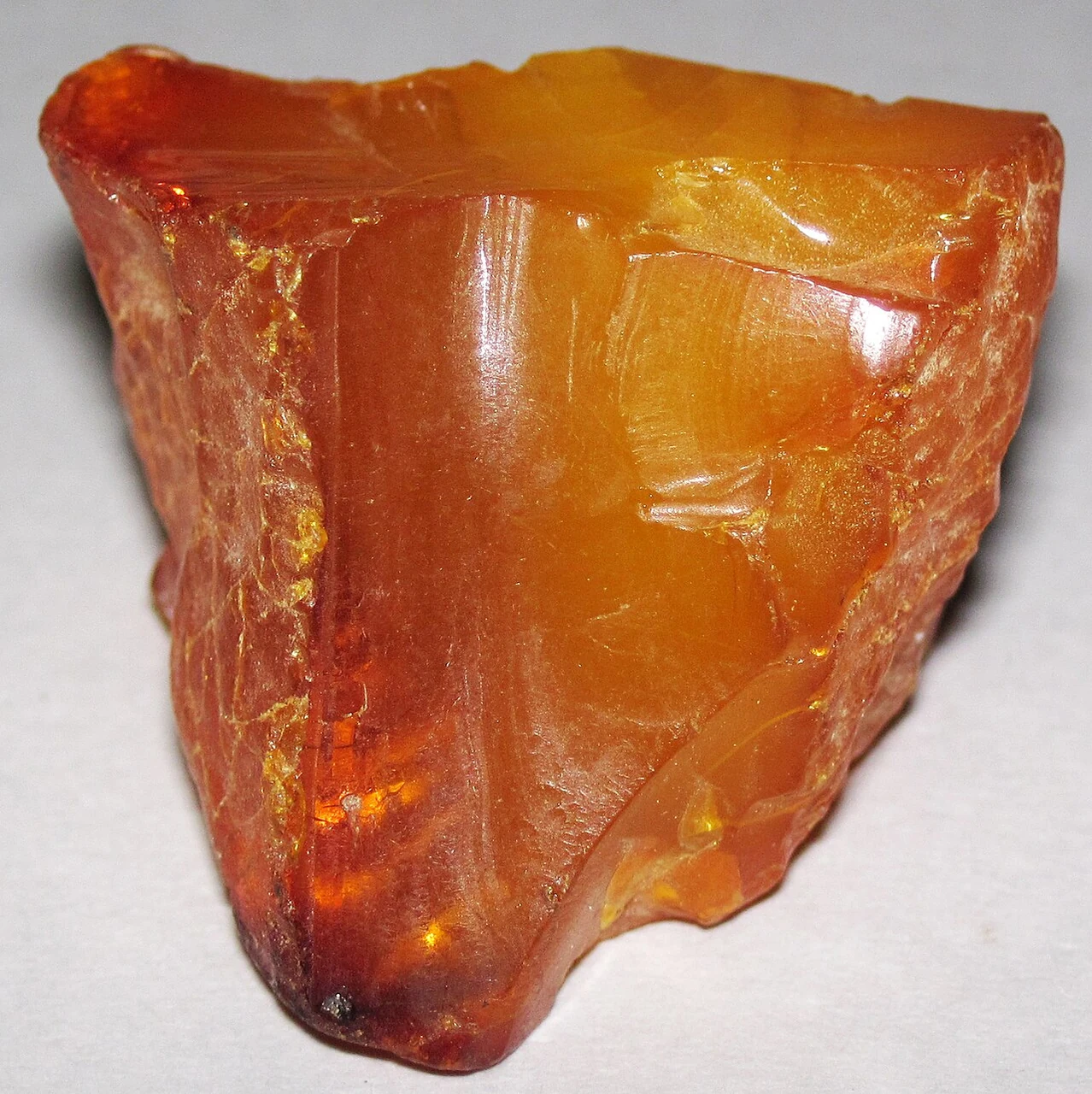
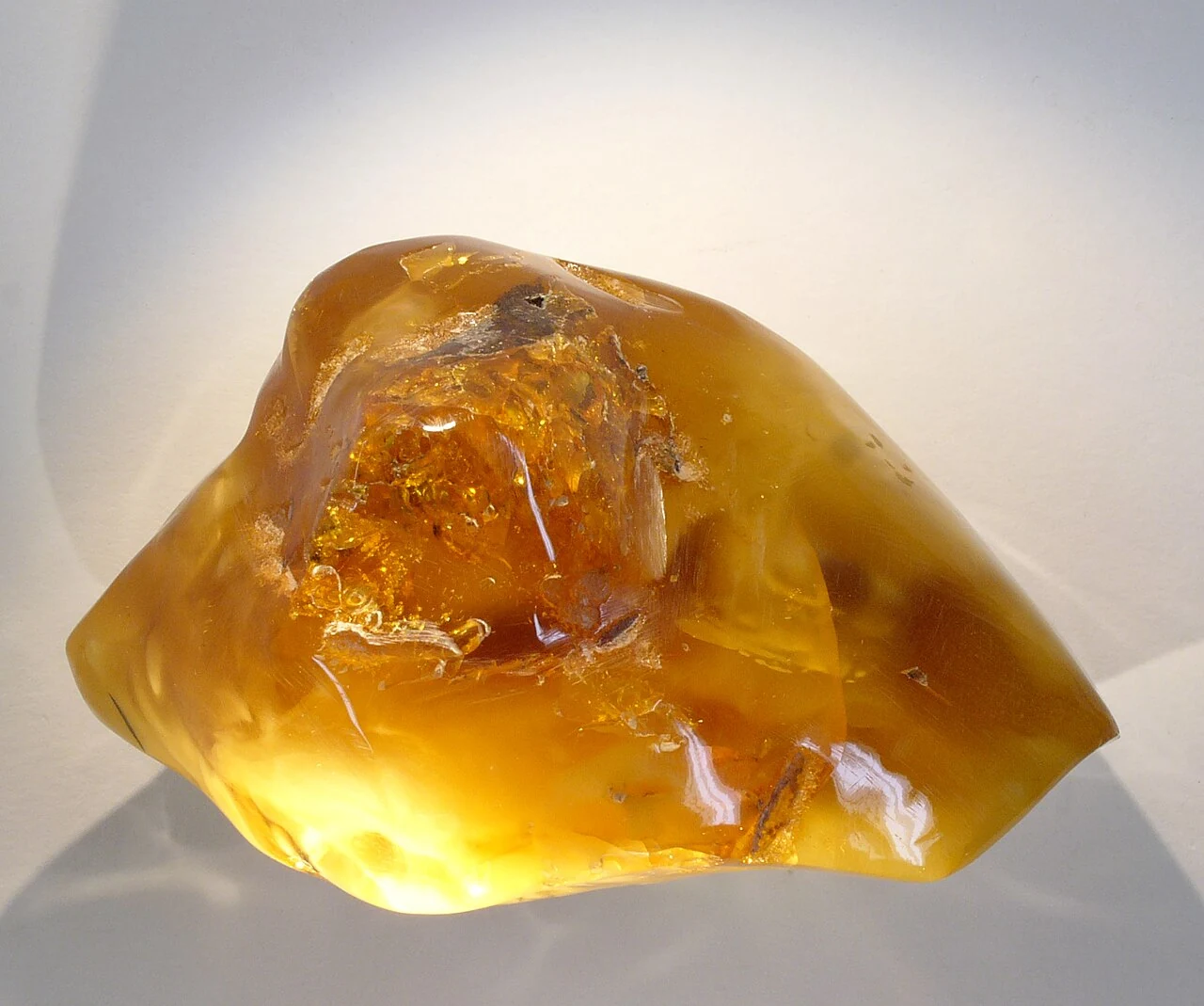
Amber: spiritual meanings, practices and correspondences in two contemporary sources. Their traditional language is presented alongside a separate original practice.
warmth, joy and courage [400]
The contemporary Crystal Vaults compilation presents amber as a symbol of solar warmth, joy and courage. This records present-day lithotherapy; it does not establish a therapeutic effect from an ornament. Crystal Vaults develops warmth into courage, hope and kindness. Amber appears as a personal talisman for good decisions and sustaining bonds; solar imagery connects agency with a friendly disposition. A worn ornament symbolises openness to good experiences and readiness to act warmly within this account, while retaining one’s own boundaries. [400]
Healing Crystals emphasises clearing, protection and moving on from the past. The stone serves as a focus before conversation or reflection and is then displayed in a place associated with the intention. The directory includes altruism, ancient wisdom, grounding and aura balancing. The solar plexus is its principal chakra. This differs in emphasis from Crystal Vaults’ joyful solar account. HC’s directory identifies Aquarius and the symbolic number three, adding correspondences that are independent of the other publisher’s solar imagery. [437]
Crystal Vaults associates yellow and golden colours with the sacral and solar plexus chakras within its colour system. [400]
Original practice, “keep the good moments”: place amber beside three small cards. On the first, record a small pleasure from the previous day; on the second, something you did for another person; on the third, a gesture you want to repeat. Observe the colour in ordinary diffused light. If you see inclusions, treat them as an invitation to natural curiosity rather than a message intended for you. Choose one card and set a specific time to carry out that gesture. You can keep the note in the jewellery box and return to it when you next wear the piece. The practice does not require further stones or a perfect colour match. If the amber is a family keepsake, add the giver’s name and the object’s verifiable history. This keeps personal memory separate from the story of its geological origin. Solar imagery can be retained in a small gesture of hospitality or daily remembrance of something good. Amber may also recall a journey or gift; adding your own history gives the ornament a meaning that need not fit a predetermined system. Choose an association that reflects your experience.
Scope of the sources: The listed pages were consulted, without claiming to have read the books they cite. Correspondences document a selected contemporary current rather than a shared system for all cultures. Symbolic cleansing can consist of an intention alone, without water, salt, smoke or exposure to sunlight.
Intention practice →Yellow to brown pieces, transparent or cloudy. [391] [392] [393]
Observe in diffused light without scratching, heating or breaking.
It develops from ancient tree resin. Baltic coasts are a well-known occurrence, but the material name does not automatically establish Baltic origin.
GIA distinguishes amber from younger resin called copal. [392]
When purchasing, ask for an unambiguous material name and disclosure of treatment. A spectacular inclusion should not replace documentation. Compare photographs of the same object from both sides rather than judging a catalogue colour alone. Do not use a hot needle, burning or tasting tests; these can damage the object and are not safe observation methods. Have a valuable inclusion specimen examined before buying and retain the examination report with the receipt.
Material-specific guidance is given under safe handling; settings and treatments need separate assessment.
Use a separate supported compartment away from a sunny windowsill. Keep the provenance label with the object.
GIA recommends gentle cleaning with mild soap and warm water, with protection from heat and chemicals. Prolonged light can alter its appearance, and dye may fade. Do not use steam or ultrasonic cleaners. After brief cleaning, dry with a soft cloth and check the setting’s requirements separately. Choose a separate padded compartment for everyday storage. “Solar” symbolism is not an instruction to leave amber on a windowsill or heat it for its scent.
Do not grind, drill or inhale dust. This card concerns intact objects; a chemical formula alone does not quantify exposure. [37]
No. Request the precise name, treatment disclosure and documentation appropriate to the object’s value. Do not perform destructive home tests.
The cited clinical trial concerned rose quartz, not this atlas entry. It does not establish a therapeutic effect for this material; the symbolism is presented for understanding traditions and personal practice. [159]
Study methods and limitations →Mineralogical, gemological, institutional or scientific source. Its scope is recorded in the source index.
Commercial practitioner source: documents beliefs, not medical evidence. The site sells crystals, so we give a bibliographic description without an active link; the full address is kept in Avonoria’s source documentation.
Mineralogical, gemological, institutional or scientific source. Its scope is recorded in the source index.
Mineralogical, gemological, institutional or scientific source. Its scope is recorded in the source index.
Mineralogical, gemological, institutional or scientific source. Its scope is recorded in the source index.
Commercial practitioner source: documents beliefs, not medical evidence. The site sells crystals, so we give a bibliographic description without an active link; the full address is kept in Avonoria’s source documentation.
Photograph identity and usage-rights source; not a test of specimen composition.
Photograph identity and usage-rights source; not a test of specimen composition.