Celestine
- Why it looks similar
- Pale blue may look similar.
- What can help distinguish it
- Calcium carbonate differs in composition from strontium sulphate.
- What a photograph cannot establish
- A photograph establishes neither composition nor treatment.
Crystal atlas / variety
Blue calcite is a colour variety of the same species as other calcites. Its separate card describes a distinct trade and lithotherapy tradition, not a new mineral species.
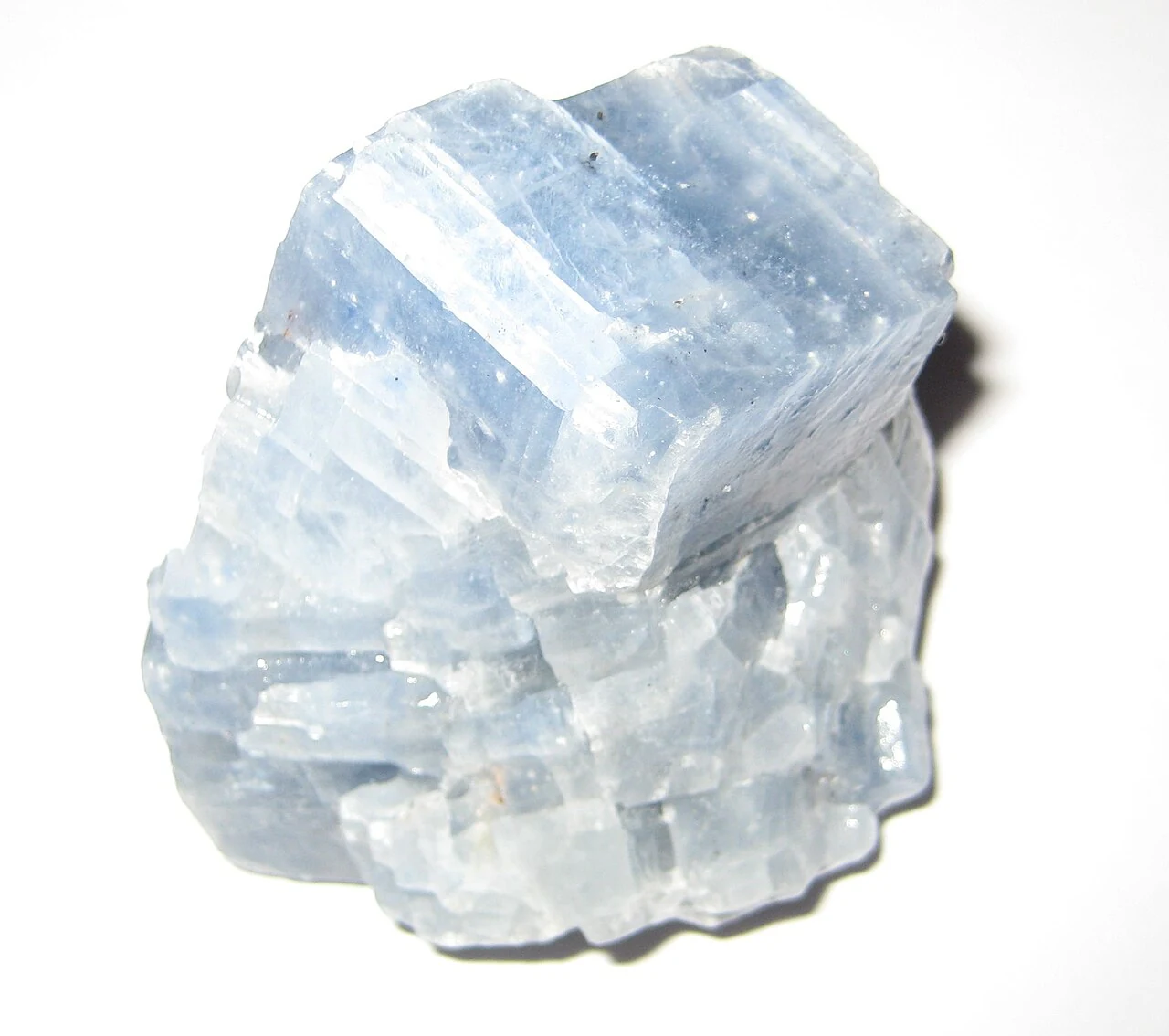
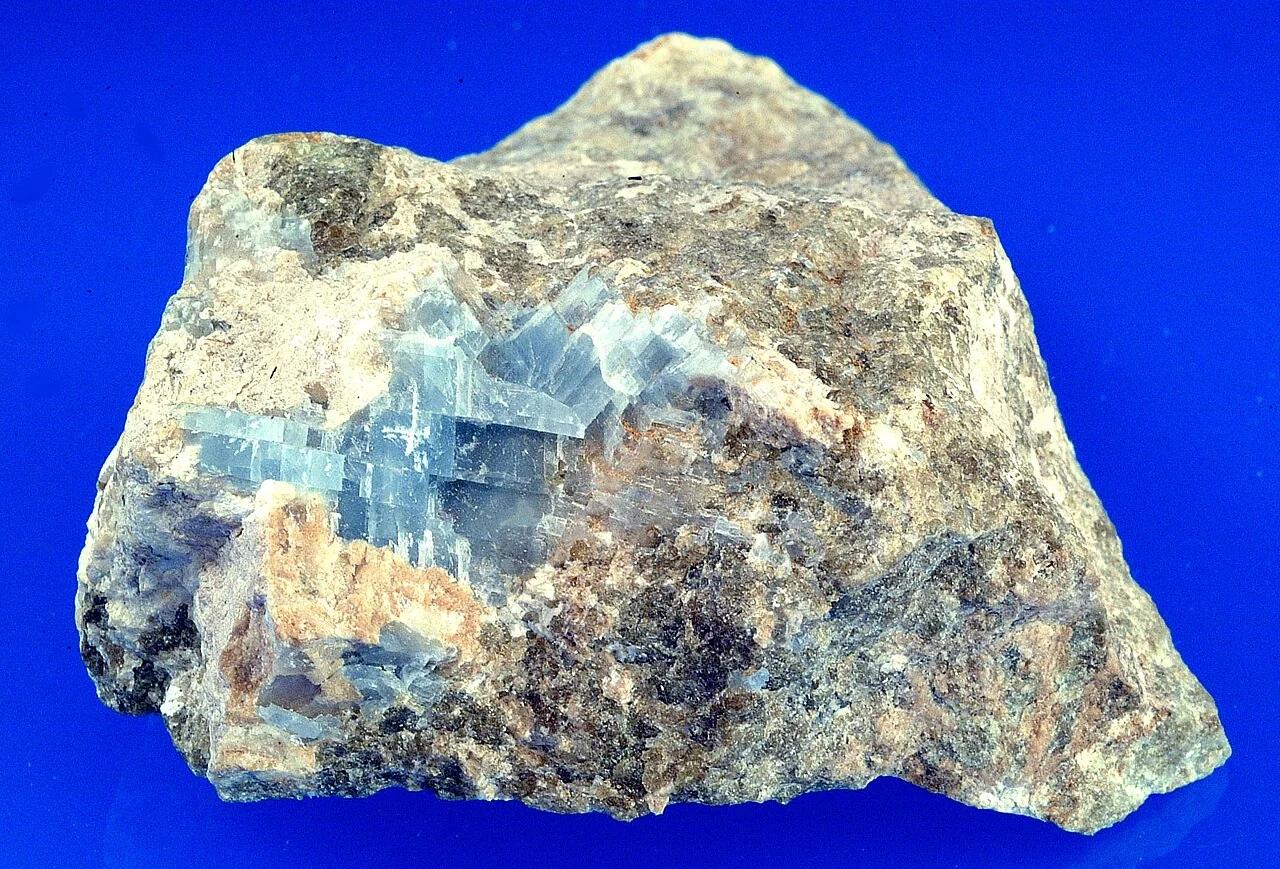
Blue calcite: spiritual meanings, practices and correspondences in two contemporary sources. Their traditional language is presented alongside a separate original practice.
quiet and communication [432]
The Crystal Council presents blue calcite as a symbol of quiet, aura shielding, creative imagination and dreams. Communicating feelings is more central to this account than the energetic beginning associated with the orange variety. TCC describes the aura as a space symbolically buffered and ordered by the stone. Dream work then leads into expressing personal insights. Pairing with aquamarine strengthens communication within its account. Creativity and communication connect through translating an inner image into expression. In this account, blue signifies the space needed to hear one’s own thought. [432]
Happy Glastonbury calls blue calcite a gentle variety and links it with clarity of speech, particularly mentioning speakers, singers and actors. A symbolic energy “filter” is intended to allow calmer expression; its correspondences include throat, third eye and crown. Both sources discuss communication, but HG concentrates on voice and articulation while TCC develops creative imagination and dreams more strongly. HG also describes intuitively choosing a calcite colour as the start of practice. A changed colour preference can symbolise another stage of a personal journey. [447]
The Crystal Council: throat and third eye; fire and wind. [432]
Original practice, “a sentence after a pause”: choose a thought you find hard to express clearly. Write it beside blue calcite, then take a brief quiet pause. Read it again and separate observation from judgement. Find one simple sentence that can be spoken kindly. Keep the note where you prepare for a conversation; the stone marks a pause rather than speaking for you. In the evening record whether the attempt was useful. If dreams interest you, keep separate columns for recollection and interpretation, without treating an image as an instruction. No stone under the pillow is needed. Blue and orange calcite remain one species but receive different symbolic stories. Choose quiet work with words or a creative beginning according to today’s intention. A personal colour preference is enough to give a decoration a place in your own ritual.
Scope of the sources: The listed pages were consulted, without claiming to have read the books they cite. Correspondences document a selected contemporary current rather than a shared system for all cultures. Symbolic cleansing can consist of an intention alone, without water, salt, smoke or exposure to sunlight.
Intention practice →Blue colour in calcitic material. [414]
Observe in diffused light without scratching, heating or breaking.
Pieces and aggregates of the colour variety. [414]
Table sources: [414]
Calcite occurs in sedimentary and metamorphic rocks and veins. The reference source does not establish the cause of blue colour in every object.
A blue stone need not be calcite. Request material identification and disclosure of dye or coating. Do not test natural origin by immersing it in vinegar: that is destructive and unsuitable for an ornament. Choose a piece without loose fragments and with safe edges. For a matrix specimen also ask about the matrix’s stability. Presumed energetic strength is not accepted as a way to separate natural material from an imitation.
Material-specific guidance is given under safe handling; settings and treatments need separate assessment.
Use a separate supported compartment away from a sunny windowsill. Keep the provenance label with the object.
Store in a padded compartment without rubbing against hard jewellery. For an unexamined object use dry cleaning, without acids, salt, ultrasonic cleaning or prolonged soaking. Do not heat it or treat a Mohs number as impact resistance. An adhesive-repaired or dyed object requires separate assessment. An intention of “cleansing” does not require altering the stone physically.
Do not grind, drill or inhale dust. This card concerns intact objects; a chemical formula alone does not quantify exposure. [37]
No. Request the precise name, treatment disclosure and documentation appropriate to the object’s value. Do not perform destructive home tests.
The cited clinical trial concerned rose quartz, not this atlas entry. It does not establish a therapeutic effect for this material; the symbolism is presented for understanding traditions and personal practice. [159]
Study methods and limitations →Mineralogical, gemological, institutional or scientific source. Its scope is recorded in the source index.
Commercial practitioner source: documents beliefs, not medical evidence. The site sells crystals, so we give a bibliographic description without an active link; the full address is kept in Avonoria’s source documentation.
Mineralogical, gemological, institutional or scientific source. Its scope is recorded in the source index.
Photograph identity and usage-rights source; not a test of specimen composition.
Photograph identity and usage-rights source; not a test of specimen composition.