Blue calcite
- Why it looks similar
- Both can be pale blue.
- What can help distinguish it
- Celestine is strontium sulphate; calcite is calcium carbonate.
- What a photograph cannot establish
- A photograph establishes neither composition nor treatment.
Crystal atlas / mineral
Celestine, also called celestite in English trade, is strontium sulphate. Blue clusters are recognisable, but the mineral can also be colourless or white. Colour is not its entire definition.
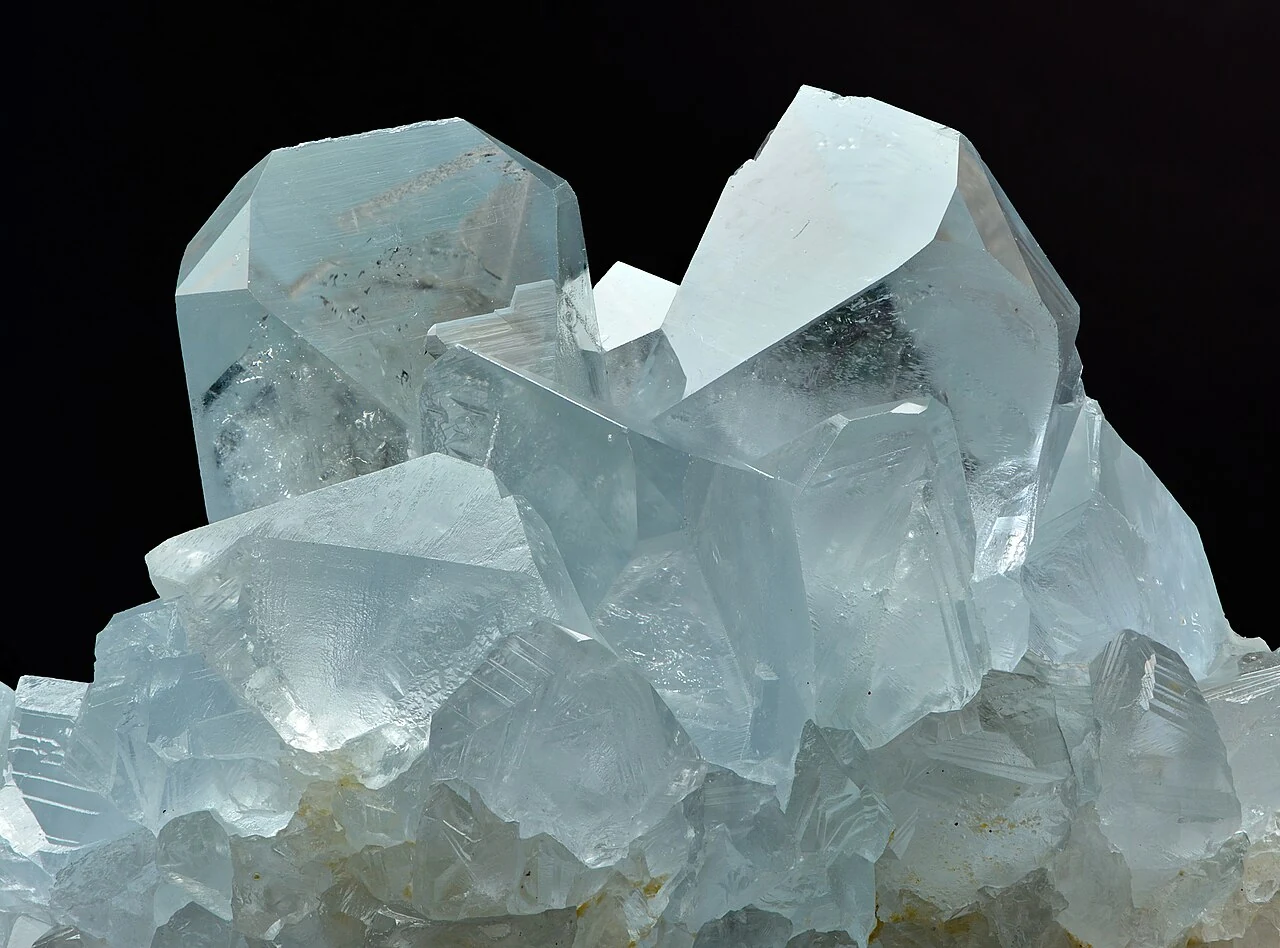
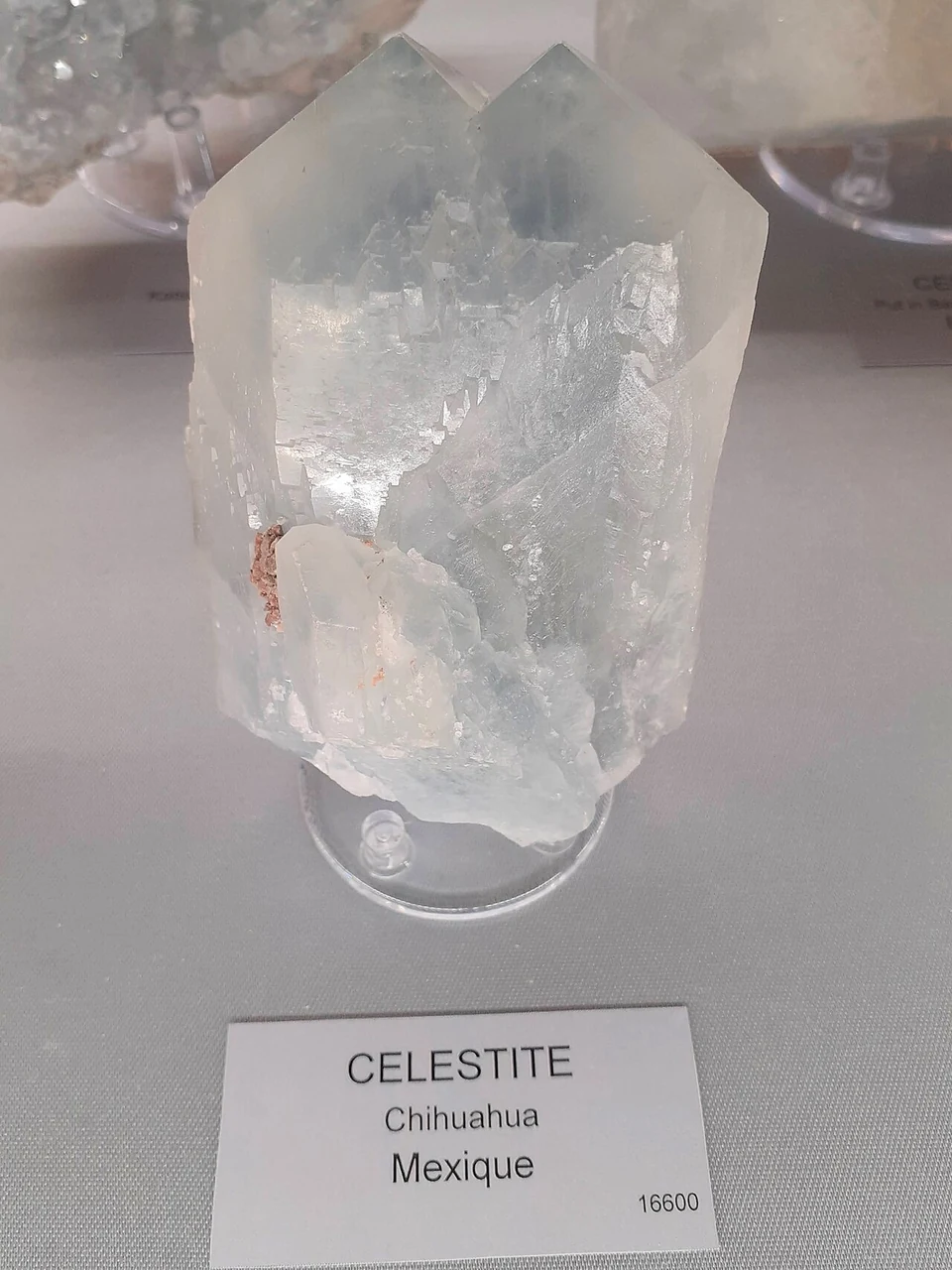
Celestine: spiritual meanings, practices and correspondences in two contemporary sources. Their traditional language is presented alongside a separate original practice.
angelic symbolism and communication [406]
The Crystal Council describes celestine through angels, calm communication and dreams. Its celestial meaning is a language of contemporary spirituality, not a laboratory property of strontium sulphate. TCC emphasises a gentle atmosphere for contemplation and spiritual contact. Celestine becomes a companion for dream work and a space in which someone wishes to name feelings and intentions calmly. Angelic presence, dreams and a calm voice form a shared story of receiving inspiration and then expressing it gently in daily life. [406]
Healing Crystals presents celestine as a link with angelic realms and a companion for meditation, dreams and Reiki. It connects the throat with expressing intuitive material and lists the crown as a secondary chakra. A separate “recharging” ritual involves placing the stone in soft blue cloth in a box. This is a quiet symbolic gesture requiring no sunlight. Communication and dreams are shared with TCC. HC allows up to two days for the cloth ritual. Its astrological table lists Gemini and Libra rather than requiring a single sign. [444]
The Crystal Council: throat, third eye, crown and etheric chakra; wind. [406]
Original practice, “a calm message”: place celestine within view but outside your working hand space. Think of one conversation you want to prepare for. Write three points: an observed fact, your own feeling and a feasible request. Read them aloud at an ordinary pace. Do not send the message automatically; check that it does not speculate about the other person’s motives. Observing the pale crystals can mark a brief pause before revising your text. If angelic symbolism is meaningful to you, use it as a personal image of kindness rather than an external instruction. Finish by choosing a suitable time for the conversation. Celestine remains a decoration and reminder of considered self-expression; the outcome also depends on circumstances and both participants. Do not treat an association with angels as assurance that a specimen brings messages or guarantees safety. A spiritual meaning can be valued while checking facts needed in everyday life. No colour dictates one correct way to meditate.
Scope of the sources: The listed pages were consulted, without claiming to have read the books they cite. Correspondences document a selected contemporary current rather than a shared system for all cultures. Symbolic cleansing can consist of an intention alone, without water, salt, smoke or exposure to sunlight.
Intention practice →Blue, white or colourless glassy crystals. [399]
Observe in diffused light without scratching, heating or breaking.
Tabular crystals, prisms and clusters. [399]
Table sources: [399]
It occurs in cavities in carbonate rocks and sediments, among other settings involving strontium-bearing fluids.
For a large geode, request its weight, photographs of its base and information about reinforcement. For a small cluster, intact crystals and a stable mount matter more than a marketed intensity of blue. Do not infer a particular deposit from photographic colour. If a seller offers “celestine” as a drink ingredient or wellness powder, that use is outside this atlas. Mineral identification and suitability for food contact are different questions.
Material-specific guidance is given under safe handling; settings and treatments need separate assessment.
Use a separate supported compartment away from a sunny windowsill. Keep the provenance label with the object.
Place a heavy specimen on a base secured against tipping. Do not lift it by its crystals or hold it above your face. Use a cover to prevent dust; do not soak a geode or try to clean its interior with a water jet. Water, salt and sunlight are unnecessary for ritual. For unknown treatment and matrix, light stability remains undetermined; a lack of data is not a recommendation to expose it to heat.
Do not grind, drill or inhale dust. This card concerns intact objects; a chemical formula alone does not quantify exposure. [37]
No. Request the precise name, treatment disclosure and documentation appropriate to the object’s value. Do not perform destructive home tests.
The cited clinical trial concerned rose quartz, not this atlas entry. It does not establish a therapeutic effect for this material; the symbolism is presented for understanding traditions and personal practice. [159]
Study methods and limitations →Mineralogical, gemological, institutional or scientific source. Its scope is recorded in the source index.
Commercial practitioner source: documents beliefs, not medical evidence. The site sells crystals, so we give a bibliographic description without an active link; the full address is kept in Avonoria’s source documentation.
Mineralogical, gemological, institutional or scientific source. Its scope is recorded in the source index.
Photograph identity and usage-rights source; not a test of specimen composition.
Photograph identity and usage-rights source; not a test of specimen composition.