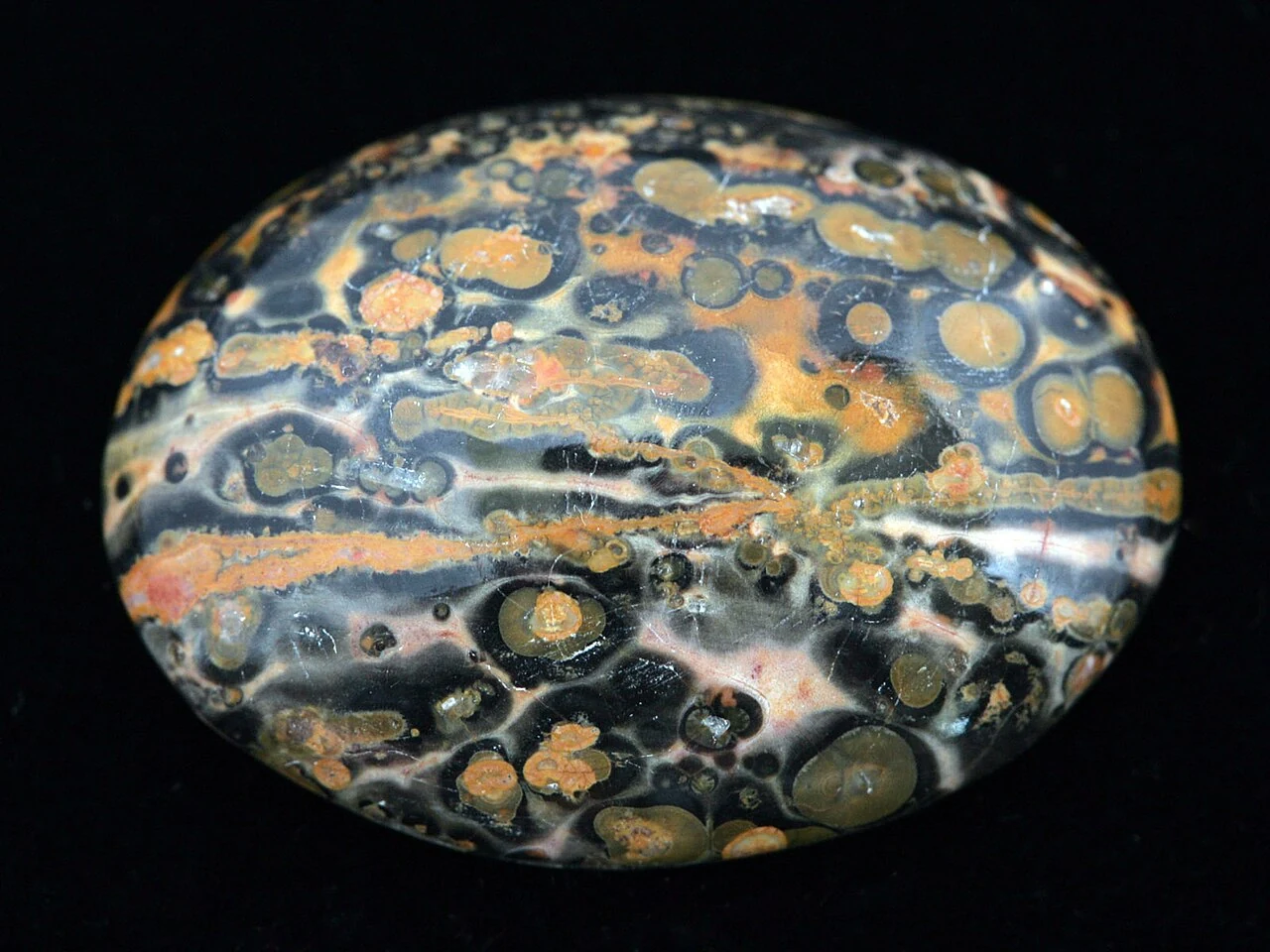
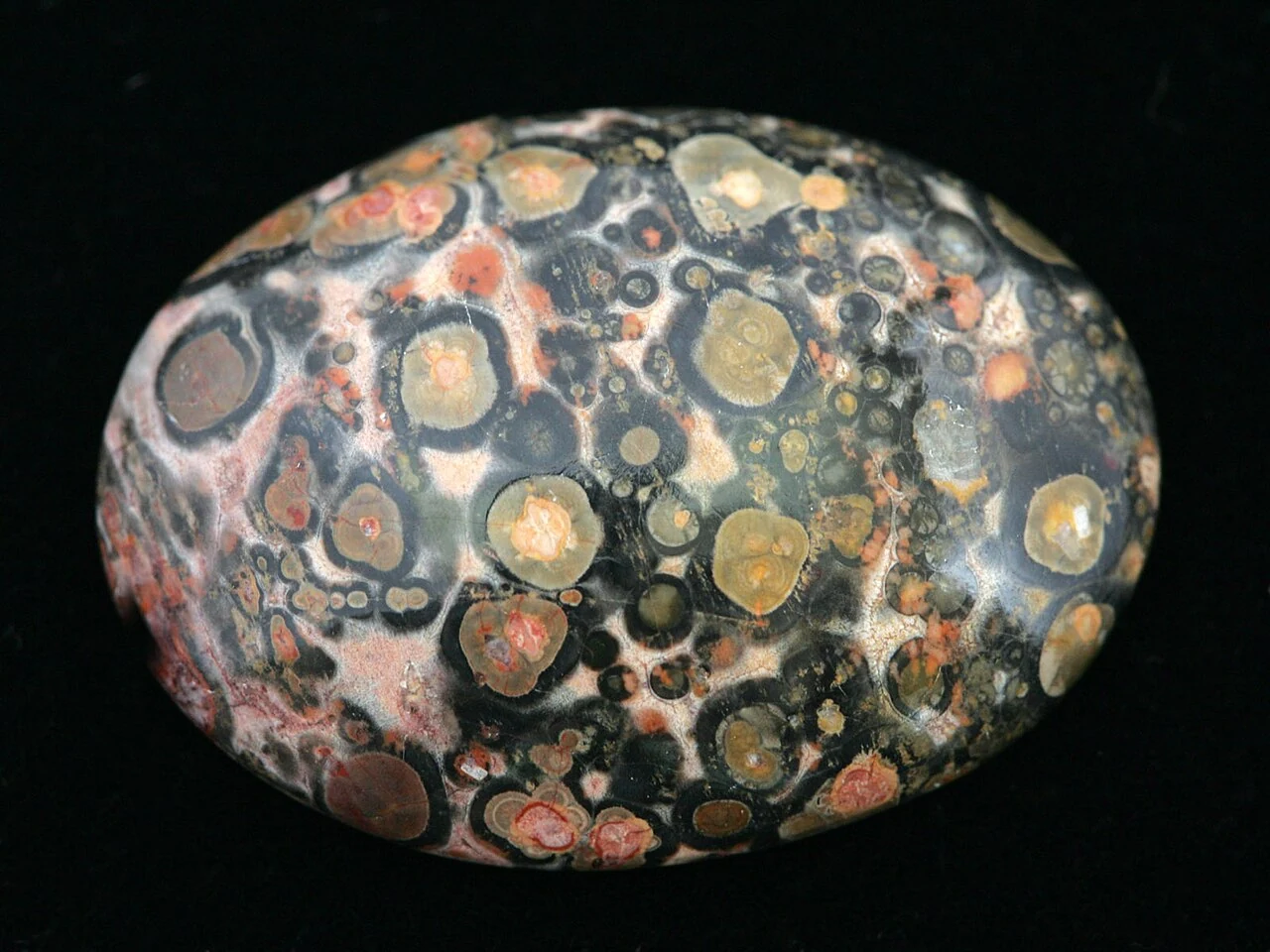
Leopard skin jasper is a recognised trade name for stones with spotted, ring-like patterns. This entry retains the practical name without automatically assigning a quartz composition. Detailed petrography has not been confirmed for the entire category. Its practice centres on creative observation and a quiet return to the present.
The Crystal Council describes leopard skin jasper through grounding, turning towards the present and creative self-expression. It lists several chakras, including Earthstar, developing an image of closeness to Earth. The author suggests that interest in personal passions can grow from this sense of presence. Writing, drawing and other hobbies appear as examples of expression. The stone accompanies a narrative of noticing interests again and making room for them. Growth means consistently giving form to something that already awakens curiosity. [366]
A second author and the context of correspondences
Healing Crystals describes leopard skin jasper through connection with animals, animal totems and spiritual journeying. It links the material with strength, stability and serving others, naming the root and heart as principal correspondences. Its affirmation centres on gentleness towards oneself and others. Compared with TCC’s creative expression, this is more relational and animal-oriented symbolism. We present it as a modern website’s language using shamanism, without assigning that synthesis to a particular Indigenous community or historical ceremony. [367]
An Avonoria editorial suggestion
Editorial suggestion — not a documented rite
Original Avonoria interpretation. An animal-like pattern can stimulate imagination and a wish to try a personal style. We propose a short sketch or description centred on the rhythm of spots. Meaning develops through what the individual notices and chooses to explore.
Exercise. Choose one area of pattern and describe it with three shape words, without judging it. Turn one word into an idea for a short drawing or sentence. Work for a few minutes without correcting the result. Finish by noting what felt enjoyable and what required effort. Keep the stone on its stand.
Returning to everyday life. Return to the pattern by choosing another area. Compare its rhythm with the previous sketch and notice what you wish to draw differently. The practice develops its personal character through your way of looking and chosen forms of expression.
Scope of the sources: Rhyolite is a frequent description in commercial and practitioner sources, but was not verified here through a primary study of the category. Formula, hardness and crystal-system fields remain null rather than creating false precision.
The name describes a spotted trade pattern; it does not identify the mineral constituents. [349]
Reference properties
View under neutral lighting and compare existing surfaces only. Hardness and streak below are reference data: do not scratch, break, heat or grind the specimen. Ask a specialist to examine valuable or unidentified materials.
Mohs hardness
Crystal system
Not applicable / not a single crystal
Material property
The name describes a spotted trade pattern; it does not identify the mineral constituents. [349]
Typical material forms
An ornamental trade category; no single crystalline habit is established. [349]
Common lookalikes and imitations
Dalmatian stone
Why it looks similar
The comparison concerns the meaning of variety and material names in the atlas.
What can help distinguish it
Similar animal names and spots do not establish identical composition. Dalmatian stone has its own mineralogical study; its findings are not transferred to leopard skin jasper.
What a photograph cannot establish
A photograph does not establish composition, treatment or the provenance of an individual specimen.
Formation remains unconfirmed for the trade category as a whole; a spotted-pattern name is not a petrographic identification.
Material facts
Gem-A warns that jasper is also applied to rocks that are not quartz gem materials. Establishing the origin of this trade category requires specimen-specific evidence. [349]
Personal / spiritual practice
Ask about composition, source and whether ‘rhyolite’ reflects identification or a repeated trade description. Not every listing meets the same standard. Establish whether the object is rock, composite or imitation. There is no need to pay for claims of ‘shamanic activation’. Choose the actual pattern and a safe shape suited to storage.
With uncertain petrography and treatment, use cautious dry care. Do not immerse in salt or drinks; avoid heating and ultrasonics. Do not perform acid or scratch tests or home grinding. Protect sharp edges and set a damaged specimen aside instead of using it in the hand.
Storage and specimen form
A separate, stable labelled container; protect against falls and access by children or pets.
Care is a precautionary editorial policy for an intact specimen with unconfirmed treatment. Wash hands after handling rough material; do not perform scratch, heat or acid tests.
Do not grind or drill at home. Dust is a different exposure route from handling an intact specimen. [37]
FAQ
How should I label a specimen when the seller knows only its trade name?
Write ‘material sold as leopard skin jasper’, the date and purchase source. Leave composition unconfirmed until reliable identification. This label preserves the object's history without guessing a species.
What research says — in brief
The cited clinical trial concerned rose quartz, not this atlas entry. It does not establish a therapeutic effect for this material; the symbolism is presented for understanding traditions and personal practice. [159]
Buying Guide: Get to Know the Different Types of ChalcedonyGem-A · accessed 2026-10-29
Mineralogical, gemological, institutional or scientific source. Its scope is recorded in the source index.
Leopard skin jasper Meanings and Crystal PropertiesThe Crystal Council · accessed 2026-10-29
Commercial practitioner source: documents beliefs, not medical evidence. The site sells crystals, so we give a bibliographic description without an active link; the full address is kept in Avonoria’s source documentation.
Mineralogical, gemological, institutional or scientific source. Its scope is recorded in the source index.
Placebo effects in alternative medical treatments for anxiety: false hope or healing potential?Cambridge University Press / CNS Spectrums · 2025 · accessed 2026-10-29DOI: 10.1017/S1092852925100515
Mineralogical, gemological, institutional or scientific source. Its scope is recorded in the source index.
Commercial practitioner source: documents beliefs, not medical evidence. The site sells crystals, so we give a bibliographic description without an active link; the full address is kept in Avonoria’s source documentation.