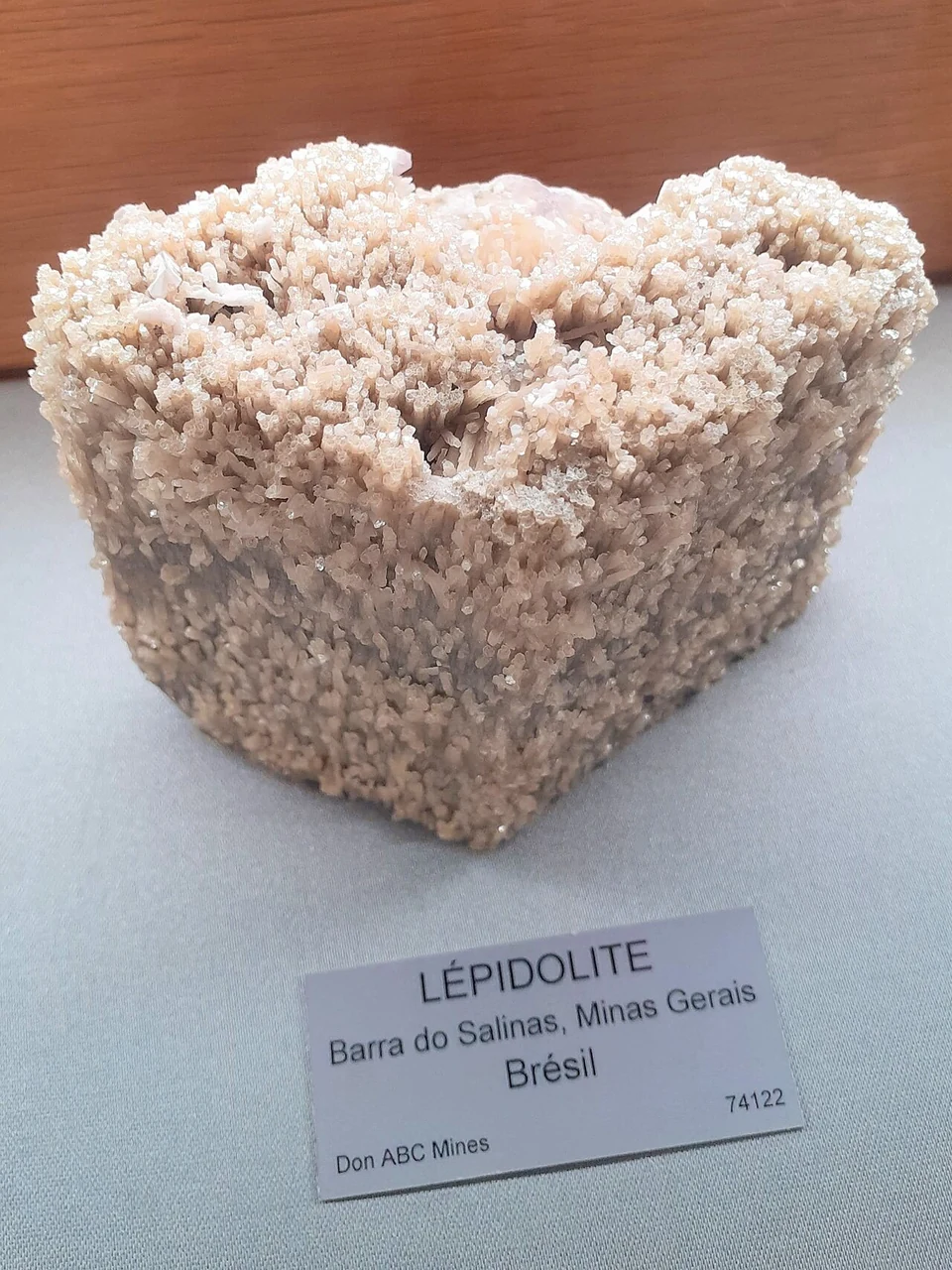
Lepidolite is a collective name for lithium-rich micas. The Handbook explicitly identifies it as a group name. A purple object may be mica-bearing rock rather than one crystal; the given formula is generalised.
Lepidolite: spiritual meanings, practices and correspondences in two contemporary sources. Their traditional language is presented alongside a separate original practice.
The Crystal Council links lepidolite with calm, personal change and dream work. This is a contemporary spiritual interpretation; lithium in mica does not give the specimen the properties of a medicine. TCC develops quiet before sleep and work with dreams. The author describes holding the stone and connecting with it personally; gentleness towards one’s emotions matters in that narrative. Dreams and changing daily habits form complementary areas here: quiet in the evening and a gentle return to personal direction during the day. [401]
Balance and transition are Healing Crystals’ themes. The author proposes a reflective moment, holding or carrying the stone as a focus, and an affirmation of inner peace. The spiritual list includes yin energy and the Akashic records; the principal chakra is the third eye. This extends TCC’s perspective towards awareness and symbolic passage between life stages. The author ends the affirmation by returning the stone to one’s space, leaving a visible sign of the intention after the session. [436]
Correspondences in the cited source
In The Crystal Council’s correspondence list: heart, third eye and crown. [401]
An Avonoria editorial suggestion
Editorial suggestion — not a documented rite
Original practice, “one gentle change”: place lepidolite in its box beside a sheet of paper. Write down a habit you have been postponing changing, then the smallest possible step for tomorrow. This might be putting your phone away before dinner or preparing your workspace. Briefly observe how light falls on the flakes; treat that observation as a pause between writing and judging yourself. Do not look for tingling or unusual sensations. Beside your step, add one condition that would make it easier and a person who could provide practical support. Return to the note after a week: review completed actions rather than the supposed power of the stone. If the plan was too difficult, make it smaller. You can retain lepidolite as a symbol of patience with a process. A fragile specimen stays in its box throughout, so the ritual does not require contact with skin.
Here, “calm” names the theme of a practice rather than a predictable bodily response. You can enjoy the lustre without adopting a chakra system. In a dream journal, distinguish what you actually remember on waking from later interpretation. Do not treat a dream image as a reason to change treatment or make major decisions without other grounds.
Scope of the sources: The listed pages were consulted, without claiming to have read the books they cite. Correspondences document a selected contemporary current rather than a shared system for all cultures. Symbolic cleansing can consist of an intention alone, without water, salt, smoke or exposure to sunlight.
It occurs in granitic pegmatites, often with other lithium-bearing minerals. Colour is not an analysis of lithium content.
Personal / spiritual practice
When choosing a piece, request a daylight photograph and ask whether it is flaky mica, a mixed rock or an impregnated object. The words “lilac” and “lithium” do not establish composition. For something to wear, also examine the edges and the security of the setting. Do not test authenticity by separating sheets. If a seller gives an exact mica species, ask which examination supports that identification; a photograph cannot supply that level of detail.
Material-specific guidance is given under safe handling; settings and treatments need separate assessment.
Storage and specimen form
Use a separate supported compartment away from a sunny windowsill. Keep the provenance label with the object.
Do not rub a flaky surface vigorously or carry rough mica loose with keys. Keep a shedding specimen in a closed box; clean only sound surfaces with a soft dry cloth. Soaking, salt, steam and ultrasonic cleaning are not recommended in this pack. This is a conservative rule for an unexamined object, not a claim that every mica dissolves in water. Leave repairs to separating layers to a specialist.
Do not grind, drill or inhale dust. This card concerns intact objects; a chemical formula alone does not quantify exposure. [37]
FAQ
Does this card authenticate my specimen?
No. Request the precise name, treatment disclosure and documentation appropriate to the object’s value. Do not perform destructive home tests.
What research says — in brief
The cited clinical trial concerned rose quartz, not this atlas entry. It does not establish a therapeutic effect for this material; the symbolism is presented for understanding traditions and personal practice. [159]
LepidoliteMineral Data Publishing · accessed 2026-10-29
Mineralogical, gemological, institutional or scientific source. Its scope is recorded in the source index.
lepidolite Meanings and Crystal PropertiesThe Crystal Council · accessed 2026-10-29
Commercial practitioner source: documents beliefs, not medical evidence. The site sells crystals, so we give a bibliographic description without an active link; the full address is kept in Avonoria’s source documentation.
Placebo effects in alternative medical treatments for anxiety: false hope or healing potential?Cambridge University Press / CNS Spectrums · 2025 · accessed 2026-10-29DOI: 10.1017/S1092852925100515
Mineralogical, gemological, institutional or scientific source. Its scope is recorded in the source index.
lepidolite — contemporary meanings and practicesHealing Crystals · accessed 2026-10-29
Commercial practitioner source: documents beliefs, not medical evidence. The site sells crystals, so we give a bibliographic description without an active link; the full address is kept in Avonoria’s source documentation.
muscoviteMineral Data Publishing · accessed 2026-10-29
Mineralogical, gemological, institutional or scientific source. Its scope is recorded in the source index.
Unusual Faceted Massive FuchsiteGemological Institute of America · 2013 · accessed 2026-10-29
Mineralogical, gemological, institutional or scientific source. Its scope is recorded in the source index.