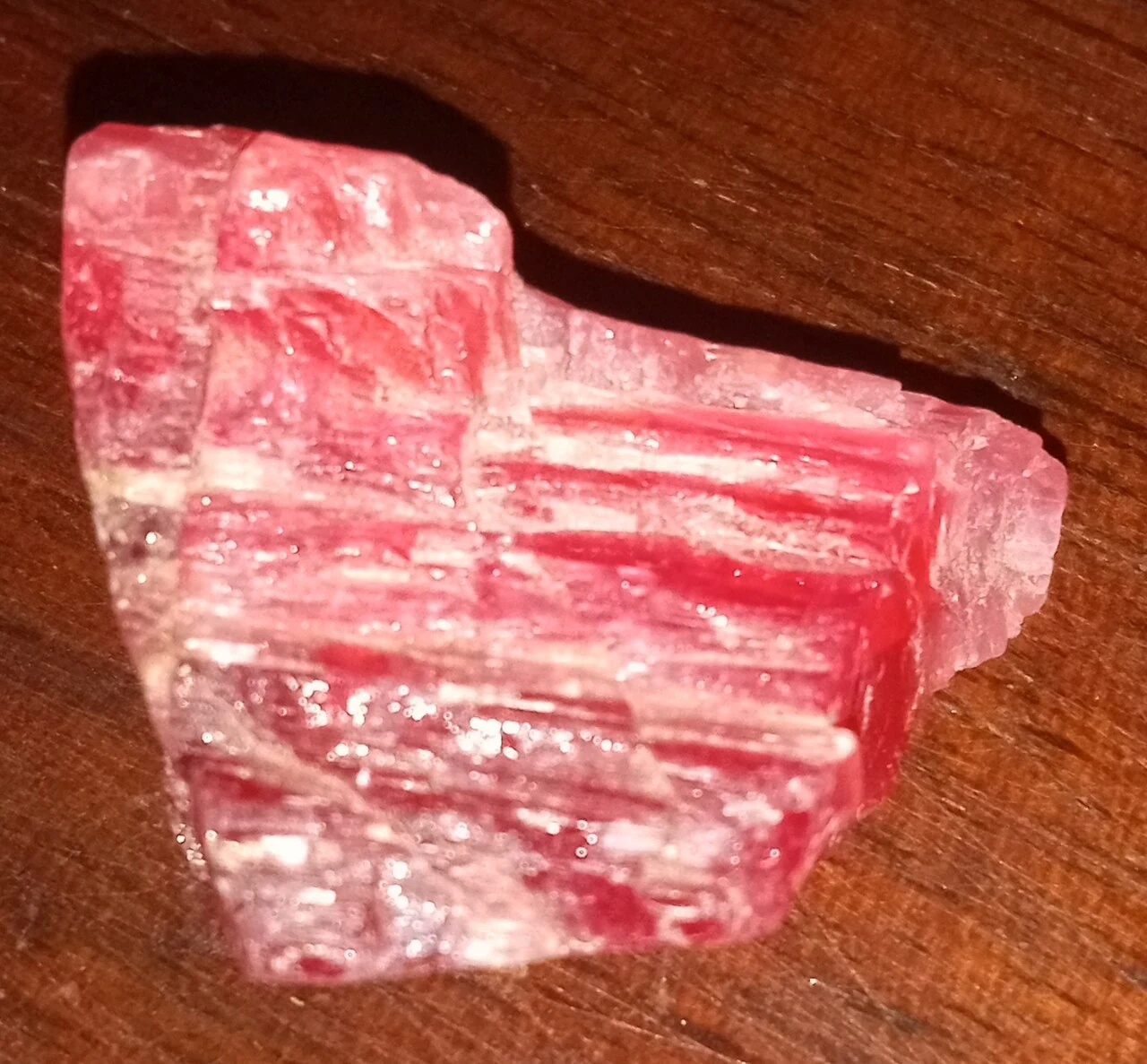
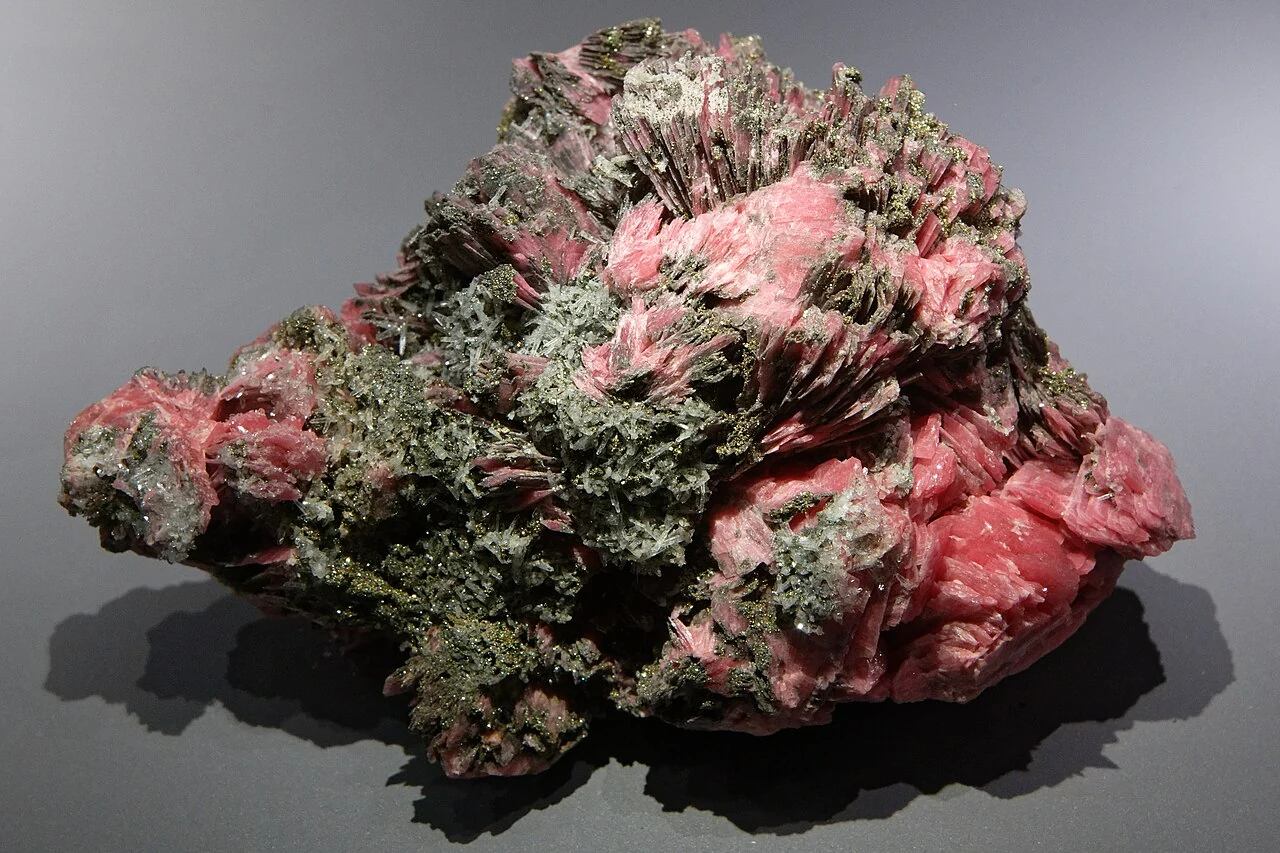
Rhodonite is a manganese silicate, often seen as a pink piece with dark markings. It is not another name for rhodochrosite. This entry focuses on its material identity and a symbolism of kindness that can become a small, real action towards another person.
The Crystal Council describes rhodonite through generosity, recognition of personal value and sharing abilities. The heart and root form its principal correspondences: a kindly intention is meant to find support in concrete action. The author encourages discovering personal talents and noticing how they might also serve others. Its symbolism therefore extends beyond a private sense of calm to participation in relationships and community. In this account, rhodonite accompanies a movement from recognising personal possibilities towards expressing them in everyday life. [338]
A second author and the context of correspondences
Crystal Vaults connects rhodonite with grounding during meditation and attentive consideration of dreams. Its account emphasises depth of personal experience and the search for meaning. Mantra is presented as structuring the practice’s rhythm, while reflection helps articulate who one wants to be and what relationships one wants. Compared with TCC’s emphasis on generosity, this is a more inward focus. Both sites use personal-growth language; CV extends it to spiritual guidance and recognising a personal direction. [339]
An Avonoria editorial suggestion
Editorial suggestion — not a documented rite
Original Avonoria interpretation. We approach generosity as sharing a particular ability in a manageable way. Rhodonite can remind us that a valuable gesture may be small. Noting the time available helps turn a kind intention into something achievable.
Exercise. With rhodonite placed securely, note one skill you could share with someone for ten minutes. Beside it, define a boundary: when you finish and what you are not undertaking. Prepare a brief offer of help without pressure to accept. Afterwards, decide whether the gesture actually suits the situation. The stone reminds you of a conscious choice.
Returning to everyday life. After a helpful gesture, notice what was most useful and how long it took. This note helps shape future offers. Personal abilities can also be developed through a project of one's own.
Scope of the sources: The formula follows the Handbook reference, rather than an analysis of the item being sold. Modern correspondences do not document an ancient ritual.
Rose-red or brownish red, often with dark manganese oxidation products; granular masses and tabular crystals. [337]
Reference properties
View under neutral lighting and compare existing surfaces only. Hardness and streak below are reference data: do not scratch, break, heat or grind the specimen. Ask a specialist to examine valuable or unidentified materials.
Rhodonite occurs in settings involving metamorphosed manganese-rich materials.
Material facts
Associated with sedimentary, hydrothermal and metamorphosed manganese deposits. Localities include the Urals, Broken Hill and Morro da Mina. [337]
Personal / spiritual practice
Inspect the entire object, including its underside and bead holes. Ask about repairs and whether the name identifies the dominant mineral or the whole rock. A black network is not a certificate of natural origin. Pendant selection should consider mounting and weight; the number of veins does not establish protective strength. If the seller names a particular mine, keep that information with the receipt.
Store separately without pressure on crystals or projecting parts. For an object with unknown treatment, use a soft dry cloth; avoid salt, acids, steam and ultrasonics. Do not grind or drill it at home. Do not use it in drinking water; wash your hands after handling rough material.
Storage and specimen form
A separate, stable labelled container; protect against falls and access by children or pets.
Care is a precautionary editorial policy for an intact specimen with unconfirmed treatment. Wash hands after handling rough material; do not perform scratch, heat or acid tests.
Do not grind or drill at home. Dust is a different exposure route from handling an intact specimen. [37]
FAQ
Are dark veins enough to recognise rhodonite?
No. Pink and dark areas provide a visual clue but do not confirm the species. Rhodochrosite differs in composition and hardness; ask a gemmologist to distinguish valuable pieces.
What research says — in brief
The cited clinical trial concerned rose quartz, not this atlas entry. It does not establish a therapeutic effect for this material; the symbolism is presented for understanding traditions and personal practice. [159]
RhodoniteMineral Data Publishing / Handbook of Mineralogy · accessed 2026-10-29
Mineralogical, gemological, institutional or scientific source. Its scope is recorded in the source index.
Rhodonite Meanings and Crystal PropertiesThe Crystal Council · accessed 2026-10-29
Commercial practitioner source: documents beliefs, not medical evidence. The site sells crystals, so we give a bibliographic description without an active link; the full address is kept in Avonoria’s source documentation.
RhodochrositeMineral Data Publishing / Handbook of Mineralogy · accessed 2026-10-29
Mineralogical, gemological, institutional or scientific source. Its scope is recorded in the source index.
Placebo effects in alternative medical treatments for anxiety: false hope or healing potential?Cambridge University Press / CNS Spectrums · 2025 · accessed 2026-10-29DOI: 10.1017/S1092852925100515
Mineralogical, gemological, institutional or scientific source. Its scope is recorded in the source index.
Rhodonite — second practitioner accountCrystal Vaults · accessed 2026-10-29
Commercial practitioner source: documents beliefs, not medical evidence. The site sells crystals, so we give a bibliographic description without an active link; the full address is kept in Avonoria’s source documentation.