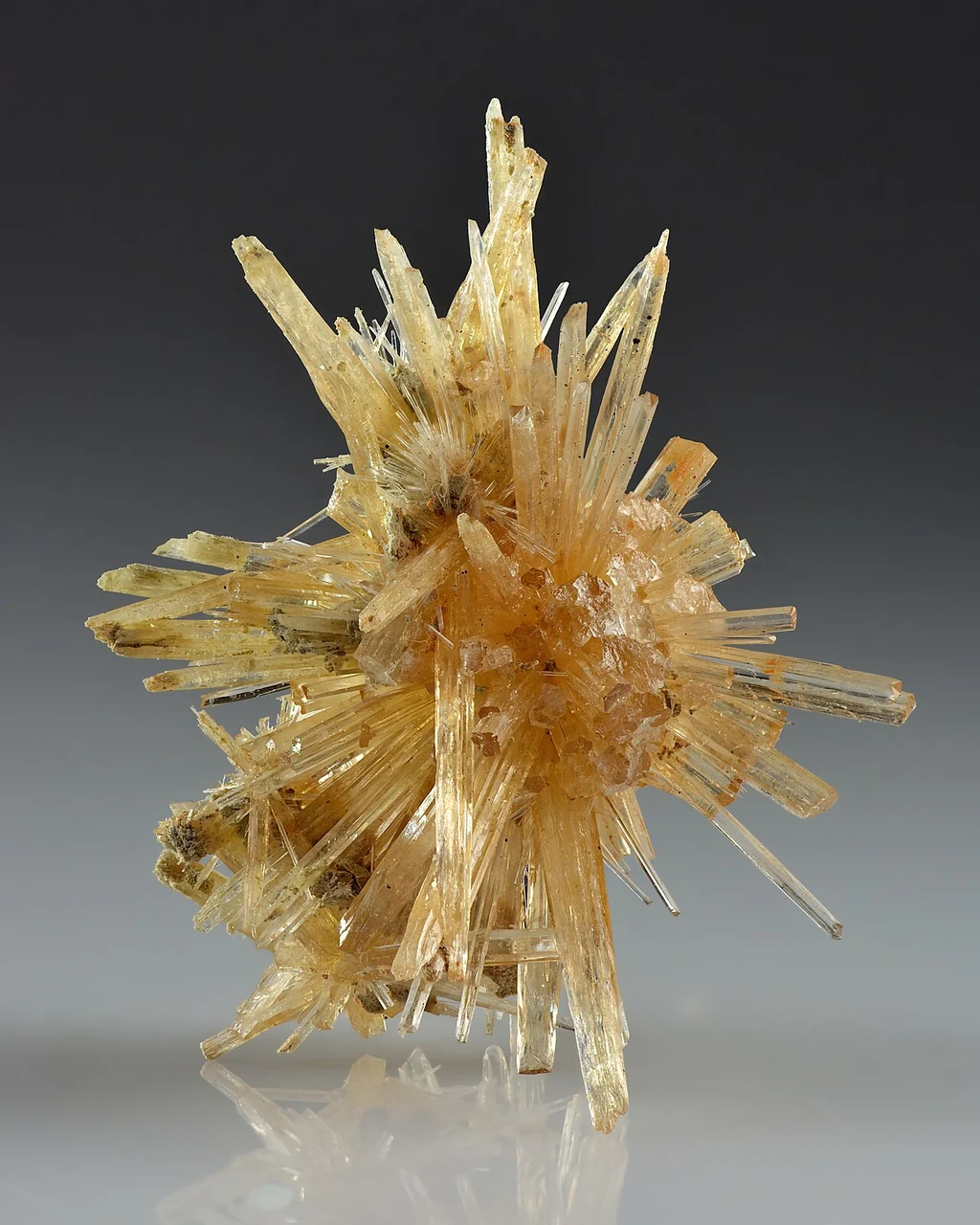
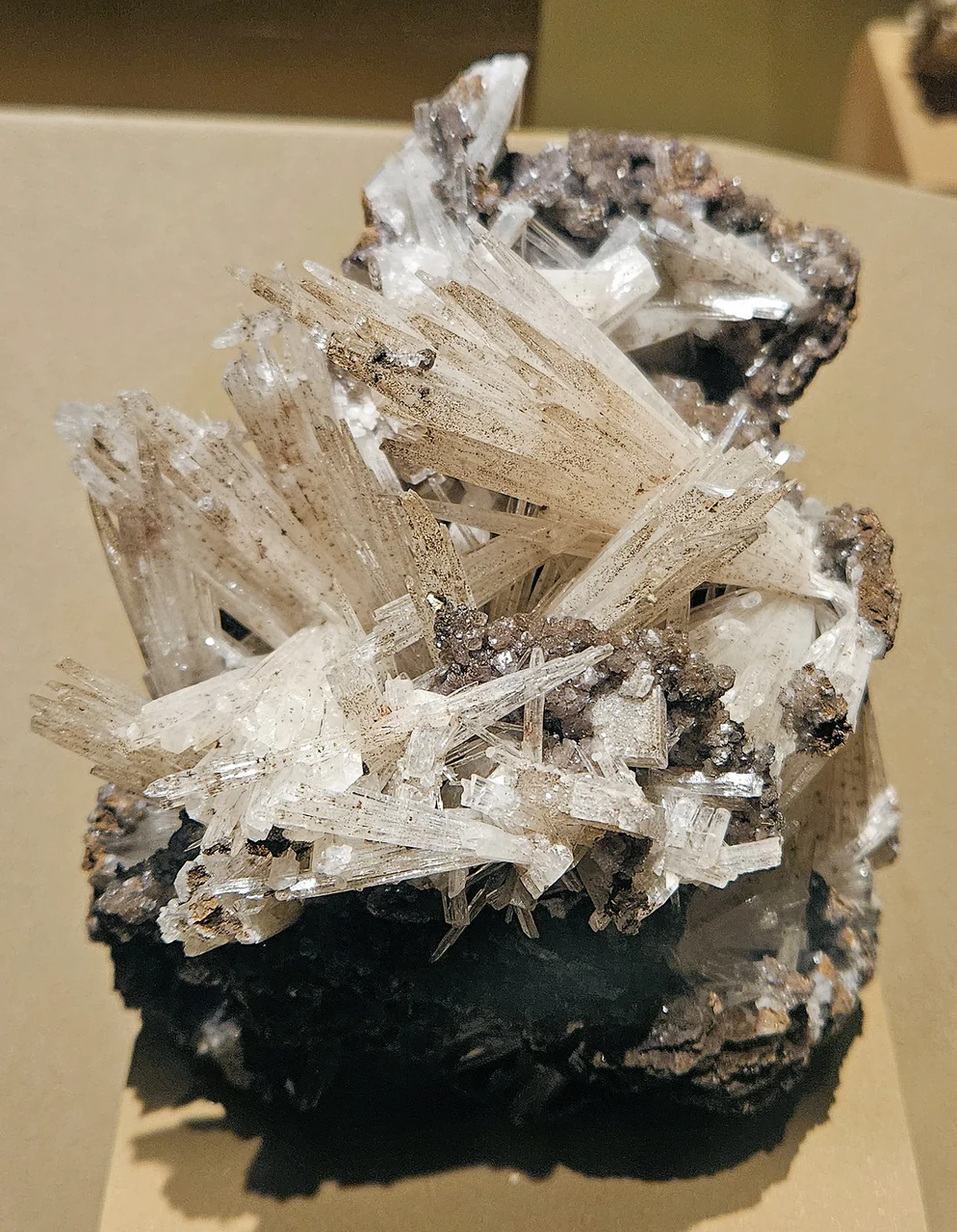
Aragonite is a different calcium carbonate structure from calcite. This card includes both branching aggregates and compact specimens. When choosing it for a practice, begin by asking whether its delicate form suits handling or is better observed quietly.
The Crystal Council describes aragonite as a companion to grounding, balance and finding an inner centre. It associates the stone with the whole chakra column rather than restricting meaning to one colour or centre. In its language, meditation gathers scattered energy and restores harmony between different areas of experience. The body's relationship with Earth and a calm return to the present are central. Within this contemporary practice, the stone represents integration: first finding stability, then acting with a more organised intention. [326]
A second author and the context of correspondences
Healing Crystals presents aragonite through grounding, centring and stability, naming the root chakra. Its practice starts by choosing a quiet moment before conversation, creative work or meditation. The stone provides a physical focus, while an affirmation expresses connection with Earth’s energy. Afterwards the author suggests displaying it as an intention reminder. Compared with TCC’s all-chakra account, this is a simpler symbolic map, centred on rootedness and returning to a chosen intention within everyday surroundings. [327]
An Avonoria editorial suggestion
Editorial suggestion — not a documented rite
Original Avonoria interpretation. We suggest reading a radiating cluster as a metaphor for several concerns meeting at one centre. A personal definition of balance can be built from time for responsibilities, rest and relationships. The specimen marks a moment to organise them.
Exercise. Place the cluster in a container in front of you. Draw three areas on paper: responsibilities, rest and relationships. In each, note one thing you currently need and choose the smallest possible change for tomorrow. For a few comfortable breaths, look at the specimen’s centre without touching its tips. You can repeat the same question for a week. Do not place a sharp cluster on your body or beneath a pillow; the journal records your own choices.
Returning to everyday life. Aragonite can remain on a shelf as a reminder of a brief pause. After a week, review the notebook's three areas and notice whether their proportions changed. Choose a practice rhythm that suits your day.
Scope of the sources: We do not equate all aragonite with shell, pearl or coral: those are distinct materials with additional composition and provenance. The collected sources do not establish an ancient rite.
Crystals may be needle-like or prismatic, often twinned and apparently hexagonal; aggregates can be radiating or stalactitic. [325]
Reference properties
View under neutral lighting and compare existing surfaces only. Hardness and streak below are reference data: do not scratch, break, heat or grind the specimen. Ask a specialist to examine valuable or unidentified materials.
Aragonite occurs in sediments, hot springs and caves among other settings; a specimen's origin requires geological context.
Material facts
It forms in marine deposits, hot springs, caves and high-pressure metamorphic settings. The reference documents specimens from Spain and Morocco. [325]
Personal / spiritual practice
Inspect photographs of the base and tips. Ask about repairs and the precise locality if known. The label ‘sputnik’ describes a trade appearance, not another species. You need not buy every colour to build a complete practice. For frequent movement, specimen integrity and a suitable box matter more than size or the number of rays.
Do not lift thin crystals or brush radiating clusters. As a precautionary policy, use dry display without salt, soaking or acids. Keep it in a separate box secured against movement; do not push cotton wool between needles. If the surface sheds dust, minimise handling and seek conservation advice.
Storage and specimen form
A separate, stable labelled container; protect against falls and access by children or pets.
Care is a precautionary editorial policy for an intact specimen with unconfirmed treatment. Wash hands after handling rough material; do not perform scratch, heat or acid tests.
Do not grind or drill at home. Dust is a different exposure route from handling an intact specimen. [37]
FAQ
How should I move a fragile aragonite cluster?
Move it with its stand or support it underneath. Leave thin tips free. Securing the box against movement is preferable to pushing packing material between crystals.
What research says — in brief
The cited clinical trial concerned rose quartz, not this atlas entry. It does not establish a therapeutic effect for this material; the symbolism is presented for understanding traditions and personal practice. [159]
AragoniteMineral Data Publishing / Handbook of Mineralogy · accessed 2026-10-29
Mineralogical, gemological, institutional or scientific source. Its scope is recorded in the source index.
Aragonite Meanings and Crystal PropertiesThe Crystal Council · accessed 2026-10-29
Commercial practitioner source: documents beliefs, not medical evidence. The site sells crystals, so we give a bibliographic description without an active link; the full address is kept in Avonoria’s source documentation.
CalciteMineral Data Publishing / Handbook of Mineralogy · accessed 2026-10-29
Mineralogical, gemological, institutional or scientific source. Its scope is recorded in the source index.
Placebo effects in alternative medical treatments for anxiety: false hope or healing potential?Cambridge University Press / CNS Spectrums · 2025 · accessed 2026-10-29DOI: 10.1017/S1092852925100515
Mineralogical, gemological, institutional or scientific source. Its scope is recorded in the source index.
Aragonite — second practitioner accountHealing Crystals · accessed 2026-10-29
Commercial practitioner source: documents beliefs, not medical evidence. The site sells crystals, so we give a bibliographic description without an active link; the full address is kept in Avonoria’s source documentation.