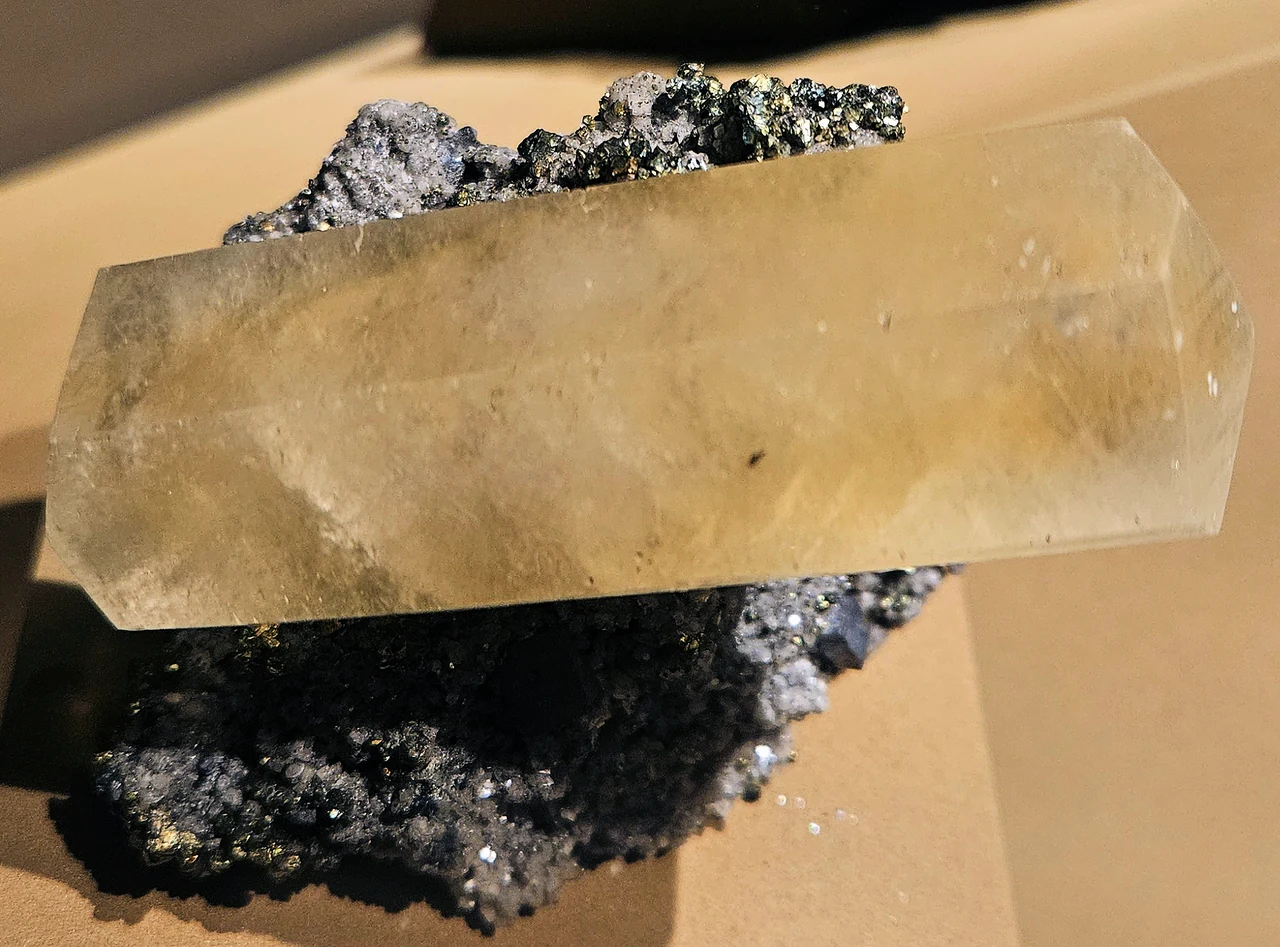
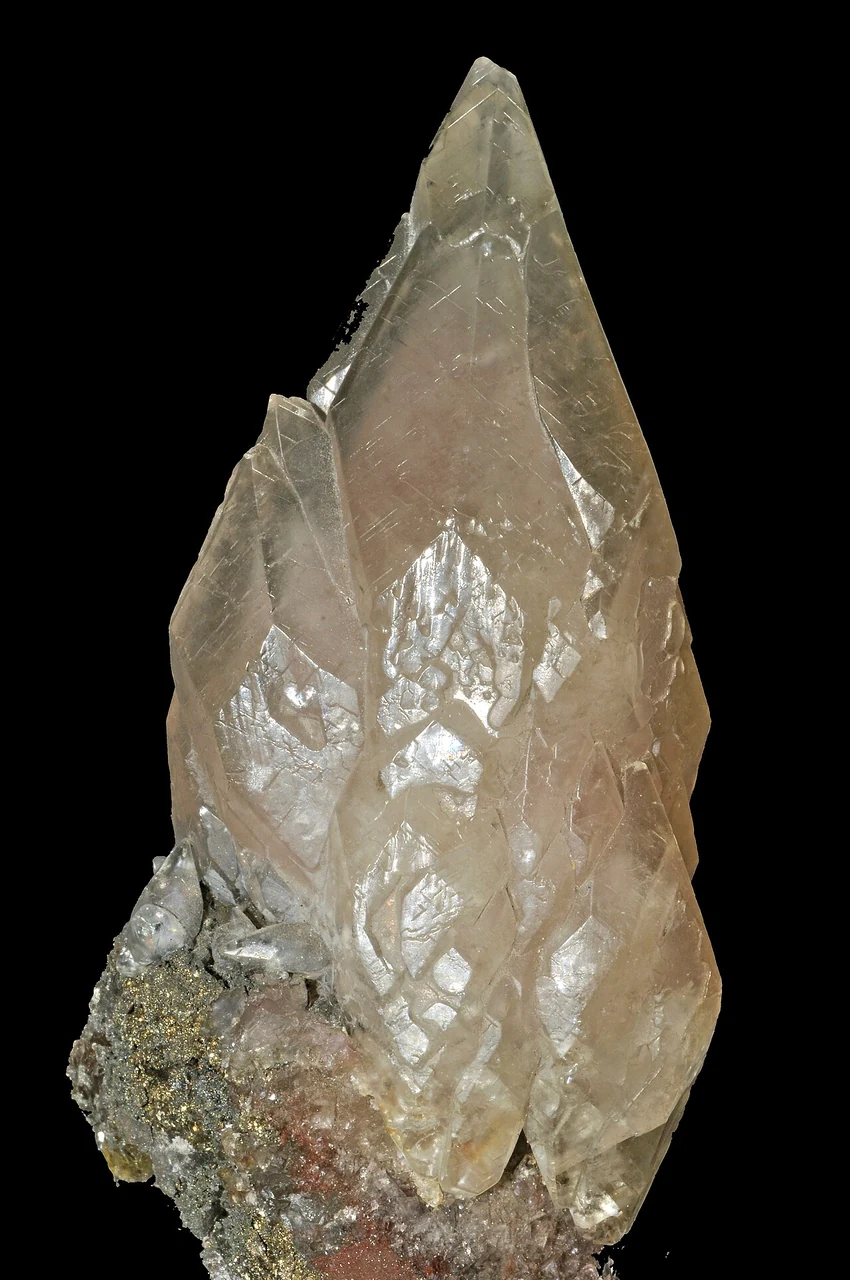
Calcite is a calcium carbonate species. This entry introduces its mineralogy, with practice chiefly centred on transparent Iceland spar; separate blue and orange calcite entries cover popular varieties rather than new species.
The Crystal Council presents Iceland spar as a calcite variety associated with clarity, insight and consciously assigning intentions. Transparency becomes an image of an organised view of personal aims. The author proposes meditation and revisiting a chosen goal with a specimen given personal meaning. All chakras appear in its map, with particular emphasis on the third eye and developing intuition. This account concerns Iceland spar specifically; other calcite colours receive their own correspondences in practitioner literature. [323]
A second author and the context of correspondences
Healing Crystals describes calcite as an amplifier and a symbol of clearing a place’s energy and renewing motivation. It links the stone with willingness to change perspective and receive new ideas. Within this narrative it accompanies learning, analysis and resolving disagreements. Its proposed affirmation expresses an open mind, while chakra assignments vary with colour. This is broader than TCC’s Iceland spar account: the author develops meaning around mental flexibility rather than solely the transparency of one variety. [324]
An Avonoria editorial suggestion
Editorial suggestion — not a documented rite
Original Avonoria interpretation. In Avonoria’s original practice, clarity means examining how we look at things. A transparent specimen can remind us to separate observations from additions of our own. This provides a starting point for quiet reflection before a small decision.
Exercise. Place calcite on a pad and spend a minute describing only what you see: boundaries, reflections and colour. Then choose a small decision and divide a sheet into ‘I know’, ‘I assume’ and ‘I can check’. Add one question for an appropriate person to the final column. The stone marks time set aside for reflection.
Returning to everyday life. Return to the note after receiving an answer to the chosen question. Mark what became clearer and add any new uncertainty. This record gives clarity symbolism a personal reference point.
Scope of the sources: We do not adopt the practitioner website’s Viking navigation narrative as an established history of this specimen. Rituals for every calcite colour have not been verified here.
It may form rhombohedra, elongated crystals, cave deposits and granular aggregates; it can be colourless, white or coloured. [322]
Reference properties
View under neutral lighting and compare existing surfaces only. Hardness and streak below are reference data: do not scratch, break, heat or grind the specimen. Ask a specialist to examine valuable or unidentified materials.
Rhombohedra, scalenohedra, cave deposits and granular aggregates. [322]
Common lookalikes and imitations
Aragonite
Why it looks similar
Both minerals are structural polymorphs of CaCO₃.
What can help distinguish it
The same formula, CaCO₃, does not mean the same mineral: aragonite is orthorhombic and calcite trigonal. A photograph of an aggregate does not settle identification.
What a photograph cannot establish
A photograph does not establish composition, treatment or the provenance of an individual specimen.
Calcite can crystallise in sedimentary, hydrothermal and metamorphic settings.
Material facts
It occurs in limestone, marble and chalk, hydrothermal veins and cave formations. Iceland and Mexico are among its specimen localities. [322]
Personal / spiritual practice
When buying, ask whether the object is a natural crystal, a cleavage fragment or a carved shape. Ask about resin, repairs and surface enhancement without assuming they are present. If the seller calls it ‘onyx’, request the mineralogical name. Choose a stable base rather than paying for claims of stronger energy. Small chips matter for handling even when you like the appearance.
We use dry care as a precaution for an unidentified specimen. Avoid vinegar, salt, descaling agents, steam and ultrasonic cleaning. Do not test cleavage by striking it. Support the chunk from below and store it separately from harder stones; ritual ‘charging’ does not require direct sunlight.
Storage and specimen form
A separate, stable labelled container; protect against falls and access by children or pets.
Care is a precautionary editorial policy for an intact specimen with unconfirmed treatment. Wash hands after handling rough material; do not perform scratch, heat or acid tests.
Do not grind or drill at home. Dust is a different exposure route from handling an intact specimen. [37]
FAQ
Clear or coloured calcite: which should I choose for a first collection?
Choose a stable specimen with a clear label. Iceland spar introduces the transparent variety; blue and orange calcite have separate entries. All belong to calcite.
What research says — in brief
The cited clinical trial concerned rose quartz, not this atlas entry. It does not establish a therapeutic effect for this material; the symbolism is presented for understanding traditions and personal practice. [159]
CalciteMineral Data Publishing / Handbook of Mineralogy · accessed 2026-10-29
Mineralogical, gemological, institutional or scientific source. Its scope is recorded in the source index.
Iceland Spar (Clear Calcite) Meanings and Crystal PropertiesThe Crystal Council · accessed 2026-10-29
Commercial practitioner source: documents beliefs, not medical evidence. The site sells crystals, so we give a bibliographic description without an active link; the full address is kept in Avonoria’s source documentation.
AragoniteMineral Data Publishing / Handbook of Mineralogy · accessed 2026-10-29
Mineralogical, gemological, institutional or scientific source. Its scope is recorded in the source index.
Placebo effects in alternative medical treatments for anxiety: false hope or healing potential?Cambridge University Press / CNS Spectrums · 2025 · accessed 2026-10-29DOI: 10.1017/S1092852925100515
Mineralogical, gemological, institutional or scientific source. Its scope is recorded in the source index.
Calcite — second practitioner accountHealing Crystals · accessed 2026-10-29
Commercial practitioner source: documents beliefs, not medical evidence. The site sells crystals, so we give a bibliographic description without an active link; the full address is kept in Avonoria’s source documentation.