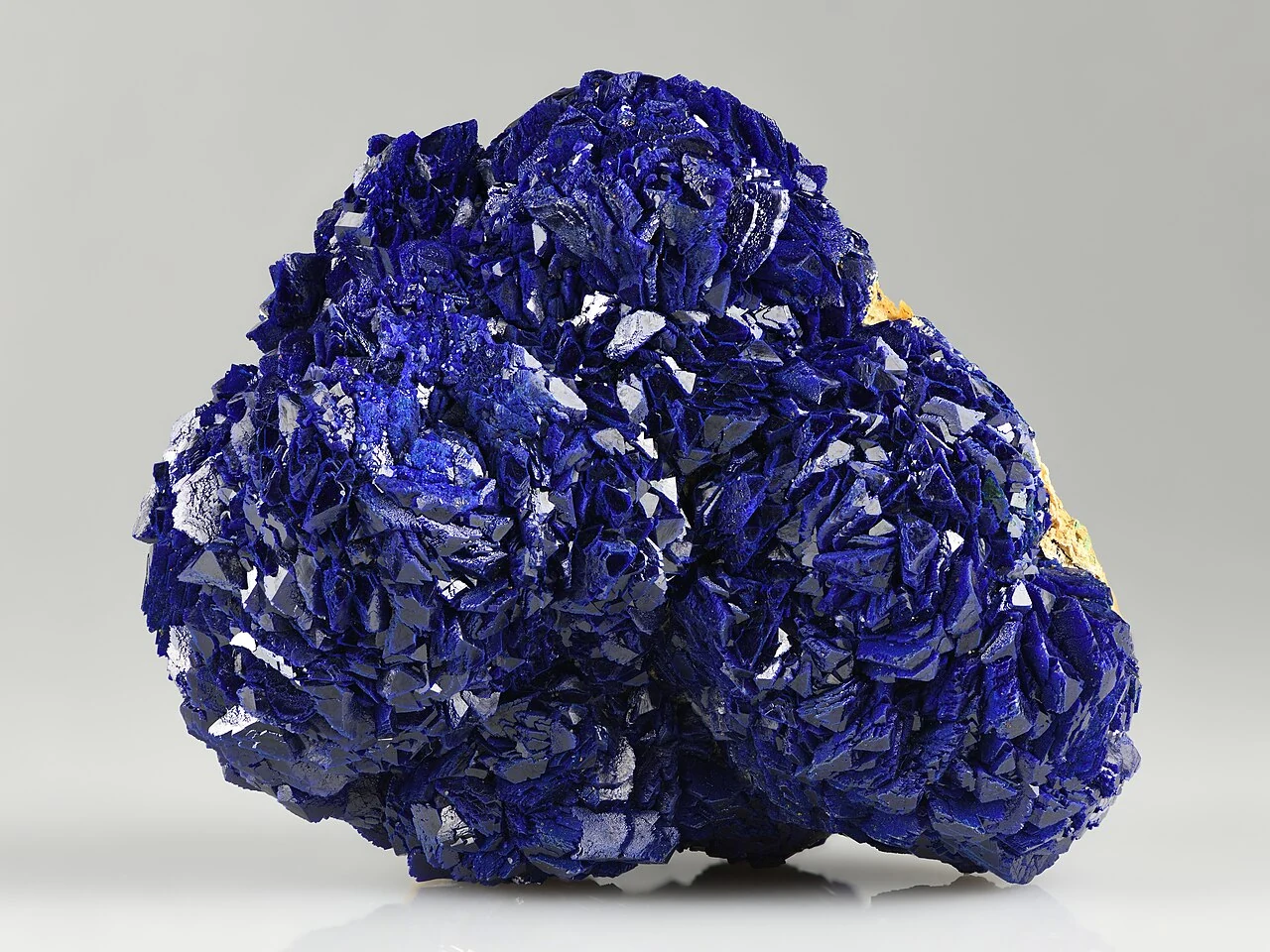
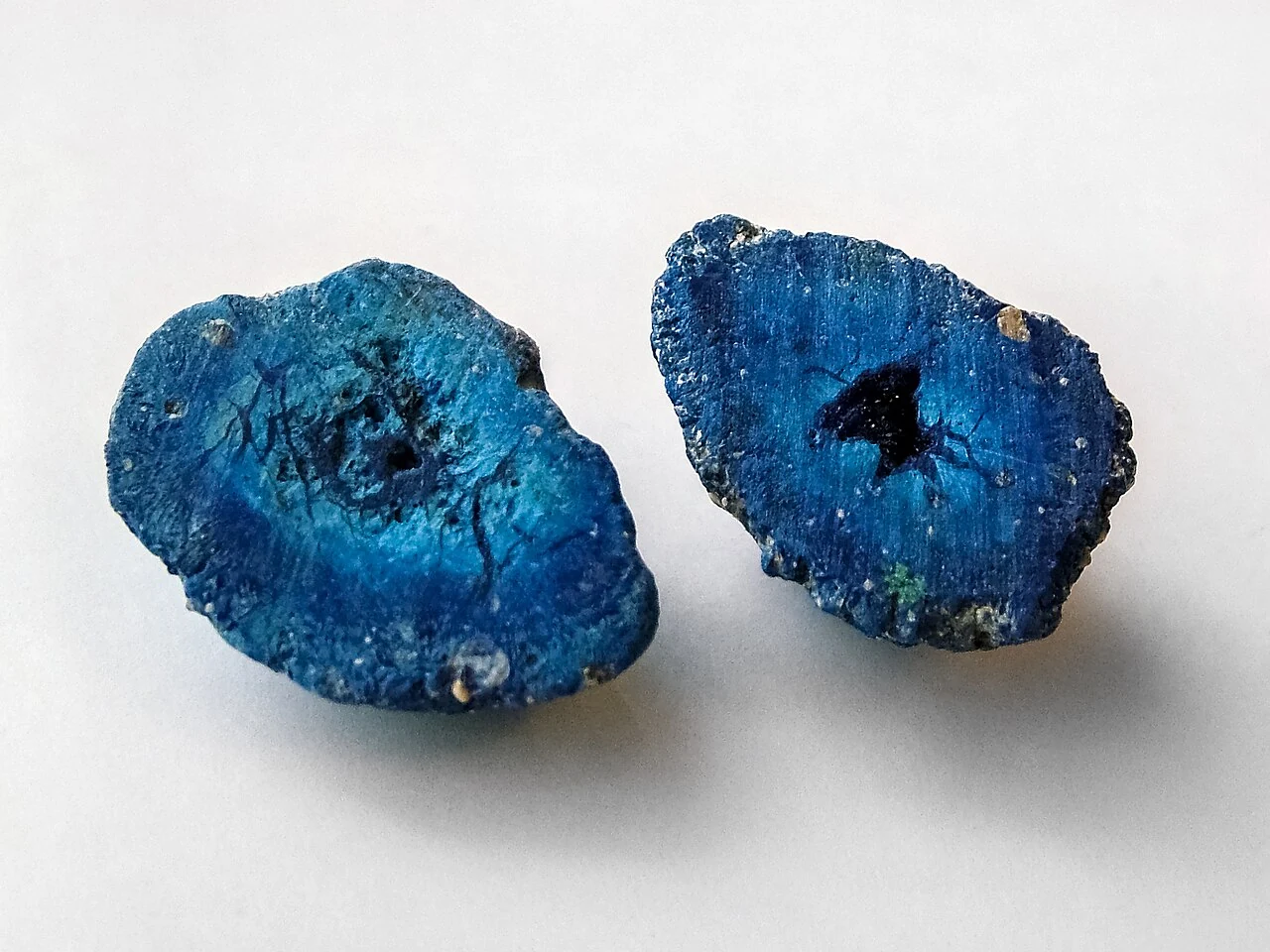
Azurite is a deep-blue copper carbonate. Its intense colour can inspire observation, but is not evidence of an effect on intuition. This entry approaches the specimen primarily as a collector’s object and visual focus, without requiring skin contact.
Azurite — the account below separates contemporary lithotherapy testimony from an original reflective exercise.
Lithotherapy tradition
Intuition, reflection and spiritual insight. [344]
Meaning and correspondences in the source
The Crystal Council links azurite with insight, intuition and recognising a personal spiritual perspective. The crown and third eye form its principal map of correspondences. In the site's narrative, meditation and attention to dreams develop inner reflection and awareness of meanings beyond everyday haste. Intense blue contributes to an image of concentration on inward experience. Azurite appears as a companion to exploring and interpreting personal experience, with its assigned meanings belonging to the contemporary language of crystal spirituality practitioners. [344]
A second author and the context of correspondences
Crystal Vaults describes azurite through introspection, spiritual insight and meditative quieting of thought. Deep blue and indigo represent truth, dignity and a broader perspective within its symbolic map. The divination section interprets the stone through attention to long-term benefit rather than immediate results. Like TCC, it retains inner vision, while developing colour symbolism and reflection more strongly. Alternative-life accounts belong to the author’s spiritual cosmology alongside the quieter themes of self-knowledge and looking inward. [345]
An Avonoria editorial suggestion
Editorial suggestion — not a documented rite
Original Avonoria interpretation. We suggest approaching insight as noticing a new perspective on something familiar. Azurite's blue can mark a quiet moment to record a question, image or association. Returning to the note later reveals changes in personal understanding.
Exercise. Set the specimen beyond easy reach and choose one ordinary belief to examine. Write down an observation, a possible alternative explanation and a safe way to obtain more information. After a minute of quiet viewing, return to the note and assess whether anything actually changed. No change is also a valid outcome. This original practice supports critical reflection; the stone need not be placed on the forehead or near the eyes.
Returning to everyday life. An open question can remain in the notebook for several days. The next time you view azurite, check for a new observation. Record it separately from the first interpretation, preserving the development of your reflection.
Scope of the sources: Accounts of ancient priests or specific health effects have not been verified here. Modern correspondences are not laws of mineralogy.
Prismatic crystals and kidney-shaped aggregates in deep blue; the reference streak is paler. [343]
Reference properties
View under neutral lighting and compare existing surfaces only. Hardness and streak below are reference data: do not scratch, break, heat or grind the specimen. Ask a specialist to examine valuable or unidentified materials.
Azurite forms secondarily within oxidised zones of copper deposits.
Material facts
It forms in oxidised copper deposits, especially those associated with carbonate rocks. Familiar specimens come from Tsumeb, Morocco and Bisbee. [343]
Personal / spiritual practice
Distinguish a single crystal from a mineral on matrix. Request a clear photograph of the actual item and information about repairs. Choose a stable support that does not press against delicate terminations. Do not perform a streak test to confirm the name; creating dust is unnecessary for home observation. Price and colour saturation do not measure a capacity to develop intuition.
Store in a protected display case, away from moisture and food. Do not soak, salt or heat it. Carefully removing loose dust while dry is appropriate only for a stable specimen. Do not use this copper-bearing material in elixirs, powder it or grind it at home; wash your hands after contact.
Storage and specimen form
A separate, stable labelled container; protect against falls and access by children or pets.
Care is a precautionary editorial policy for an intact specimen with unconfirmed treatment. Wash hands after handling rough material; do not perform scratch, heat or acid tests.
Do not grind or drill at home. Dust is a different exposure route from handling an intact specimen. [37]
FAQ
How can azurite be used as a focus object?
Place a stable specimen on a stand or view it in a display case. Choose colour or shape as a focus. Skin or water contact is unnecessary for this practice.
What research says — in brief
The cited clinical trial concerned rose quartz, not this atlas entry. It does not establish a therapeutic effect for this material; the symbolism is presented for understanding traditions and personal practice. [159]
AzuriteMineral Data Publishing / Handbook of Mineralogy · accessed 2026-10-29
Mineralogical, gemological, institutional or scientific source. Its scope is recorded in the source index.
Azurite Meanings and Crystal PropertiesThe Crystal Council · accessed 2026-10-29
Commercial practitioner source: documents beliefs, not medical evidence. The site sells crystals, so we give a bibliographic description without an active link; the full address is kept in Avonoria’s source documentation.
ChrysocollaMineral Data Publishing / Handbook of Mineralogy · accessed 2026-10-29
Mineralogical, gemological, institutional or scientific source. Its scope is recorded in the source index.
Placebo effects in alternative medical treatments for anxiety: false hope or healing potential?Cambridge University Press / CNS Spectrums · 2025 · accessed 2026-10-29DOI: 10.1017/S1092852925100515
Mineralogical, gemological, institutional or scientific source. Its scope is recorded in the source index.
Azurite — second practitioner accountCrystal Vaults · accessed 2026-10-29
Commercial practitioner source: documents beliefs, not medical evidence. The site sells crystals, so we give a bibliographic description without an active link; the full address is kept in Avonoria’s source documentation.