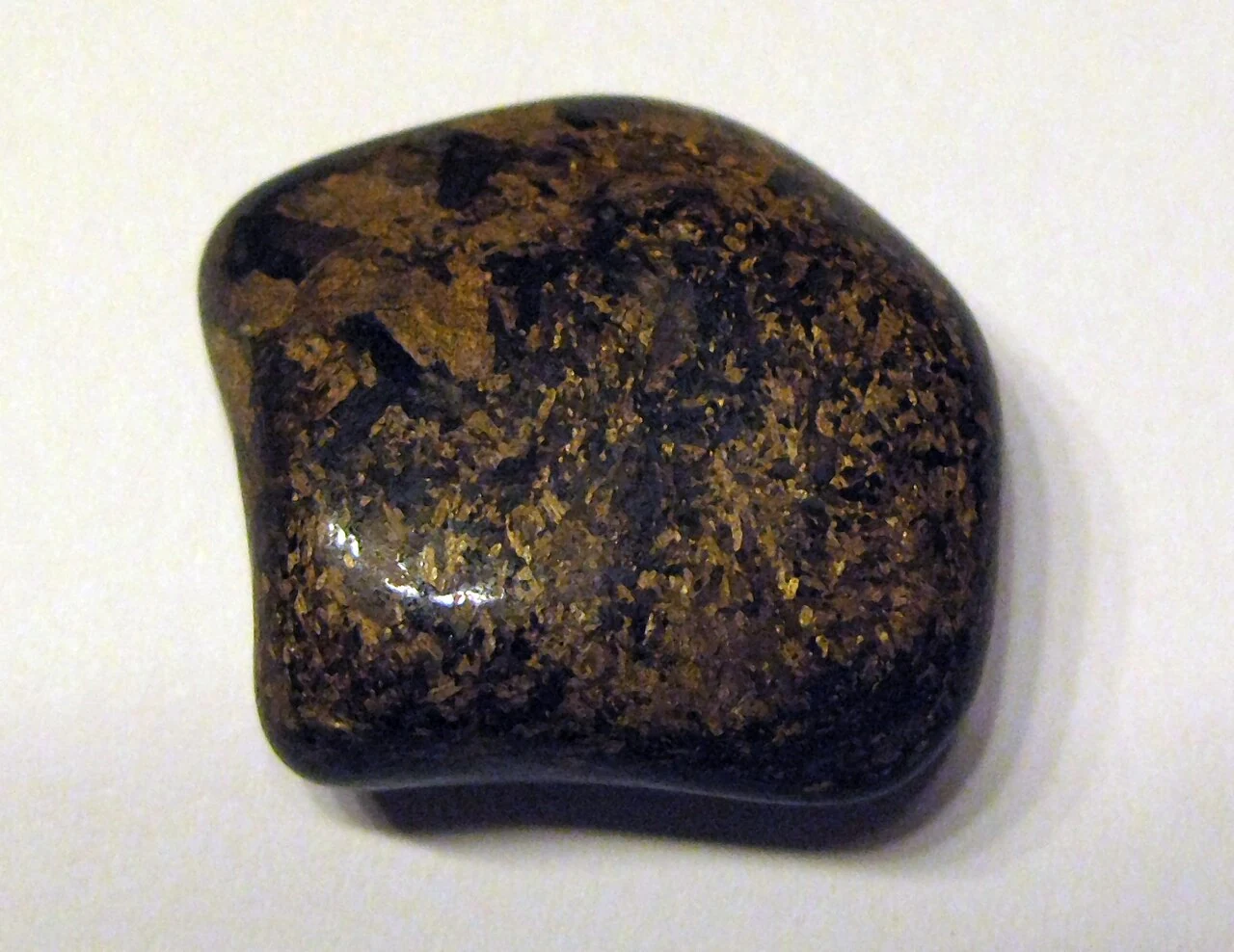
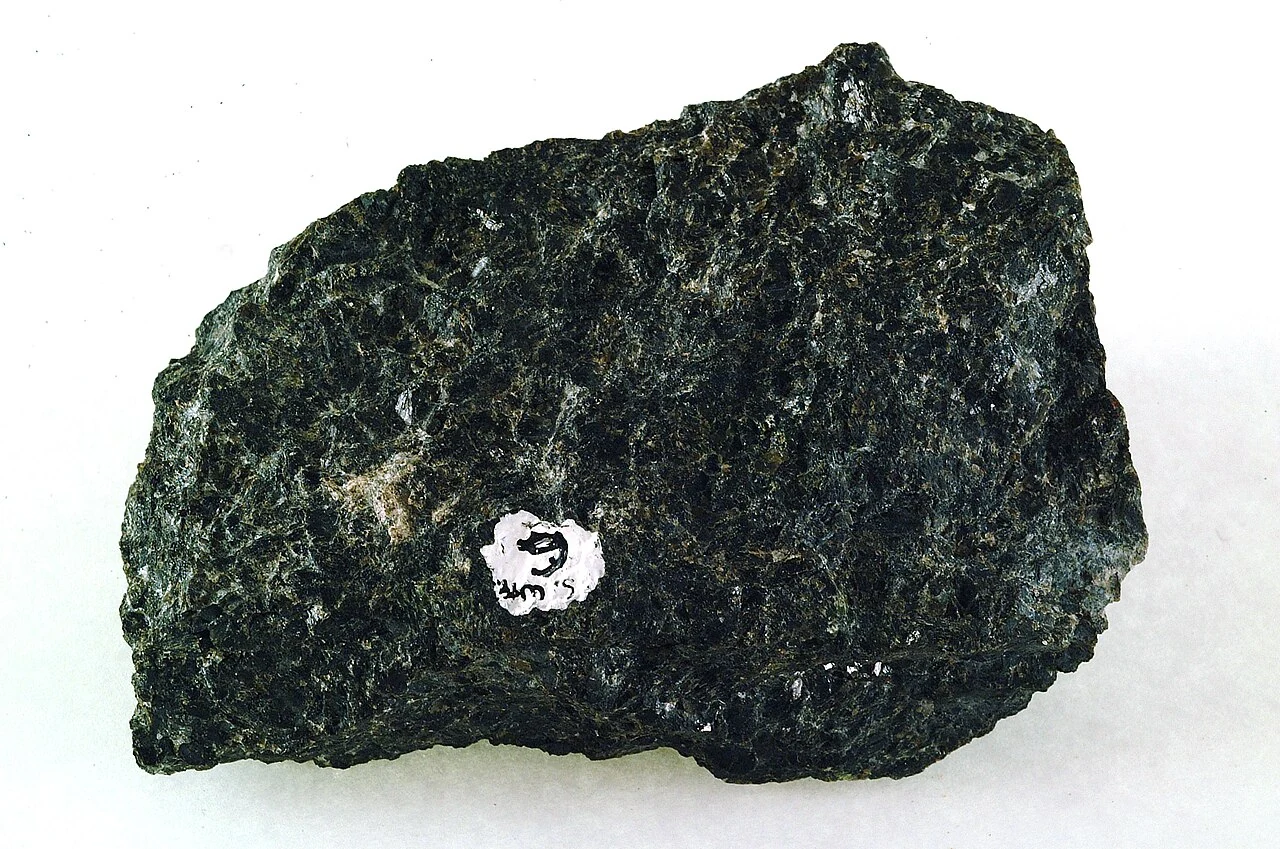
Bronzite is an iron-bearing enstatite variety with a green-brown appearance. Its name does not mean bronze alloy or a separate mineral species. Decorative lustre is an appearance feature, not evidence of gold content.
In these accounts, bronzite connects courtesy with personal initiative. The practice centres on one concrete way of cooperating, inspired by contemporary stone symbolism.
Lithotherapy tradition
The authors’ meanings and correspondences are presented in the full lithotherapy extension. [309][310]
Meaning in lithotherapy
The Crystal Council calls bronzite a stone of courtesy, linking confident action with respect for others’ equality. Within this contemporary language it symbolises assertiveness, focus and returning to what matters to the practitioner. Practitioners are encouraged to find courage for unfamiliar situations while remaining connected with their priorities. The author proposes carrying bronzite as an intention reminder and links individual action with community goodwill. [309]
Correspondences and differences
TCC names root and sacral chakras. Healing Crystals emphasises the root and grounding. Resolving that difference is unnecessary for using bronzite as a personal reminder of calm assertiveness. [309][310]
A second contemporary approach
Healing Crystals places harmony and reciprocal goodwill alongside protection. This is a gentler framing than TCC’s literal energetic filter. We do not turn energy-return claims into a rule that courtesy always guarantees good treatment. Its intention list adds focus and creative expression. Bronzite can therefore be explored as a symbol of attentive action rather than solely defence against one’s surroundings. [310]
An Avonoria editorial suggestion
Editorial suggestion — not a documented rite
Original practice: courteous assertiveness. Put bronzite on your desk and choose a small situation in which you usually agree too quickly or reply more sharply than intended. Record the other person’s request as neutrally as possible. Compose a reply with three elements: what you understand, what you agree to and where your willingness ends. Do not add a promise you do not intend to keep. Read slowly and notice unnecessary accusations. Choose a shorter version that preserves the meaning. The stone may remind you of the sentence during preparation, but leave it behind wherever it would distract you. After the conversation, check whether your boundary was concrete. The other person’s response does not measure the quality of your intention. If you could not say the sentence, return to it later without judging yourself. Finish by storing the specimen and doing something else. A brown rectangle drawn on paper can replace the object. Ritual retaliation or returning ‘bad energy’ to anyone is unnecessary.
Scope of the sources: You can describe your own sensations as personal experience. The exercise does not require accepting every belief in both catalogues; choose meanings you understand and leave room to revise your interpretation.
Bronzite is an iron-bearing enstatite variety with a green-brown appearance. Its name does not mean bronze alloy or a separate mineral species. Decorative lustre is an appearance feature, not evidence of gold content. [307][308]
Reference properties
Observe existing surfaces in neutral light. Mohs values are not instructions to scratch, break or heat.
The Handbook gives enstatite hardness of 5–6, good cleavage and brittle tenacity. Here this is a reference range for the variety, not a measurement of every polished stone sold. [307][308]
Typical material forms
For the variety’s parent enstatite: prismatic crystals and massive or granular aggregates. [307]
Common lookalikes and imitations
Diopside
Why it looks similar
Both are pyroxenes and can have dark colours.
What can help distinguish it
Bronzite is an orthorhombic enstatite variety; diopside is monoclinic with different composition.
What a photograph cannot establish
A photograph does not establish composition, hardness or treatment.
Enstatite occurs in pyroxenites, peridotites and other magnesium-rich rocks. The Handbook describes its series with ferrosilite. These data concern the variety’s mineral foundation; the identity of an individual item needs separate checking. [307][308]
Editorial suggestion — not a documented rite
Request the precise material name and information about coatings and repairs. Observe the surface while gently changing the angle, without abrasion or scratching. Compare photographs with an ordinary-light video.
Personal / spiritual practice
You can describe your own sensations as personal experience. The exercise does not require accepting every belief in both catalogues; choose meanings you understand and leave room to revise your interpretation.
Do not scrub or repolish uncertain surfaces yourself. For an unexamined item we choose a soft dry cloth, no salt, soaking or strong heating. Mohs hardness does not imply resistance to cleavage-related fracture.
Storage and specimen form
Store separately on a stable surface away from strong heat and falls.
Do not scrub or repolish uncertain surfaces yourself. For an unexamined item we choose a soft dry cloth, no salt, soaking or strong heating. Mohs hardness does not imply resistance to cleavage-related fracture.
Do not grind, drill or break the specimen at home. Dust requires a separate exposure assessment. [37]
FAQ
What should I know before choosing?
Do bronzite and enstatite count as two new species? No. Bronzite has its own entry as a recognised variety; this expansion does not add another general enstatite entry.
What research says — in brief
The cited clinical trial concerned rose quartz, not this atlas entry. It does not establish a therapeutic effect for this material; the symbolism is presented for understanding traditions and personal practice. [159]
Mineralogical, gemological, institutional or scientific source. Its scope is recorded in the source index.
bronzite — Meanings and Crystal PropertiesThe Crystal Council · accessed 2026-10-29
Commercial practitioner source: documents beliefs, not medical evidence. The site sells crystals, so we give a bibliographic description without an active link; the full address is kept in Avonoria’s source documentation.
BronziteHealing Crystals · accessed 2026-10-29
Commercial practitioner source: documents beliefs, not medical evidence. The site sells crystals, so we give a bibliographic description without an active link; the full address is kept in Avonoria’s source documentation.
DiopsideMineral Data Publishing / Handbook of Mineralogy · accessed 2026-10-29
Mineralogical, gemological, institutional or scientific source. Its scope is recorded in the source index.
Placebo effects in alternative medical treatments for anxiety: false hope or healing potential?Cambridge University Press / CNS Spectrums · 2025 · accessed 2026-10-29DOI: 10.1017/S1092852925100515
Mineralogical, gemological, institutional or scientific source. Its scope is recorded in the source index.