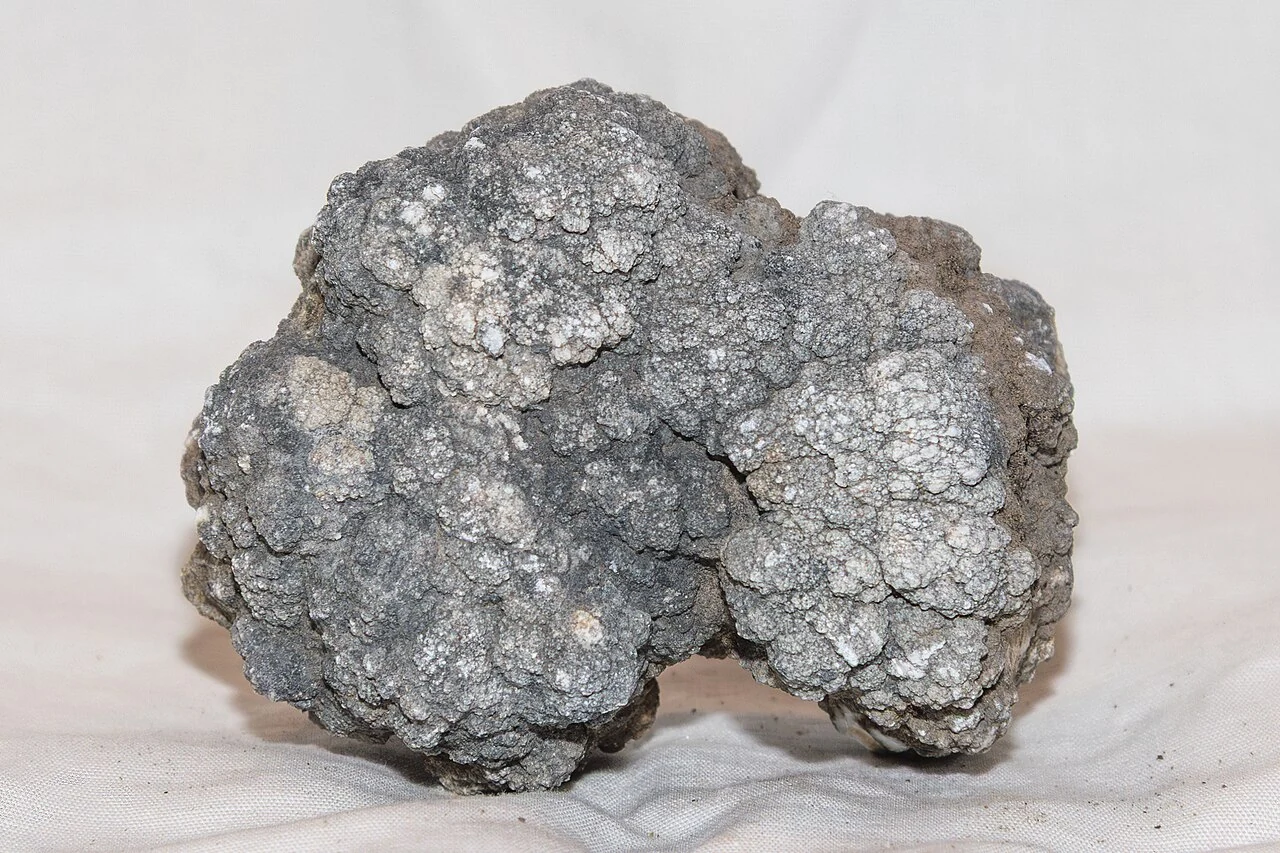
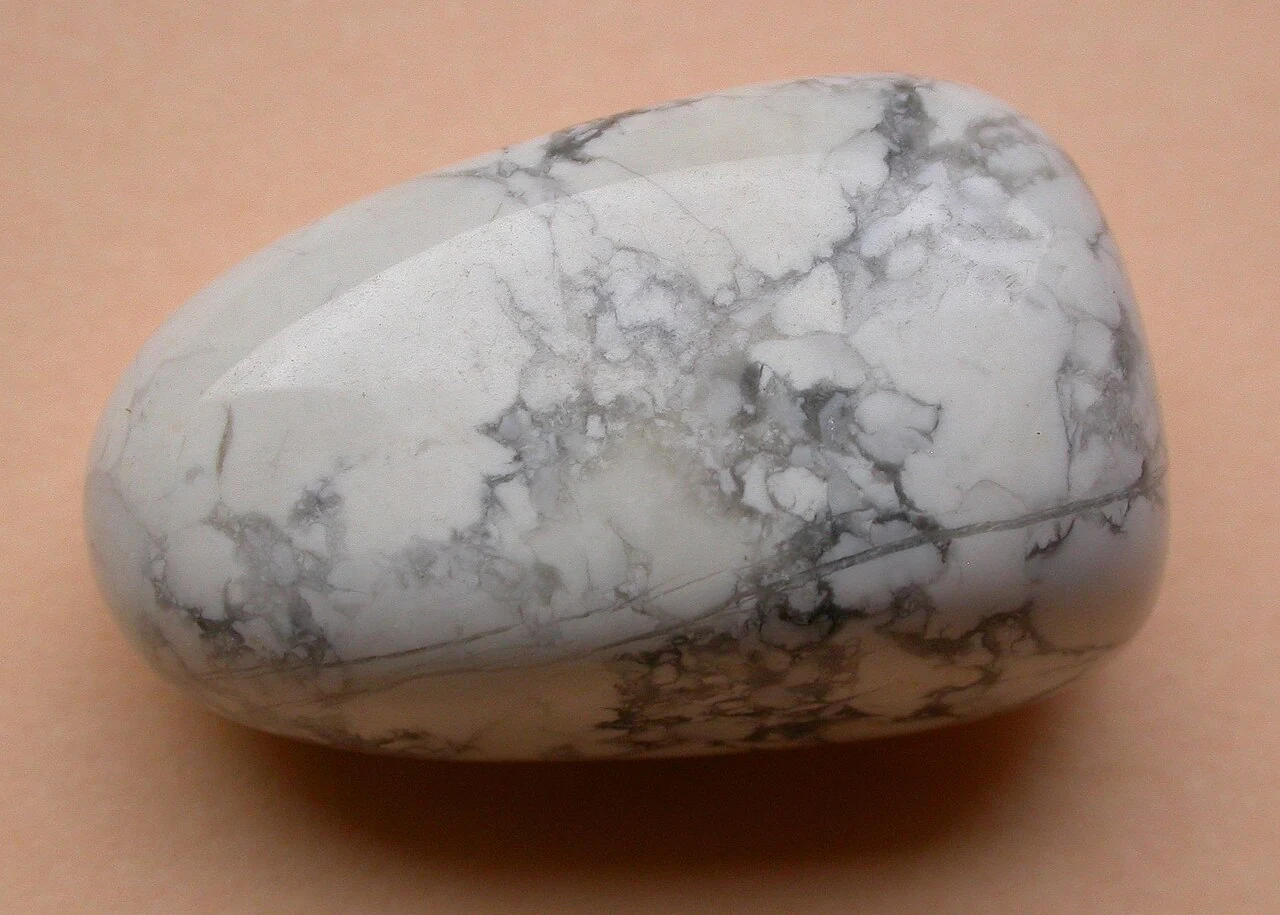
Howlite is a white calcium borate containing silicon. It is neither magnesite nor a white turquoise variety. This card places quiet symbolism beside an important buyer’s question: does the label identify a mineral, or merely describe an object’s appearance?
The Crystal Council presents howlite as a symbol of patience, quietness and a calmer relationship with personal emotions. It connects the root and crown chakras, building a narrative that joins everyday presence with spiritual perspective. In the author's account, the stone reminds practitioners to slow down and observe their inner experience. Meditation emphasises gentleness, while ordinary situations invite a patient response. This is the website's contemporary symbolic language, in which the white colour contributes to an image of a quiet focus. [332]
A second author and the context of correspondences
Healing Crystals presents howlite through calm, awareness and spirituality, with the crown as its principal correspondence. A brief practice chooses a moment before conversation, creativity or meditation, uses the stone as a focus and repeats a personal affirmation. The author then suggests placing it where its colour recalls the intention. Symbolic associations also include inspiration and self-expression. TCC additionally names the root, while HC organises its account around open awareness and a quiet rite of returning to intention. [333]
An Avonoria editorial suggestion
Editorial suggestion — not a documented rite
Original Avonoria interpretation. We read calm as an invitation to pause. Howlite can become a personal sign of time to reread one's words and choose their tone. Gentleness also means allowing oneself a moment for consideration.
Exercise. Put smooth howlite on the table before writing a difficult message. Draft it in a notebook and leave it for a few minutes. Then underline facts, circle the request and remove sentences you would not wish to send in a calmer mood. The stone is an agreed reminder to pause, not a guarantee of a good response. Finish by consciously choosing to send, revise or postpone the message.
Returning to everyday life. Record the chosen message and date. When facing a similar task, recall which change of tone helped. Howlite can remain an aesthetic reminder of that brief pause.
Scope of the sources: No historical healing tradition has been verified in this set. Identification and the imitation example come from the Handbook of Mineralogy and GIA respectively; energy symbolism comes solely from the critically read practitioner source.
It most often occurs in white nodules with a chalky or porcelain-like appearance; small crystals are tabular. [331]
Reference properties
View under neutral lighting and compare existing surfaces only. Hardness and streak below are reference data: do not scratch, break, heat or grind the specimen. Ask a specialist to examine valuable or unidentified materials.
Howlite occurs in evaporite deposits, often as nodules.
Material facts
It is associated with borate deposits, including Nova Scotia and California. Its name honours Henry How. [331]
Personal / spiritual practice
GIA lists dyed howlite among turquoise imitations. Dyeing does not remove an object’s decorative value when disclosed. Choose using information and personal taste; do not attempt authentication by scratching a bead or applying acetone. Also ask about coatings and cleaning. A blue example is not thereby a separate mineral and does not increase the atlas count.
Material facts
GIA describes dyed howlite as a turquoise imitation. [380]
Because treatment is unconfirmed, we use dry care without baths, salt, steam or ultrasonic cleaning. Do not leave the object on a hot windowsill. Store beads separately from sharp specimens. During practice, do not put small stones in a child’s bed or within pets’ reach; do not prepare elixirs.
Storage and specimen form
A separate, stable labelled container; protect against falls and access by children or pets.
Care is a precautionary editorial policy for an intact specimen with unconfirmed treatment. Wash hands after handling rough material; do not perform scratch, heat or acid tests.
Do not grind or drill at home. Dust is a different exposure route from handling an intact specimen. [37]
FAQ
What does blue colour mean in an item labelled howlite?
GIA describes dyed howlite used as a turquoise imitation. Ask for treatment disclosure. Blue colour alone does not identify natural turquoise.
What research says — in brief
The cited clinical trial concerned rose quartz, not this atlas entry. It does not establish a therapeutic effect for this material; the symbolism is presented for understanding traditions and personal practice. [159]
HowliteMineral Data Publishing / Handbook of Mineralogy · accessed 2026-10-29
Mineralogical, gemological, institutional or scientific source. Its scope is recorded in the source index.
Howlite Meanings and Crystal PropertiesThe Crystal Council · accessed 2026-10-29
Commercial practitioner source: documents beliefs, not medical evidence. The site sells crystals, so we give a bibliographic description without an active link; the full address is kept in Avonoria’s source documentation.
MagnesiteMineral Data Publishing / Handbook of Mineralogy · accessed 2026-10-29
Mineralogical, gemological, institutional or scientific source. Its scope is recorded in the source index.
Placebo effects in alternative medical treatments for anxiety: false hope or healing potential?Cambridge University Press / CNS Spectrums · 2025 · accessed 2026-10-29DOI: 10.1017/S1092852925100515
Mineralogical, gemological, institutional or scientific source. Its scope is recorded in the source index.
Turquoise buying guideGemological Institute of America · accessed 2026-10-29
Mineralogical, gemological, institutional or scientific source. Its scope is recorded in the source index.
Howlite — second practitioner accountHealing Crystals · accessed 2026-10-29
Commercial practitioner source: documents beliefs, not medical evidence. The site sells crystals, so we give a bibliographic description without an active link; the full address is kept in Avonoria’s source documentation.