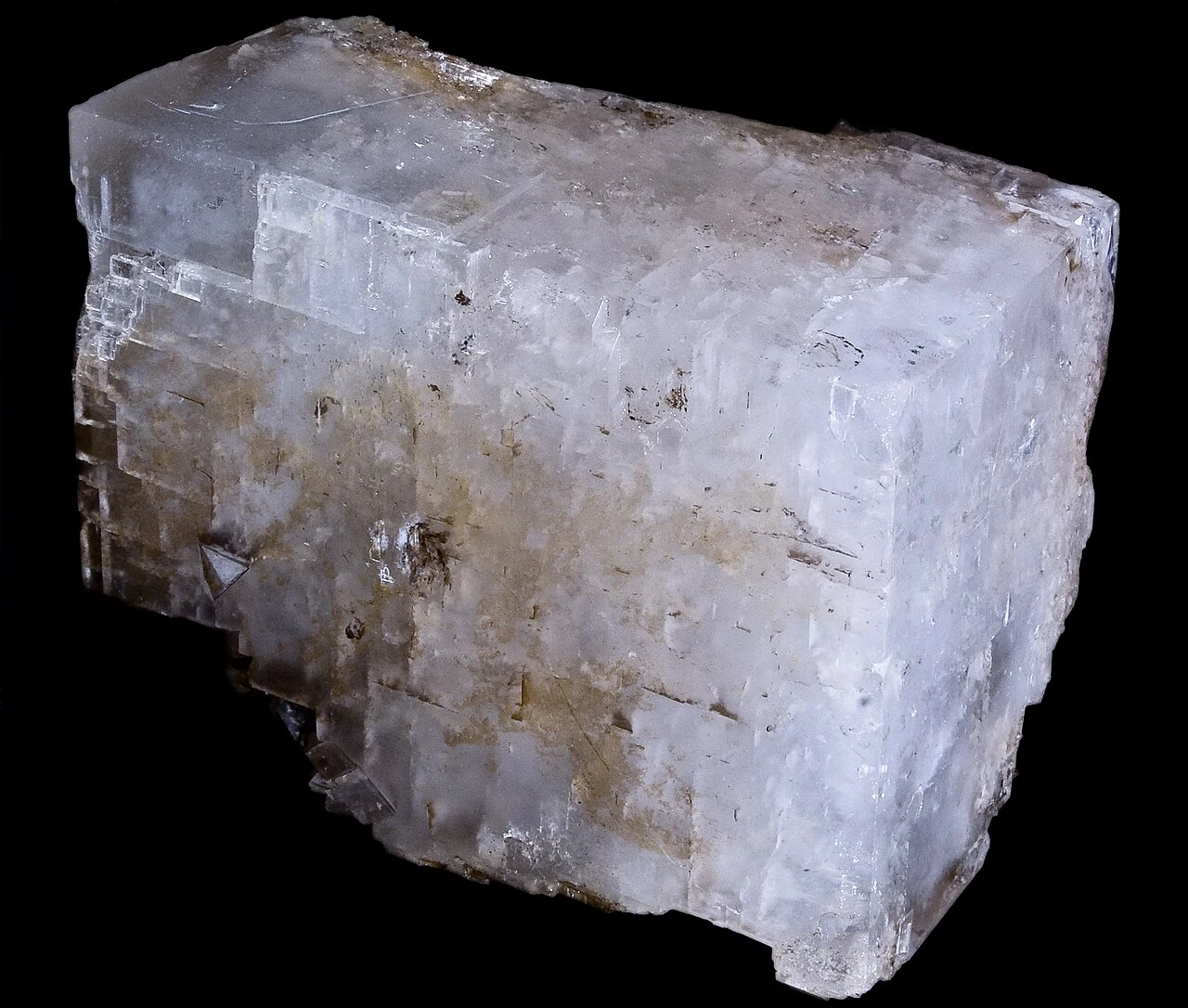
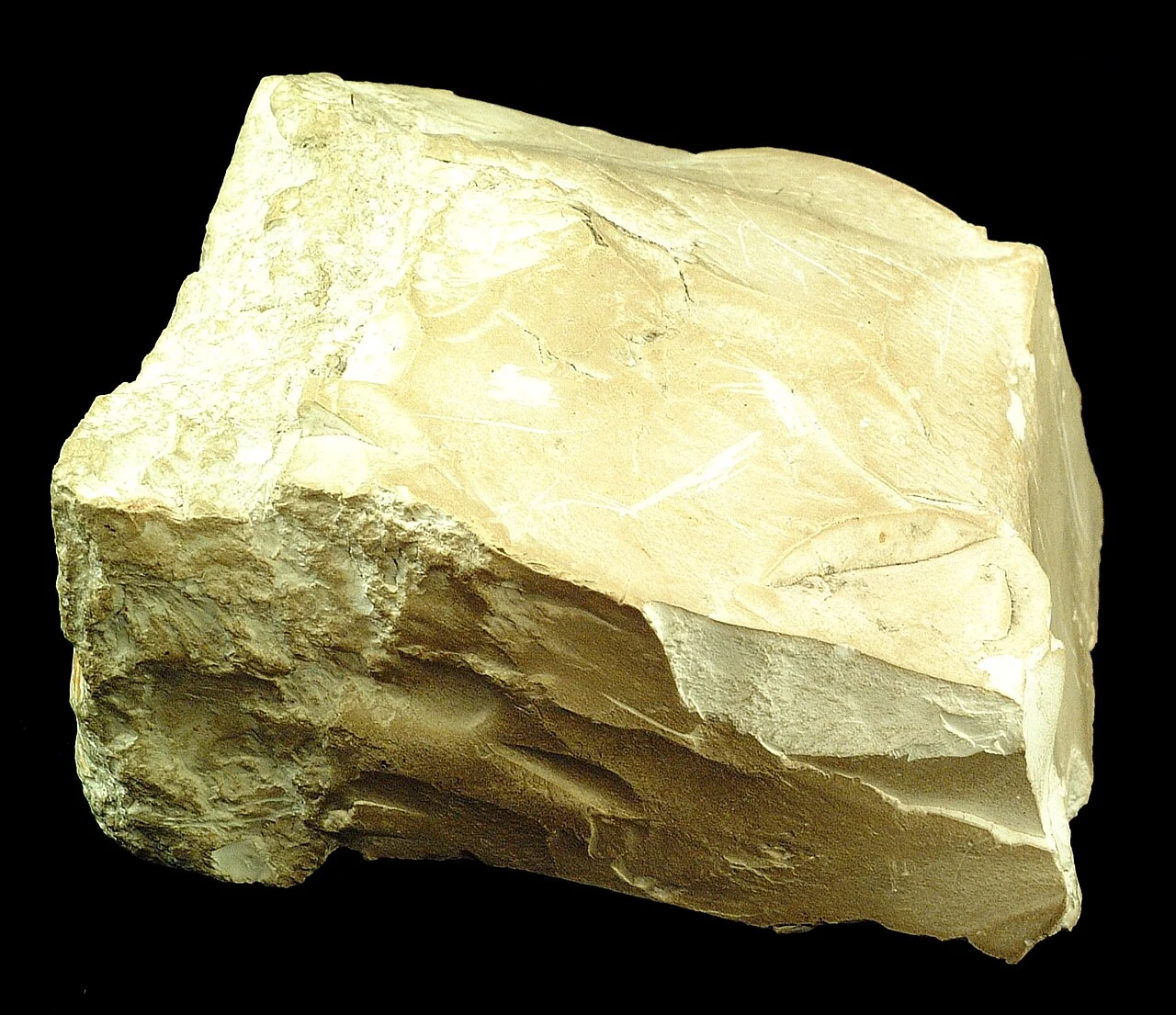
Magnesite is magnesium carbonate, distinct from howlite. Its modest appearance is no reason to infer hidden power: it can simply be a focus during visualisation. Identification needs evidence rather than a white colour.
Magnesite — the account below separates contemporary lithotherapy testimony from an original reflective exercise.
Lithotherapy tradition
Creative visualisation and kindly introspection. [329]
Meaning and correspondences in the source
Liz Oakes at Healing Crystals for You associates magnesite with creative visualisation, introspection and deeper meditation. The third eye and crown mark space for imagination and spiritual exploration in her map, while the heart contributes kindness towards oneself. She presents quiet reflection as an opportunity to notice new imagery and become more familiar with personal responses. Imagination is central to this practice rather than an optional addition. Magnesite therefore accompanies both visualisation and reflection on what that imagery means to the individual. [329]
A second author and the context of correspondences
Healing Crystals links magnesite with calm amid demanding responsibilities and with creative visualisation. In its narrative, the crown and third eye open space for images, ideas and reflection during yoga or meditation. The heart adds unconditional kindness, also expressed in an affirmation about attitudes towards oneself and others. Imagination and introspection are shared with Liz Oakes’s account; HC places greater emphasis on ordinary busyness and the need for quiet before new thoughts can emerge. [330]
An Avonoria editorial suggestion
Editorial suggestion — not a documented rite
Original Avonoria interpretation. Visualisation can be a small rehearsal before starting a task. In our proposal, magnesite marks time to imagine the first step and prepare what is needed. A later note allows the idea to be compared with personal experience.
Exercise. Place the specimen beside a notebook and choose a simple task, such as starting a conversation or tidying a desk. Imagine only the first step, then note the object needed, the time and a possible obstacle. Open your eyes, check your surroundings and take that step without waiting for special sensations. Afterwards, record the difference between imagination and experience.
Returning to everyday life. Treat visualisation ideas as drafts to develop. The next day, select one and note the preparation needed. After taking the first step, compare intention with experience and retain a helpful clue for the future.
Scope of the sources: We reject the identification of magnesite with howlite found on The Crystal Council. We do not adopt Liz Oakes’s health promises or claims of effective clairvoyance.
It usually forms compact, fine-grained, chalky or porcelain-like masses; crystals are less common. Colour may be white, colourless or faintly brown. [328]
Reference properties
View under neutral lighting and compare existing surfaces only. Hardness and streak below are reference data: do not scratch, break, heat or grind the specimen. Ask a specialist to examine valuable or unidentified materials.
Magnesite forms through alteration of magnesium-rich rocks among other processes.
Material facts
It occurs in sedimentary and igneous rocks and as an alteration product of serpentinite and peridotite. Large crystals are documented from Brumado, Brazil. [328]
Personal / spiritual practice
Request an unambiguous material name and disclosure of dyeing or impregnation. If an offer describes the same object as both howlite and magnesite, its identity needs clarification. ‘Natural’ does not answer the dyeing question. For a specimen on matrix, also ask about associated minerals. Passing on an unclear purchase is preferable to home acid testing.
For an unidentified object, use a dry cloth and separate box. Avoid salt soaking, heating and attempts to remove colour with solvent. Magnesium content does not make a specimen a supplement; do not prepare a mineral drink. Leave dusty or fibrous matrix in a closed container for specialist assessment.
Storage and specimen form
A separate, stable labelled container; protect against falls and access by children or pets.
Care is a precautionary editorial policy for an intact specimen with unconfirmed treatment. Wash hands after handling rough material; do not perform scratch, heat or acid tests.
Do not grind or drill at home. Dust is a different exposure route from handling an intact specimen. [37]
FAQ
Are magnesite and howlite two names for the same stone?
No. Magnesite is magnesium carbonate and howlite is a borate. Similar-looking white beads need more than visual identification; ask the seller for the material name and any dyeing information.
What research says — in brief
The cited clinical trial concerned rose quartz, not this atlas entry. It does not establish a therapeutic effect for this material; the symbolism is presented for understanding traditions and personal practice. [159]
MagnesiteMineral Data Publishing / Handbook of Mineralogy · accessed 2026-10-29
Mineralogical, gemological, institutional or scientific source. Its scope is recorded in the source index.
Magnesite: Creative Visualization & Deeper MeditationHealing Crystals for You · accessed 2026-10-29
Commercial practitioner source: documents beliefs, not medical evidence. The site sells crystals, so we give a bibliographic description without an active link; the full address is kept in Avonoria’s source documentation.
HowliteMineral Data Publishing / Handbook of Mineralogy · accessed 2026-10-29
Mineralogical, gemological, institutional or scientific source. Its scope is recorded in the source index.
Placebo effects in alternative medical treatments for anxiety: false hope or healing potential?Cambridge University Press / CNS Spectrums · 2025 · accessed 2026-10-29DOI: 10.1017/S1092852925100515
Mineralogical, gemological, institutional or scientific source. Its scope is recorded in the source index.
Magnesite — second practitioner accountHealing Crystals · accessed 2026-10-29
Commercial practitioner source: documents beliefs, not medical evidence. The site sells crystals, so we give a bibliographic description without an active link; the full address is kept in Avonoria’s source documentation.