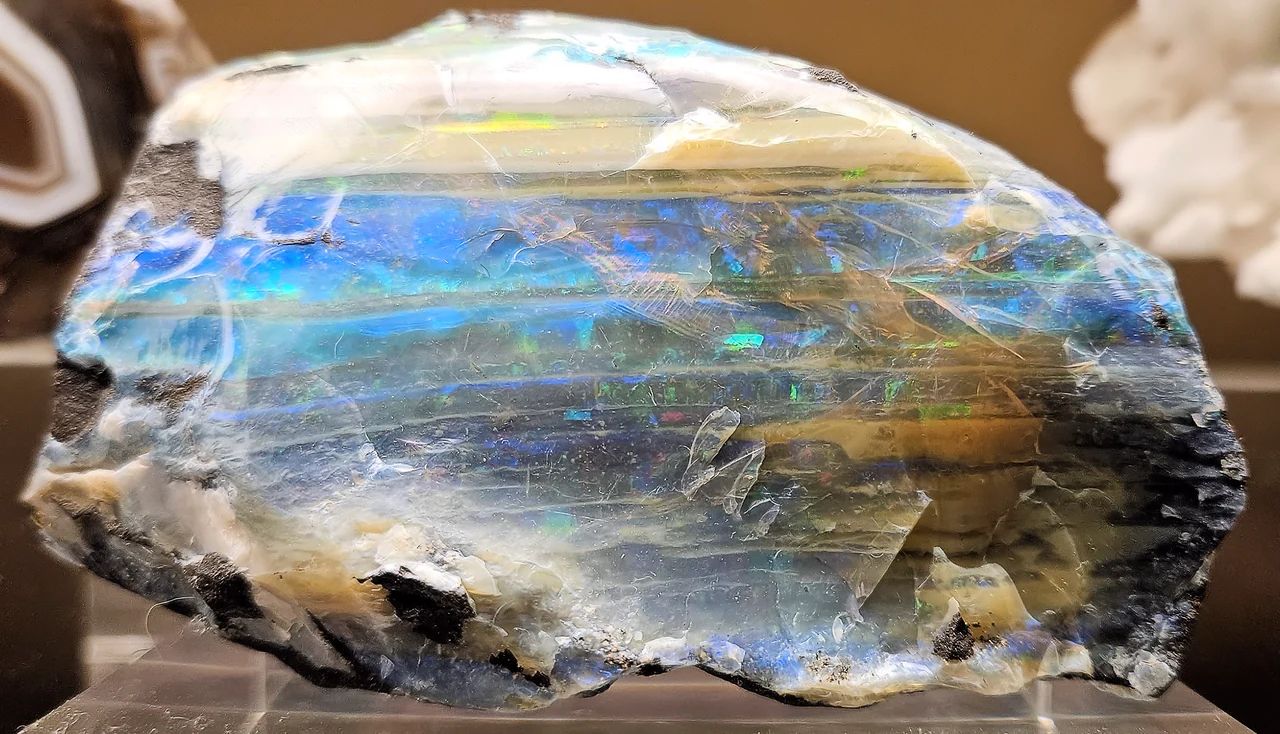
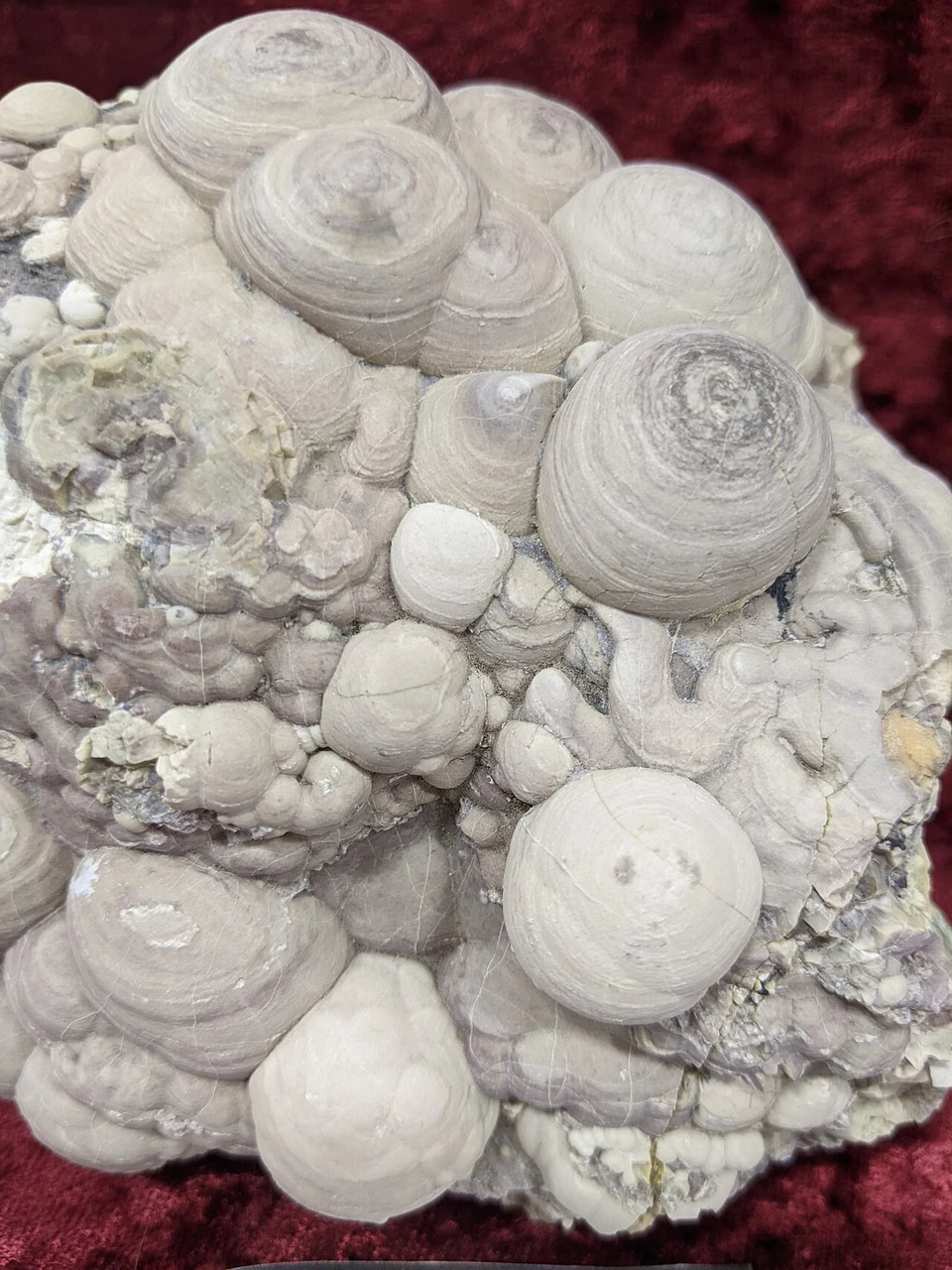
Opal is hydrated silica, treated here as a mineraloid. Precious opal displays play-of-colour; common opal does not. Fiery body colour and play-of-colour are different phenomena: orange opal need not flash a rainbow.
Here opal invites exploration of imagination and changing attention. Welo-specific accounts are distinguished from broader beliefs about opal.
Lithotherapy tradition
The authors’ meanings and correspondences are presented in the full lithotherapy extension. [258][259]
Meaning in lithotherapy
The Crystal Council describes Welo opal specifically as a symbol of acceptance, growth and grounding. In its system the correspondences encompass all chakras. This account is not transferred to every white, black or fire opal: practitioner pages assign different meanings to different varieties. Symbolic changeability can provide a theme for personal reflection on perspective. In the Welo account, willingness to grow and flexibility towards new experiences matter. The practice accompanies discovery of a personal direction rather than supplying one unchanging answer to everyone. [258]
Correspondences and differences
TCC associates Welo with all main chakras. [258][259]
A second contemporary approach
Crystal Vaults develops hope, imagination and awareness of personal qualities. It describes opal as a metaphorical mirror of emotion, whereas TCC focuses on Welo and acceptance of change. Both accounts belong to contemporary practice. Difficult feelings are not evidence that opal is ‘drawing’ something harmful out of a person. The author emphasises joy, spontaneity and noticing potential. Light imagery presents many aspects of one person rather than reducing them to a single mood. [259]
An Avonoria editorial suggestion
Editorial suggestion — not a documented rite
An original perspective practice: view opal on a stable surface in gentle light, without a heat lamp or soaking. Write down a situation you have judged from only one viewpoint. Add two alternative interpretations, marking which rest on facts and which remain assumptions. Finish by asking what information you could check. If your opal lacks play-of-colour, do not force yourself to find it: a quiet surface can also accompany attention. In this exercise you create meaning deliberately rather than expect a message hidden in a flash. Choose a neutral creative subject: a short piece’s title, a colour combination or a table-setting idea. Note the idea before evaluating it, then check whether available materials make it feasible. Do not seek health or relationship answers in changing light. If the sight evokes no associations, use an illustration instead or simply finish. Lack of inspiration is not a failure of practice.
Scope of the sources: You can describe your own sensations as personal experience. The exercise does not require accepting every belief in both catalogues; choose meanings you understand and leave room to revise your interpretation.
Opal is hydrated silica, treated here as a mineraloid. Precious opal displays play-of-colour; common opal does not. Fiery body colour and play-of-colour are different phenomena: orange opal need not flash a rainbow. [256][257]
Reference properties
Observe existing surfaces in neutral light. Mohs values are not instructions to scratch, break or heat.
Mohs hardness range 5–6.5. Variable water content and structure mean that the name opal does not describe identical behaviour in every specimen. [256][257]
Typical material forms
Silica accumulations filling rock cracks; this describes the sedimentary model discussed by GIA. [257]
Common lookalikes and imitations
Quartz
Why it looks similar
Pale or translucent material may resemble other pale silica.
What can help distinguish it
Opal contains water and lacks quartz’s crystal structure. Not every opal displays play-of-colour.
What a photograph cannot establish
A photograph does not establish composition, hardness or treatment.
GIA explains play-of-colour through light diffraction by ordered microscopic silica spheres. Its account of formation in Australian sediments involves water transporting dissolved silica and depositing it in cracks. This is not a universal deposit model for every opal. [256][257]
Editorial suggestion — not a documented rite
Ask for a clear description of the item’s construction and treatment. Examine the opal from the side and underneath, and compare its pattern under several ordinary lighting arrangements. Keep a photograph showing areas without strong flashes too.
Personal / spiritual practice
You can describe your own sensations as personal experience. The exercise does not require accepting every belief in both catalogues; choose meanings you understand and leave room to revise your interpretation.
According to GIA, intense light can heat opal and contribute to crazing; sudden temperature changes also pose a risk. Mild soapy-water cleaning concerns appropriately identified jewellery. For doublets, triplets and hydrophane material, establish individual care; storage in water and ritual soaking are not recommended here.
Storage and specimen form
Store separately on a stable surface away from strong heat and falls.
According to GIA, intense light can heat opal and contribute to crazing; sudden temperature changes also pose a risk. Mild soapy-water cleaning concerns appropriately identified jewellery. For doublets, triplets and hydrophane material, establish individual care; storage in water and ritual soaking are not recommended here.
Do not grind, drill or break the specimen at home. Dust requires a separate exposure assessment. [37]
FAQ
What should I know before choosing?
Is common opal energetically inferior? No scientific method establishes such a ranking. Appearance and personal meaning can guide a choice, while the precise material is disclosed.
What research says — in brief
The cited clinical trial concerned rose quartz, not this atlas entry. It does not establish a therapeutic effect for this material; the symbolism is presented for understanding traditions and personal practice. [159]
OpalGemological Institute of America · accessed 2026-10-29
Mineralogical, gemological, institutional or scientific source. Its scope is recorded in the source index.
Opal DescriptionGemological Institute of America · accessed 2026-10-29
Mineralogical, gemological, institutional or scientific source. Its scope is recorded in the source index.
ethiopian-welo-opal — Meanings and Crystal PropertiesThe Crystal Council · accessed 2026-10-29
Commercial practitioner source: documents beliefs, not medical evidence. The site sells crystals, so we give a bibliographic description without an active link; the full address is kept in Avonoria’s source documentation.
opal — meanings and usesCrystal Vaults · accessed 2026-10-29
Commercial practitioner source: documents beliefs, not medical evidence. The site sells crystals, so we give a bibliographic description without an active link; the full address is kept in Avonoria’s source documentation.
Opal Care and CleaningGemological Institute of America · accessed 2026-10-29
Mineralogical, gemological, institutional or scientific source. Its scope is recorded in the source index.
QuartzMineral Data Publishing / Handbook of Mineralogy · accessed 2026-10-29
Mineralogical, gemological, institutional or scientific source. Its scope is recorded in the source index.
Placebo effects in alternative medical treatments for anxiety: false hope or healing potential?Cambridge University Press / CNS Spectrums · 2025 · accessed 2026-10-29DOI: 10.1017/S1092852925100515
Mineralogical, gemological, institutional or scientific source. Its scope is recorded in the source index.