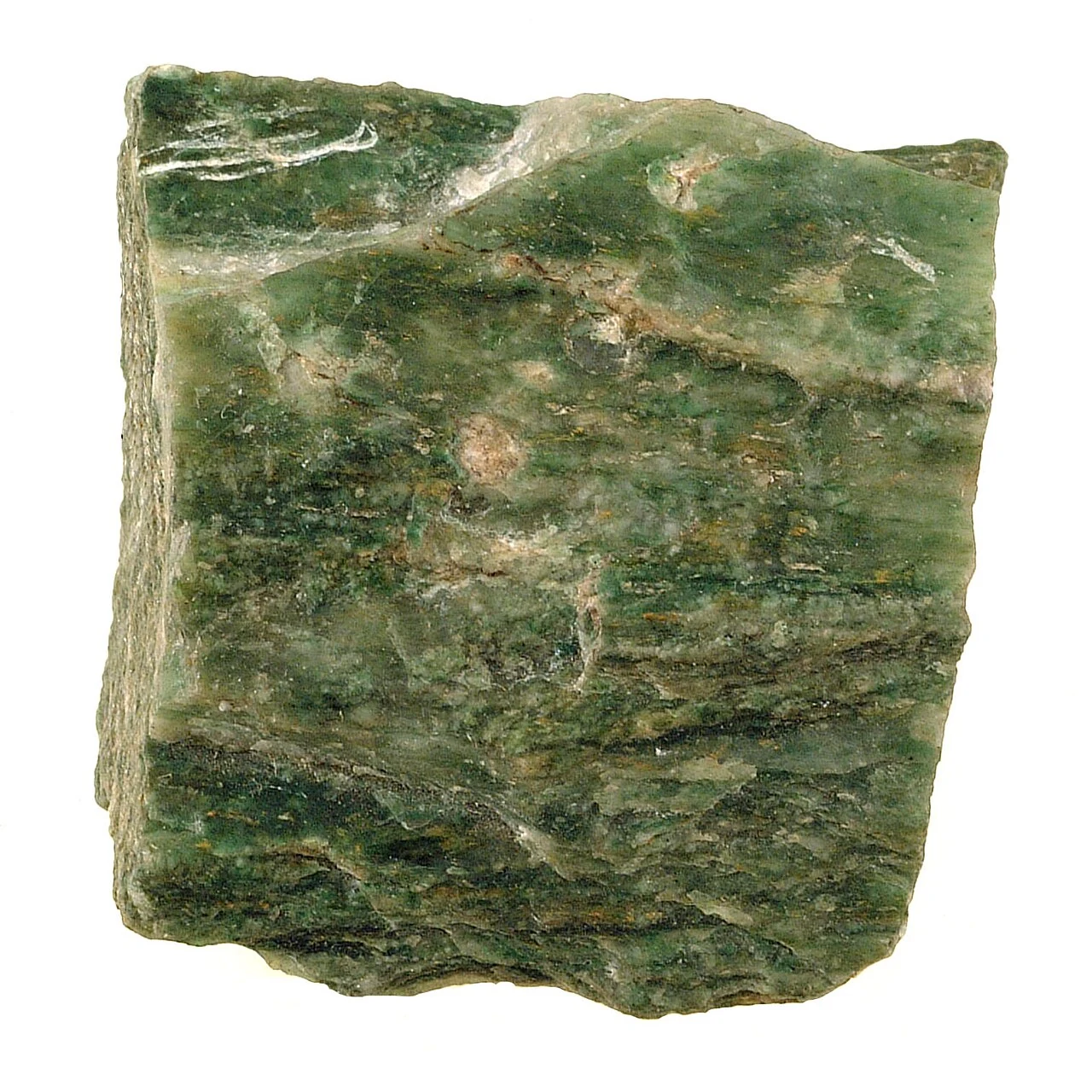
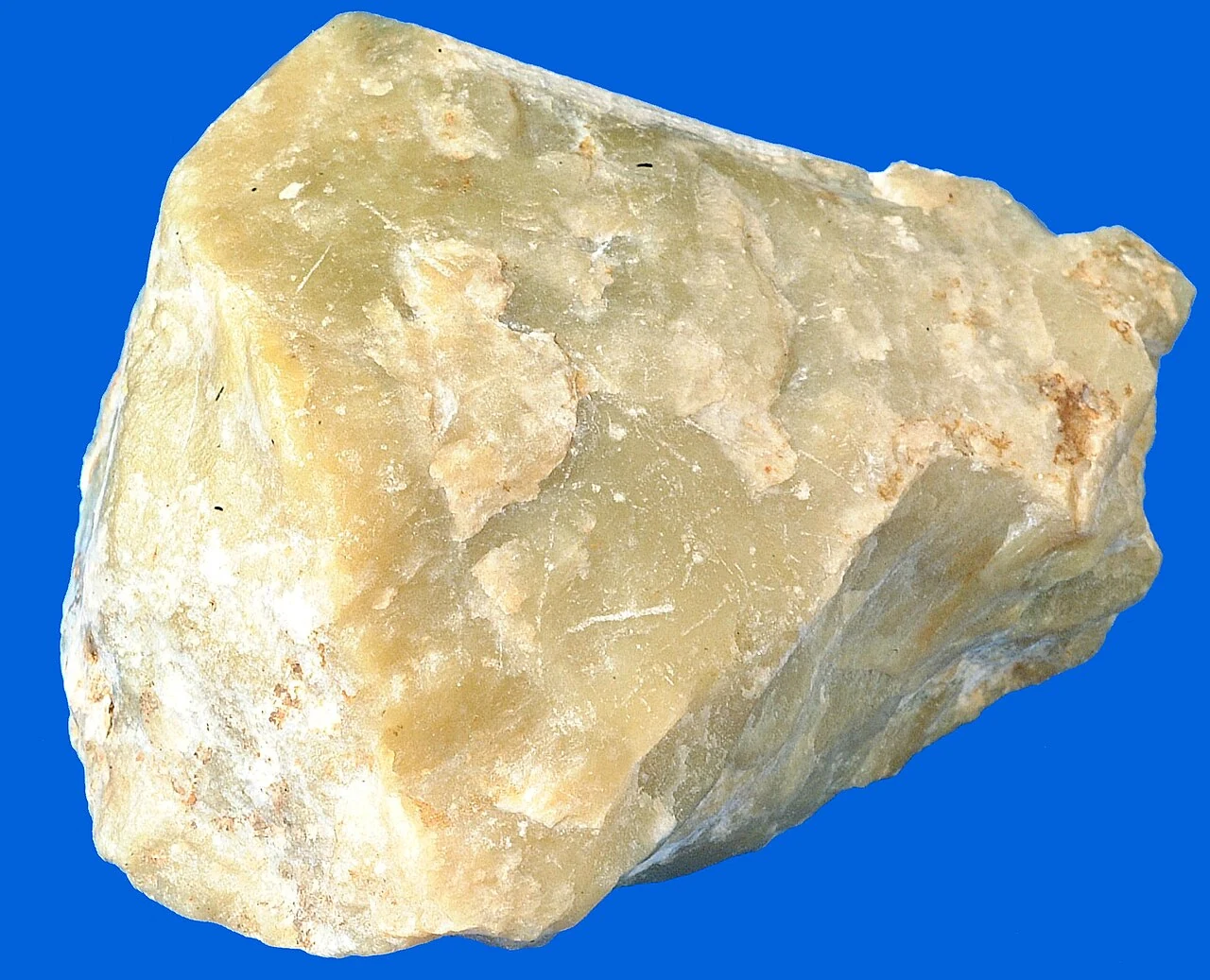
Serpentine is a group name rather than one species. It includes antigorite, lizardite and chrysotile. Decorative material may contain several components; serpentinite names a rock. We do not assign the whole group one hardness result or crystal system.
Contemporary catalogues give serpentine extensive earth, heart and transformation symbolism. We explore it through reflection on an image, because a trade name alone does not identify a specimen’s composition.
Lithotherapy tradition
The authors’ meanings and correspondences are presented in the full lithotherapy extension. [313][314]
Meaning in lithotherapy
The Crystal Council links serpentine with nature and a contemporary crystal interpretation of kundalini. A coiled-snake motif becomes a metaphor for potential and change. We do not treat a retail account as full evidence of historical tantra or instructions for inducing intense sensations. Outdoor meditation and a sense of connection with surrounding life are important in the account. The heart theme adds kindness and gentleness towards oneself to the snake symbol. [313]
Correspondences and differences
TCC covers all main chakras, whereas Healing Crystals primarily identifies the heart. These describe different spiritual maps, not anatomical properties of minerals. [313][314]
A second contemporary approach
Healing Crystals places serpentine among symbols of abundance, manifestation and respect, also associating it with kundalini. Compared with TCC, it gives less space to an extended altered-consciousness narrative. Nature connection can be explored without compulsory chakra ‘opening’ or special breathing techniques. Its intention list includes respect and spiritual knowledge. In this framing, contact with the symbol offers reflection on values rather than an obligation to reproduce one technique. [314]
An Avonoria editorial suggestion
Editorial suggestion — not a documented rite
Original practice: observing nature’s patterns. Use a photograph of serpentine rather than an unidentified specimen. Choose one visible curve or band and sketch its course without trying to copy the entire image. Then look through a window or go to an accessible quiet place and find a similar shape in a leaf, branch or cloud. Write down two similarities and one difference. Move from symbolic ‘earth connection’ to a practical question: what can I respect in my immediate surroundings? It might be leaving a plant unpicked or planning rest without buying anything extra. Choose an action suited to the place rather than a grand declaration. Breathe normally, without holding your breath or forcing a sense of flow along the spine. Stop when attention becomes tired. No unusual sensation is required. The exercise encourages quiet observation, not testing the body’s limits or contact with an unknown mineral. Your own drawing of a knot or branch can replace the photograph.
Scope of the sources: You can describe your own sensations as personal experience. The exercise does not require accepting every belief in both catalogues; choose meanings you understand and leave room to revise your interpretation.
Serpentine is a group name rather than one species. It includes antigorite, lizardite and chrysotile. Decorative material may contain several components; serpentinite names a rock. We do not assign the whole group one hardness result or crystal system. [311][312]
Reference properties
Observe existing surfaces in neutral light. Mohs values are not instructions to scratch, break or heat.
For example, the Handbook gives lizardite hardness of 2.5 and antigorite 2.5–3.5 Mohs. These figures are not transferred to every mixed-mineral object. Species, texture and associated minerals need identification. [311][312]
Typical material forms
Lizardite forms fine platy and massive aggregates; antigorite can be bladed or fibrous. A group description does not determine an individual item’s form. [312][311]
Common lookalikes and imitations
Nephrite
Why it looks similar
Green compact objects may be confused through the broad name jade.
What can help distinguish it
Nephrite is an amphibole aggregate, while serpentine names a different group. Identification is needed, including assessment of fibrous components.
What a photograph cannot establish
A photograph does not establish composition, hardness or treatment.
Antigorite and lizardite form during alteration of ultramafic rocks, among other settings. The Handbook distinguishes their structures and properties. Group-level composition and crystal-system fields remain blank because this entry covers a mineral group. [311][312]
Editorial suggestion — not a documented rite
Before buying, require identification of the material and assessment of its form. Do not choose fibrous or dusty rough for handling, massage or working. If the documentation leaves uncertainty, use a photograph in your practice.
Personal / spiritual practice
You can describe your own sensations as personal experience. The exercise does not require accepting every belief in both catalogues; choose meanings you understand and leave room to revise your interpretation.
Chrysotile is asbestos; WHO classifies all asbestos forms as carcinogenic. Not all serpentine is asbestos, but an unidentified object cannot be assessed from a photograph or polish alone. Do not grind, drill, brush or blow dust away. Keep fibrous or friable specimens enclosed and seek expert assessment; do not use them for touch-based practice.
Storage and specimen form
Store separately on a stable surface away from strong heat and falls.
Chrysotile is asbestos; WHO classifies all asbestos forms as carcinogenic. Not all serpentine is asbestos, but an unidentified object cannot be assessed from a photograph or polish alone. Do not grind, drill, brush or blow dust away. Keep fibrous or friable specimens enclosed and seek expert assessment; do not use them for touch-based practice.
Chrysotile is asbestos; WHO classifies all asbestos forms as carcinogenic. Not all serpentine is asbestos, but an unidentified object cannot be assessed from a photograph or polish alone. Do not grind, drill, brush or blow dust away. Keep fibrous or friable specimens enclosed and seek expert assessment; do not use them for touch-based practice. [37]
FAQ
What should I know before choosing?
Can all serpentine be called dangerous, or all polished pieces safe? Both generalisations are wrong. Identification, texture, condition and potential fibre release matter.
What research says — in brief
The cited clinical trial concerned rose quartz, not this atlas entry. It does not establish a therapeutic effect for this material; the symbolism is presented for understanding traditions and personal practice. [159]
AntigoriteMineral Data Publishing / Handbook of Mineralogy · accessed 2026-10-29
Mineralogical, gemological, institutional or scientific source. Its scope is recorded in the source index.
LizarditeMineral Data Publishing / Handbook of Mineralogy · accessed 2026-10-29
Mineralogical, gemological, institutional or scientific source. Its scope is recorded in the source index.
serpentine — Meanings and Crystal PropertiesThe Crystal Council · accessed 2026-10-29
Commercial practitioner source: documents beliefs, not medical evidence. The site sells crystals, so we give a bibliographic description without an active link; the full address is kept in Avonoria’s source documentation.
SerpentineHealing Crystals · accessed 2026-10-29
Commercial practitioner source: documents beliefs, not medical evidence. The site sells crystals, so we give a bibliographic description without an active link; the full address is kept in Avonoria’s source documentation.
AsbestosWorld Health Organization · accessed 2026-10-29
Mineralogical, gemological, institutional or scientific source. Its scope is recorded in the source index.
Jade DescriptionGemological Institute of America · accessed 2026-10-29
Mineralogical, gemological, institutional or scientific source. Its scope is recorded in the source index.
Placebo effects in alternative medical treatments for anxiety: false hope or healing potential?Cambridge University Press / CNS Spectrums · 2025 · accessed 2026-10-29DOI: 10.1017/S1092852925100515
Mineralogical, gemological, institutional or scientific source. Its scope is recorded in the source index.