Calcium fluoride occurring in many colours. Hardness 4 and perfect cleavage mean it needs protection from scratches and impact. Fluorescence is not a universal identity test.
In lithotherapy fluorite is a stone of clarity and orderly thinking. Practitioners value it because, they say, it brings freshness to a space and helps with decisions; multicoloured specimens are linked with the whole chakra system.
Meaning in lithotherapy
The Crystal Council describes fluorite as a stone of clarity and mental enhancement that absorbs negative energy — especially from the aura and the mind — and lets the mind flow freely to balance thoughts and ideas. It is meant to help with decisions, awaken “the entire chakra column” and help one discover one’s true self; placed in a room, to awaken and uplift the space. [55]
Crystal Vaults distinguishes the colours: purple fluorite is the most peace-giving and devoted to the part of the mind that connects with Spirit; green fluorite clears heavy energy from the environment and brings a spring-like freshness to the chakras; multicoloured fluorite is meant to cleanse and repair the aura as a whole, energise all the chakras, calm a chaotic mind and encourage free thinking, flexibility and freedom of choice. [139]
The Crystal Council assigns separate meanings to the colours of fluorite. Pink (found beside creedite) is meant to open the heart and support self-love; black is the “ultimate cleanser” of negativity and a shield for the emotional body; purple attunes the mind to higher vibrations; blue helps one communicate the purest ideas — which is why it is recommended to teachers, speakers and artists; colourless is a stone of intuition and an activator of the third eye; green balances emotion and thought; yellow links the solar plexus with the third eye and opens a path to self-expression. [55]
Ways of working with the stone
Crystal Vaults describes a meditation in a circle: six fluorite octahedra are arranged around oneself, one sits in the middle and begins a meditation intended to release tension. The Crystal Council advises placing fluorite in a room whose atmosphere one wants to enliven, and for people born under Libra presents it as a stone that builds confidence. [139][55]
The Crystal Council also describes combining fluorite with other stones: quartz is meant to enhance fluorite of any colour, jet or black obsidian to support the cleansing of one’s own energy field, emerald, rose quartz and pink tourmaline to help when fluorite is used to link the third eye with the heart, and pyrite to activate the lower chakras and “manifestation energy”, so that a clear mind can turn dreams into reality. [55]
Chakras, element and astrology
Chakras
the whole “chakra column” — all seven; colours assigned to individual chakras: pink — heart, colourless — third eye, yellow — solar plexus and third eye, green — joins heart and mind (The Crystal Council); multicoloured — all chakras (Crystal Vaults) [55][139]
Libra, Capricorn, Pisces; especially builds confidence in decisions for Libra (The Crystal Council) [55]
Older observations
History and beliefs
Fluorite has no belief tradition of its own in Kunz, but Kunz — himself a researcher of the luminescence of thousands of minerals — described chlorophane, a variety of fluorite that glows from the warmth of a hand alone and, on a live coal, shines with a green light visible from a distance. He considered such phenomena the real basis of some old legends of glowing stones. [120]
A possible but uncertain ancient thread concerns “murrhine” vessels. Pliny the Elder (Natural History, book 37, chapters 7–8) writes that Pompey brought them to Rome, that they came from the East, mainly the Parthian empire, and that they were prized for veins of purple and white turning to red; Nero is said to have paid a million sesterces for a single cup. The translators (Bostock and Riley, 1855) note that scholars identified the material in different ways — as coloured glass, onyx or porcelain — while Ajasson and Desfontaines saw fluorspar in the description. We therefore do not transfer this history automatically to modern fluorite; it is one proposed identification. [145]
Where the sources differ
Both sources agree that fluorite orders the mind and clears a space, but they place the emphasis differently. The Crystal Council builds its whole account around clear thinking, decisions and colours assigned to chakras. Crystal Vaults — in a short article on relaxation — speaks of fluorite above all as a stone of calm: purple is for it “the most peace-giving”, and green serves to clear the surroundings, whereas The Crystal Council links green with the balance of heart and mind. [55][139]
An Avonoria editorial suggestion
Editorial suggestion — not a documented rite
Place the delicate specimen on a stable surface. Write down the options for a decision and a way to compare them; the stone can accompany this exercise in organising thoughts.
Scope of the sources: The Crystal Vaults fluorite encyclopedia page now redirects to a short relaxation article, so the second practitioner source is slim. None of the sources we read gives a ritual cleansing for fluorite, so none is added. The identification of murrhine vessels with fluorite is uncertain and given as the opinion of the scholars cited.
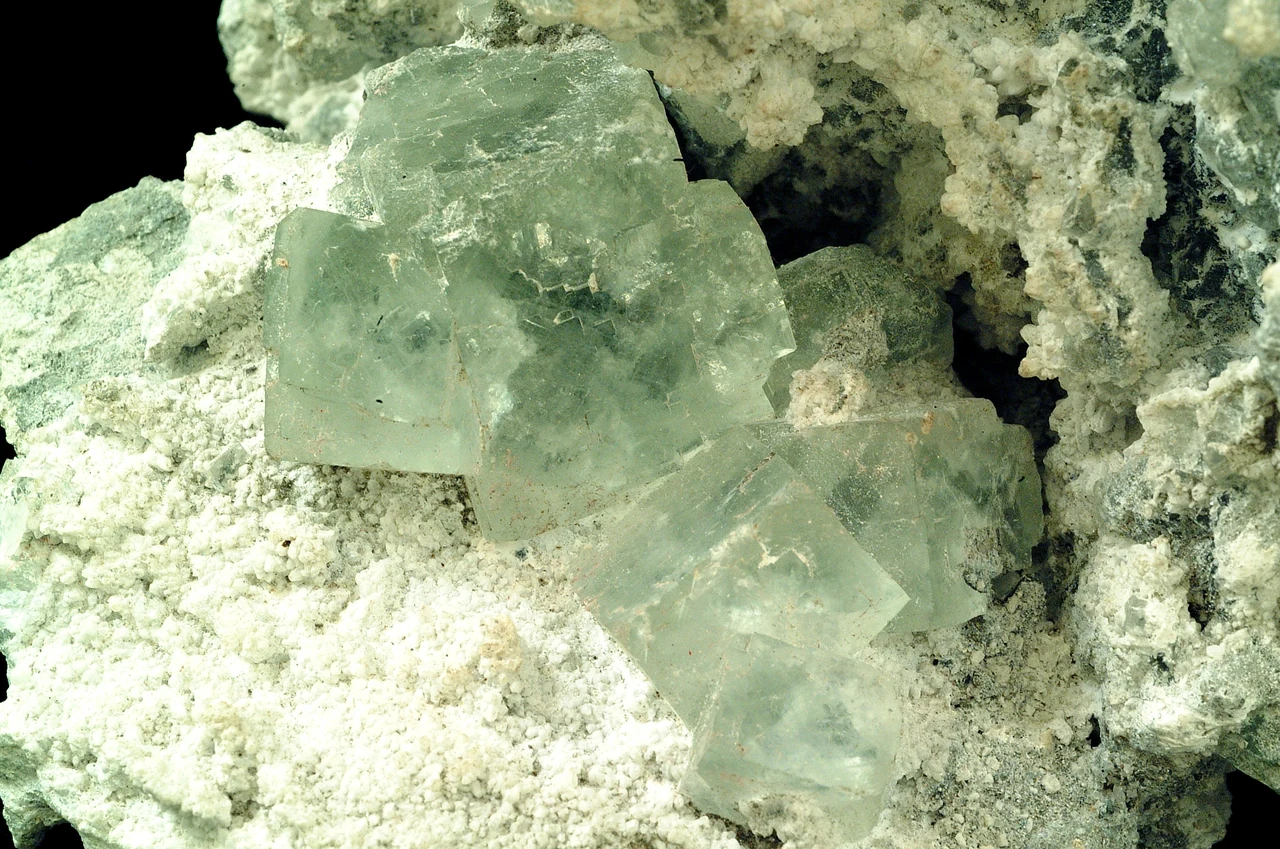
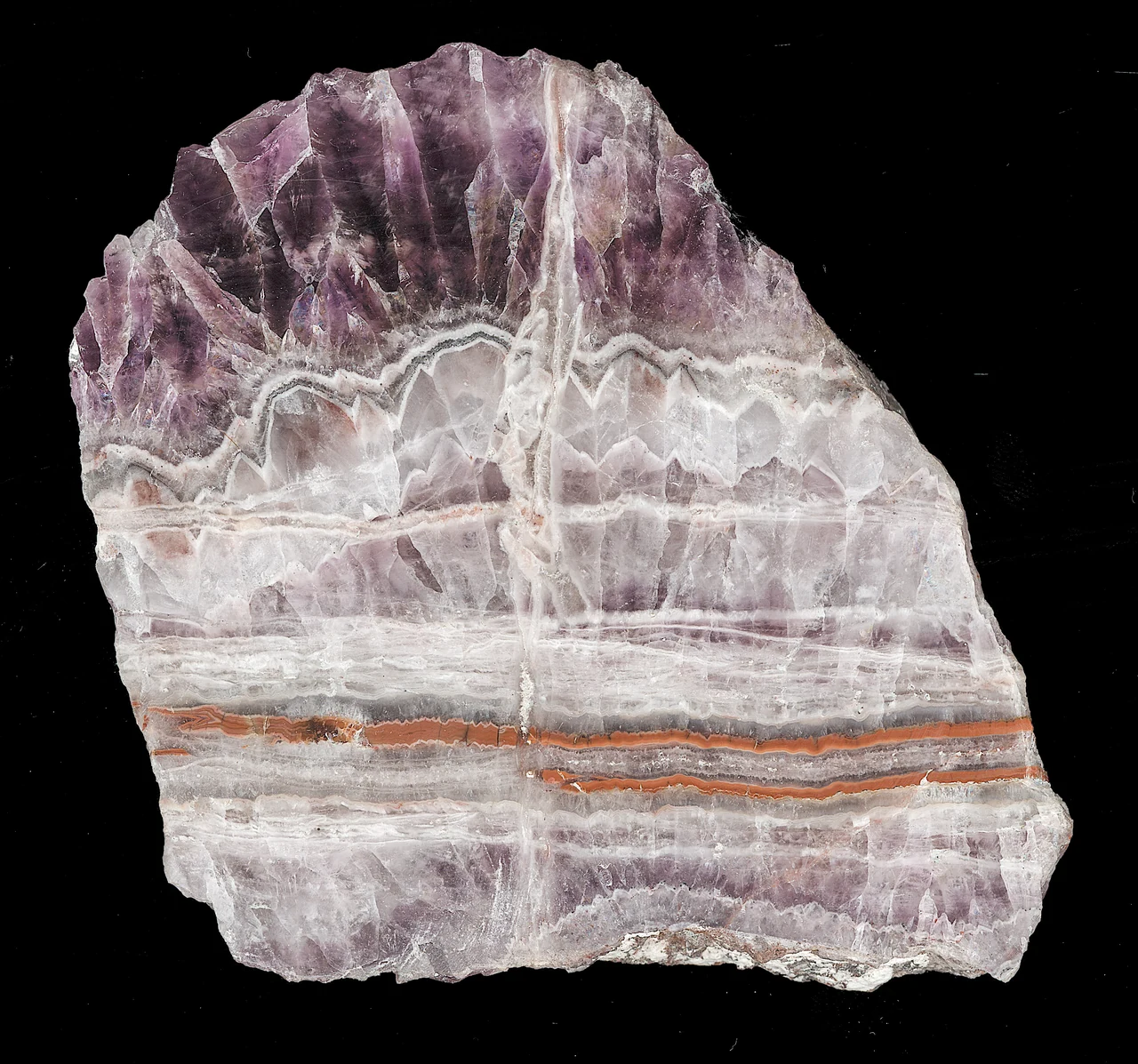
Colourless or, among other colours, green, purple or yellow; transparent to translucent. Natural cubes and colour zones are useful clues. Lustre is glassy, and cleavage fragments can be octahedral. A carved six-sided shape does not prove a natural crystal habit. [5]
Reference properties
View under neutral lighting and compare existing surfaces only. Hardness and streak below are reference data: do not scratch, break, heat or grind the specimen. Ask a specialist to examine valuable or unidentified materials.
Pale blue-green cubic fluorite crystals (about 3 cm on edge) with calcite. Cut and polished fluorite section from China with purple, white and thin reddish bands. [102][103]
Common lookalikes and imitations
Purple or colourless quartz
Why it looks similar
Colour and glassy lustre can resemble fluorite.
What can help distinguish it
Fluorite has Mohs 4 and perfect octahedral cleavage; quartz has Mohs 7 and very poor cleavage. Natural cubes support fluorite identification.
What a photograph cannot establish
A photograph does not establish composition, hardness or treatment.
Start with a soft, dry cloth. Unknown coatings, adhesives and settings need separate assessment.
Storage and specimen form
Separate from other specimens and protect from drops and abrupt temperature changes.
Store the intact specimen securely; wash hands after handling rough material. Do not generalise care advice to unidentified materials or coatings.
Do not grind or drill at home. Dust is a different exposure route from handling an intact specimen. [37]
FAQ
Is the name enough to identify a specimen?
No. This card describes a material and does not authenticate your specimen. For a valuable purchase, request provenance, treatment disclosure and, when appropriate, gemological testing.
What research says — in brief
We found no studies of fluorite in lithotherapy; results for the name concerned technical applications. [129]
Mineralogical, gemological, institutional or scientific source. Its scope is recorded in the source index.
Fluorite — contemporary practitioner accountThe Crystal Council · accessed 2026-09-30
Commercial practitioner source: documents beliefs, not medical evidence. The site sells crystals, so we give a bibliographic description without an active link; the full address is kept in Avonoria’s source documentation.
Photograph identity and usage-rights source; not a test of specimen composition.
Fluorite Stress Relief in Just 3 Easy Steps — practitioner accountCrystal Vaults · accessed 2026-10-04
Commercial practitioner source: documents beliefs, not medical evidence. The site sells crystals, so we give a bibliographic description without an active link; the full address is kept in Avonoria’s source documentation.