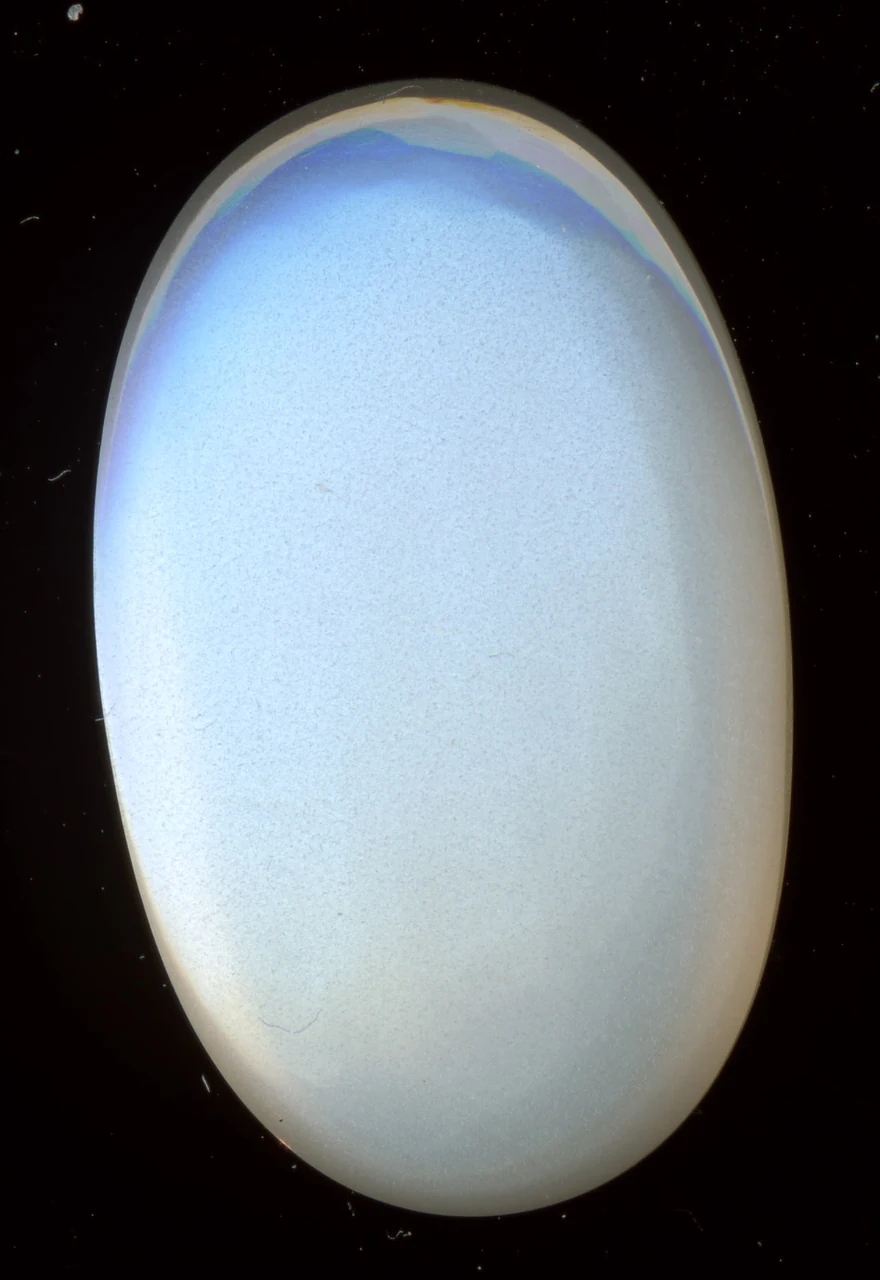
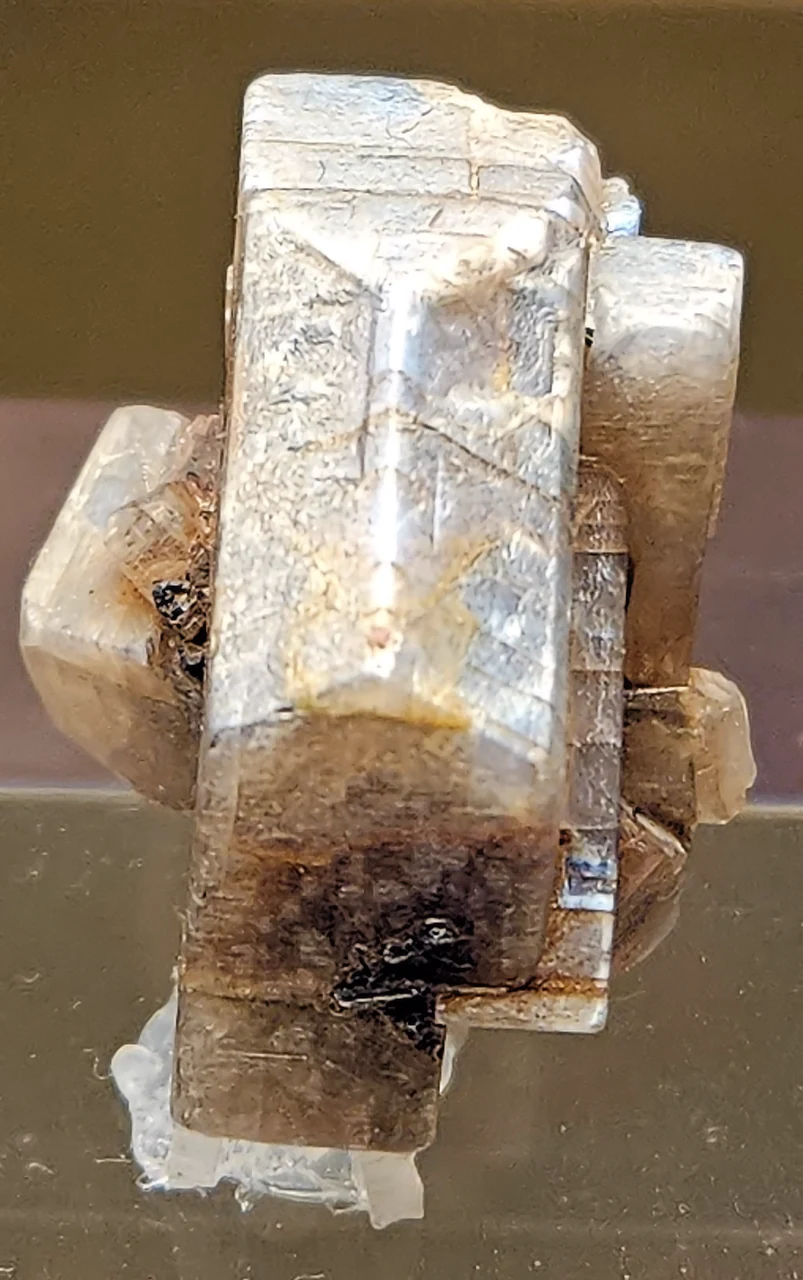
A feldspar gem variety known for adularescence, a glowing optical effect. GIA describes typical moonstone as orthoclase with layers of albite. Trade names do not always refer to the same variety.
In lithotherapy moonstone is a stone of the inner journey, intuition and cycles; in every tradition we know from the sources it stays linked with the Moon. In India it was regarded as a sacred and lucky stone, and contemporary practitioners see it as a guide to self-discovery.
Meaning in lithotherapy
The Crystal Council calls moonstone a stone of self-discovery at the highest level. It is meant to encourage growth, opportunity and action and to engage one’s intuitive spirit. Its themes include intuition, dreams, inner peace, creativity, emotional understanding, empathy, joy, and love and relationships. [52]
Crystal Vaults describes it as a talisman of the inward journey, taking one deep into the self to retrieve what is missing, and giving a tangible connection to the “magic of the moon”. It is meant to calm and soothe the emotional body, help master emotions and recognise their patterns, give confidence and composure, and strengthen the intuitive side of the mind. [136]
Ways of working with the stone
The Crystal Council recommends placing moonstone directly on the forehead over the third eye during deep meditation, and working with it in raw form as well. Crystal Vaults recommends it for meditations that lead inward, and as a protective amulet for travellers, especially at night. It also describes an old divination custom: on the night of the full moon the stone is laid on a yellow cloth and viewed by moonlight or candlelight. [52][136]
Other Crystal Vaults practices concern emotional balance and the home: the stone is placed at the centre of the chin, called the “Moon Centre”, and for fidelity in a relationship a circle of twelve stones — like the twelve months — is laid around the bedroom, with a thirteenth under the bed. [136]
Chakras, elements and astrology
The link with the Moon unites all the sources — from contemporary practitioners to an old Roman image of the weekdays in Kunz, where moonstone accompanies Diana, Monday and the sign of Cancer. In Siam, Kunz notes, white garments and moonstones were worn precisely on Monday. [52][136][120]
Chakras
crown and third eye (The Crystal Council); crown (Crystal Vaults) [52][136]
Element
water and air (The Crystal Council); metal in feng shui — the west and north-west of the home, the areas of travel and helpful people (Crystal Vaults) [52][136]
Zodiac signs
Cancer, Libra, Scorpio (The Crystal Council); Cancer (Crystal Vaults; also the Roman weekday image in Kunz) [52][136][120]
Planet and day
the Moon; Monday (the Roman weekday image and the Siamese custom in Kunz) [52][120]
Month stone
June, alongside pearl (Crystal Vaults; Kunz recorded it as a substitute for pearl in a modern list) [136][120]
Older beliefs
History and beliefs
According to Kunz, moonstone was believed to bring good fortune and was a sacred stone in India — it was never displayed for sale except on a yellow cloth, yellow being an especially sacred colour. It ranked high among gifts for lovers: it was believed to arouse tender feeling and to let lovers learn, at the full moon, what the future held for them. [120]
Kunz also cites Antoine Mizauld’s sixteenth-century account of a “selenite or moonstone” whose white spot was said to wax and wane with the Moon — Mizauld claimed to have watched it for a whole month. Among the stones whose long contemplation was believed to induce a half-trance, Kunz also lists moonstone. [120]
Where the sources differ
Crystal Vaults and Kunz agree on the Indian custom of the yellow cloth. Crystal Vaults also adds a Roman belief that an image of Diana can be seen in the stone and that it grants love, wealth, victory and wisdom — which we do not find in the historical source we read. The Crystal Council notes only that A. G. Werner named the mineral in 1780 and focuses on self-discovery. [136][120][52]
An Avonoria editorial suggestion
Editorial suggestion — not a documented rite
Place the specimen beside a journal and note a question you want to reflect on calmly until the next full moon. Return to the note after a few weeks and add what has changed.
Scope of the sources: Practices from Crystal Vaults concerning fertility, pregnancy and lovemaking are not reproduced, nor are health claims. We do not present the old Indian custom of placing the stone in the mouth at the full moon as a practice to follow. None of the practitioner sources we read gives a way to cleanse moonstone.
A gem name for feldspars with a shifting milky or bluish glow: adularescence. The body can be colourless, white, grey or warmer in colour. A cabochon helps display the glow. The trade name does not guarantee a single feldspar species. [71][19]
Reference properties
View under neutral lighting and compare existing surfaces only. Hardness and streak below are reference data: do not scratch, break, heat or grind the specimen. Ask a specialist to examine valuable or unidentified materials.
The optical effect is linked to light scattering in the layered feldspar structure. Ask what the material is rather than relying on the word “rainbow”. [19]
GIA permits brief cleaning with warm, mild soapy water. This is not advice to soak, make drinks or apply it to specimens with unknown treatment. Dry carefully; check the setting and coatings. [27]
Storage and specimen form
Separate from other specimens and protect from drops and abrupt temperature changes.
Store the intact specimen securely; wash hands after handling rough material. Do not generalise care advice to unidentified materials or coatings.
Do not grind or drill at home. Dust is a different exposure route from handling an intact specimen. [37]
FAQ
Is the name enough to identify a specimen?
No. This card describes a material and does not authenticate your specimen. For a valuable purchase, request provenance, treatment disclosure and, when appropriate, gemological testing.
What research says — in brief
We found no studies of moonstone in lithotherapy; results for the name concerned a rose cultivar and a drink of that name. [129]
Mineralogical, gemological, institutional or scientific source. Its scope is recorded in the source index.
Moonstone — contemporary practitioner accountThe Crystal Council · accessed 2026-09-30
Commercial practitioner source: documents beliefs, not medical evidence. The site sells crystals, so we give a bibliographic description without an active link; the full address is kept in Avonoria’s source documentation.
Photograph identity and usage-rights source; not a test of specimen composition.
Moonstone meaning and uses — practitioner accountCrystal Vaults · accessed 2026-10-04
Commercial practitioner source: documents beliefs, not medical evidence. The site sells crystals, so we give a bibliographic description without an active link; the full address is kept in Avonoria’s source documentation.