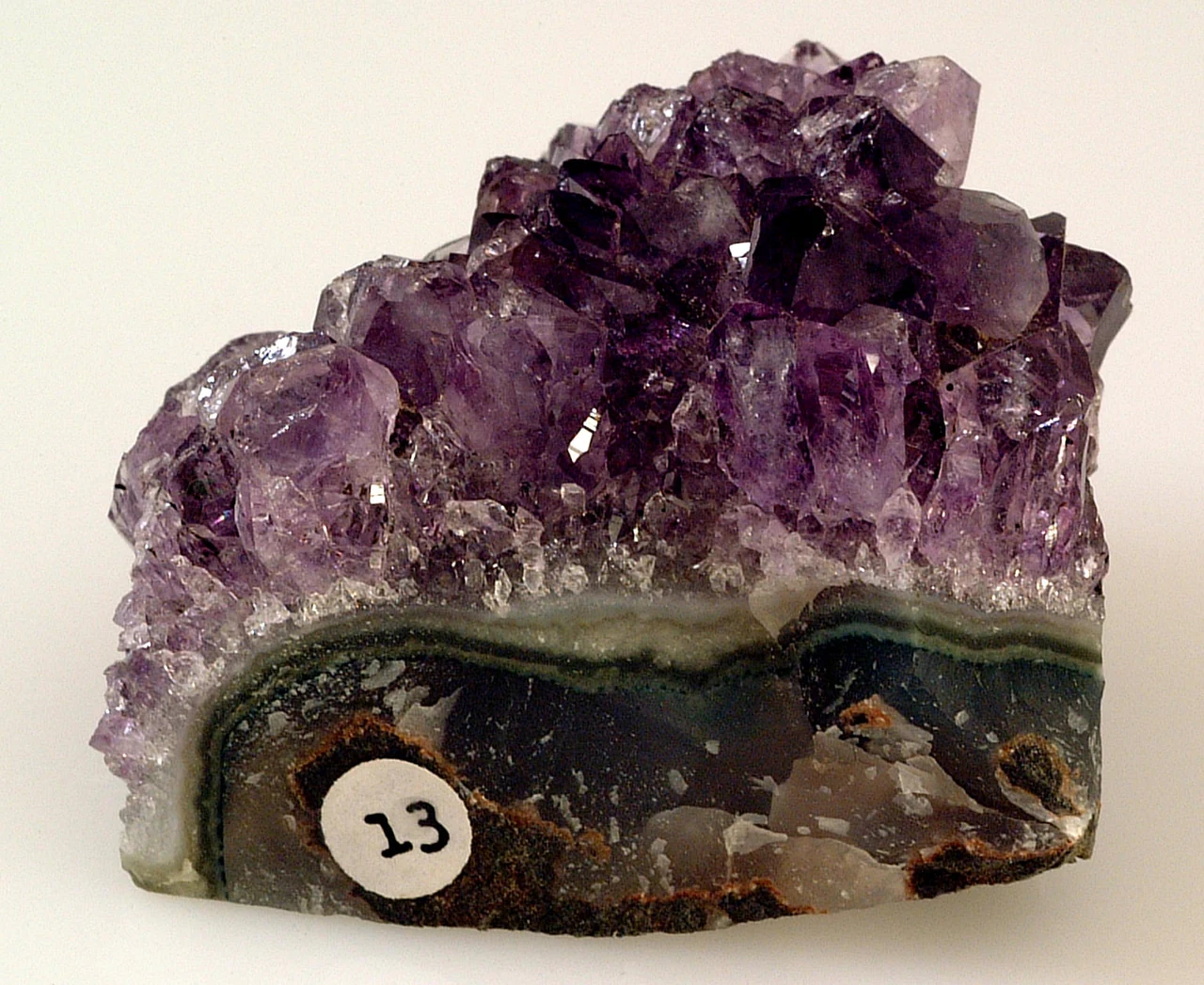
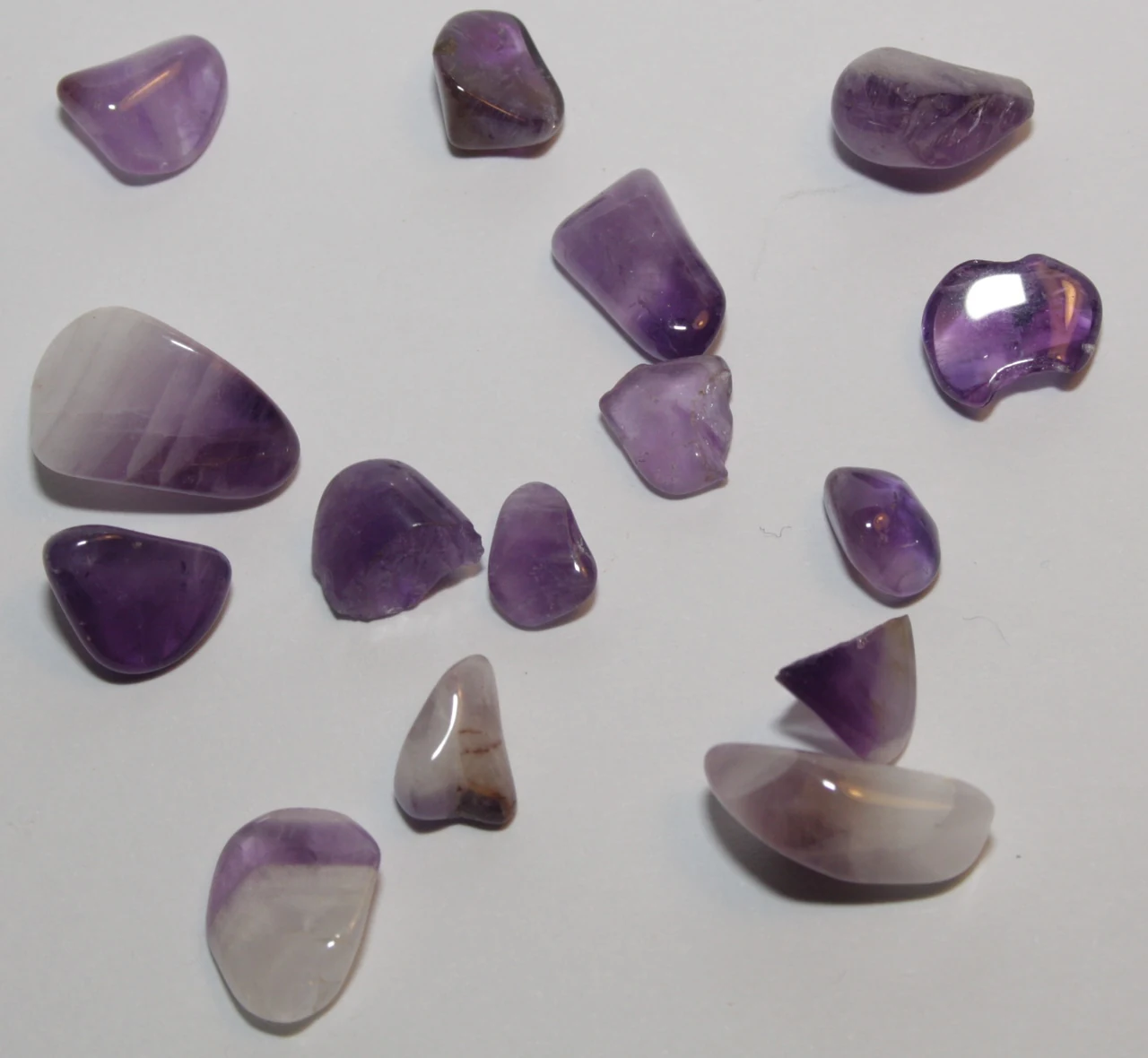
Amethyst is one of the most widely described stones in lithotherapy, the tradition that gives minerals spiritual and symbolic meanings. Below we present it as contemporary practitioners and older lapidaries describe it: a stone of a clear mind, moderation and restful sleep.
Meaning in lithotherapy
In the Crystal Vaults account (Linda Mason), amethyst is a “stone of spirituality and contentment”: it connects with the divine, gives spiritual protection and clears the energy field of negative influences. The same account stresses its double nature — the stone is said both to stimulate and to soothe the mind and emotions, and to help curb overindulgence. [121]
The Crystal Council calls amethyst a multidimensional stone. In its description the stone forms a protective envelope that helps a person keep a clear mind and steady energy, while its violet “rays” support contact with higher frequencies and the growth of intuition. A recurring theme is shedding the day’s weight and tension — in this current amethyst is meant to restore a sense of a safe place and of gratitude. [42]
Ways of working with the stone
Both sources treat meditation as the main way of working with amethyst. The Crystal Council suggests beginning with gratitude and “offering yourself up” to the stone’s violet light. Crystal Vaults gives a more detailed layout: a single crystal or small cluster is held in the left hand with the point towards the arm, or the stone is placed on the forehead over the third-eye chakra. Larger clusters are recommended for a meditation altar. [42] [121]
Beyond meditation, Crystal Vaults presents amethyst as an everyday stone: placed under the pillow or mattress it is said to support restful sleep, and set in a room or creative workspace it is said to focus and amplify the space. Worn in a ring or locket, or simply carried, it is meant to work through the day. The same author mentions the custom of wearing amethyst on the second finger of the right hand and its place at the north-east point of a crystal “medicine wheel”. [121]
Older beliefs
History and beliefsAmethyst’s name comes from a Greek word meaning “not intoxicated”, and, as George Frederick Kunz wrote in 1913, the stone was long linked with protection against drunkenness. Kunz suggested that the belief arose from the stone’s wine-like colour, and that some ancient “amethysts” may in fact have been purple garnets: water poured into a red vessel looked like wine yet did not intoxicate. [120]
The Renaissance lapidary of Camillo Leonardi (Venice, 1502), cited by Kunz, attributed much more to amethyst: it restrained evil thoughts, quickened the intelligence, made men shrewd in business, calmed not only after wine but also in the heat of passion, protected soldiers and helped hunters. Kunz also notes amethyst amulets and scarabs in ancient Egypt, a Hebrew name for the stone associated with dreams and visions, and later Christian symbolism — amethyst as the emblem of the apostle Matthias and, among the Rosicrucians, of sacrifice and hope. [120]
Pliny the Elder (Natural History, book 37, chapter 40) ranked highest the amethysts of India, with “the very richest shades of purple”. He reported that “the magicians” credited the stone with preventing drunkenness — and derived its name from this — and claimed that, inscribed with the names of the Sun and Moon and worn at the neck with baboon hair and swallow feathers, it guarded against spells, ensured access to kings and averted hail and locusts. Pliny himself called these claims falsehoods. His translators note that his “amethystos” may have included other purple stones. [145]